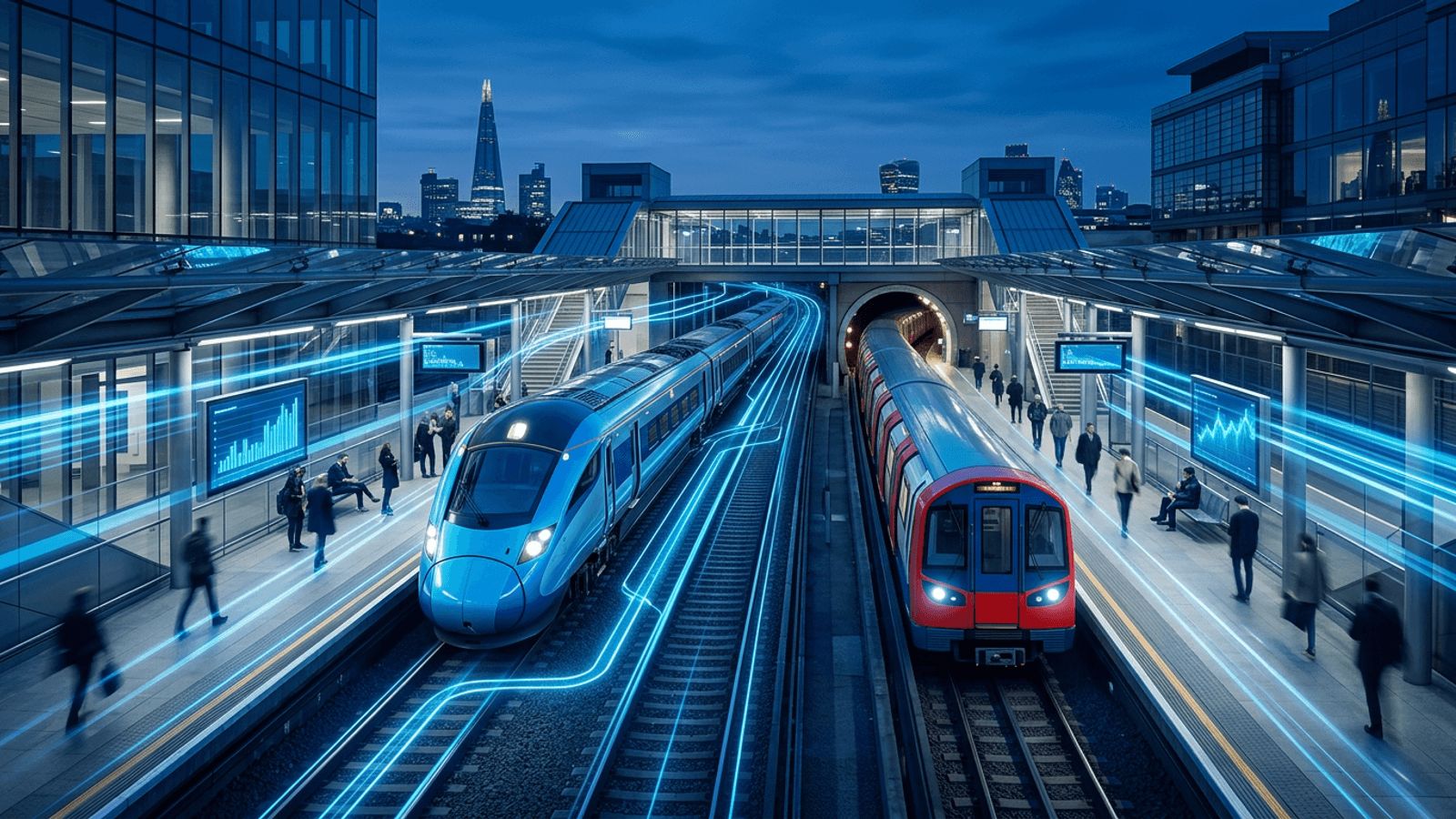
Rail and the Rhythm of Basildon Life
For a town built in the twentieth century, Basildon is unusually dependent on rail. Tens of thousands of residents rely on the railway each week, and the pattern of the town's growth has followed its stations closely. Basildon station sits on the Fenchurch Street to Shoeburyness line, with Pitsea and Laindon serving the surrounding neighbourhoods and Billericay providing an alternative route into Liverpool Street for those living to the north of the borough.
That geography gives Basildon something many commuter towns lack: genuine route choice. A resident can travel into the City via the Essex Thameside corridor or head into the Great Eastern network depending on where in London they work. Understanding which operators run which services, and what each does well, makes a material difference to daily travel quality.
How the Railway Is Organised
Britain's railway separates the running of trains from the ownership of track. Passenger train operating companies run services under contract, a national infrastructure body maintains the track, signalling and major stations, and rolling stock companies own the physical trains and lease them out. Freight operators run alongside passenger services on the same network, competing for available paths.
This structure matters to passengers because responsibility for problems is distributed. A delay caused by a signalling fault sits with the infrastructure owner, while a cancellation from crew shortage belongs to the train operator. Knowing the difference helps travellers understand delay repay outcomes and the sometimes uneven pace of service improvement.
The Key Railway Operators Serving Basildon
c2c
c2c is the operator most Basildon commuters know best, running the Essex Thameside route between Shoeburyness and London Fenchurch Street via Basildon, Pitsea and Laindon. For years it has ranked among the most punctual operators in the country, a reputation built on a relatively self-contained route with limited interaction from other services. Its high-frequency timetable, consistent rolling stock and straightforward stopping patterns make it genuinely reliable for peak travel. The operator was also an early adopter of smart ticketing and flexible season products, which suit the hybrid working patterns now common across the borough.
Greater Anglia
Greater Anglia serves Billericay and the wider Great Eastern network, providing Basildon-area residents with access to Liverpool Street, Chelmsford, Colchester and Norwich. Its transformation over recent years has been one of the more striking in British rail, having replaced its entire fleet with modern trains offering air conditioning, better accessibility and improved capacity. For passengers heading to the north or east of London, or travelling onward into Suffolk and Norfolk, Greater Anglia is the natural choice.
Network Rail
Although it carries no passengers itself, Network Rail shapes the Basildon rail experience more than almost any other organisation. It owns and maintains the track, signalling, bridges and level crossings across the Essex Thameside and Great Eastern routes. Its investment programmes in resignalling, drainage and embankment stabilisation determine long-term resilience, particularly important on a route running close to the Thames marshland where flooding and ground movement present genuine engineering challenges.
London Underground
Basildon has no Underground station, yet the network is an essential part of most residents' journeys. Fenchurch Street connects to Tower Hill and Aldgate, feeding into the District, Circle and Hammersmith and City lines. The reliability and frequency of those interchanges effectively extend or shorten the real door-to-door commute, which is why Underground performance features so heavily in local travel conversations.
Elizabeth Line
The Elizabeth line has changed the calculus for many Essex commuters. By connecting Shenfield and Stratford through central London to Paddington, Heathrow and Reading, it has opened up destinations that previously required multiple changes. Basildon residents willing to travel to Shenfield or connect at Stratford now reach the West End, Canary Wharf and Heathrow considerably faster than before.
Freightliner
Freightliner is one of the most significant freight operators using the lines around Basildon, hauling intermodal container traffic from the Thames Estuary ports towards inland terminals. Its trains are a familiar sight on the Thameside corridor, and each one removes a substantial number of lorry movements from the A13 and M25. For a borough sitting between major ports and the capital, rail freight has a direct impact on local road congestion and air quality.
GB Railfreight
GB Railfreight has grown rapidly into a major player in the UK freight market, handling construction materials, containers and infrastructure trains. It also operates engineering services that support maintenance work on the Essex network, often running overnight when passenger services have finished. Its reputation for operational flexibility has made it a preferred partner for time-sensitive port traffic.
DB Cargo UK
DB Cargo UK moves heavy bulk freight including aggregates, steel and automotive traffic across the national network. Its involvement in the Thames Gateway supports the construction and manufacturing supply chains that many Basildon businesses depend upon, and its long-haul capability links Essex terminals to the Midlands and the north.
Angel Trains
Angel Trains is a rolling stock leasing company rather than an operator, but its influence is felt every time a passenger boards. It finances and owns fleets that are then leased to train operating companies, and its willingness to invest in new-build and refurbishment programmes directly determines the comfort, accessibility and reliability of the carriages serving Basildon.
Eversholt Rail Group
Eversholt performs a similar role, owning and investing in passenger and freight rolling stock used across the UK network. Its capital programmes in fleet upgrades, including interior refurbishments, wifi installation and accessibility improvements, have tangible effects on the daily experience of Essex commuters.
Trends Reshaping Rail in the Region
Several developments are changing how rail works for Basildon travellers. The shift to hybrid working has flattened the traditional peak, prompting operators to rethink season ticket products in favour of flexible carnet-style options. Digital ticketing has largely displaced paper, with barcode and smartcard travel now the default for most regular passengers.
Decarbonisation is a longer-term theme. The Essex Thameside route is already electrified, which places it in a favourable position compared with diesel-dependent regional lines. Attention is now turning to energy efficiency, regenerative braking and reducing the carbon footprint of station operations and maintenance activity.
Accessibility continues to improve, with step-free access, tactile platform surfaces, audio-visual information and assisted travel booking becoming standard expectations rather than optional extras. Freight growth is the final significant trend, driven by port expansion in the Thames Estuary and by shippers seeking lower-emission alternatives to road haulage.
Getting the Most from Rail Travel in Basildon
Practical habits make a real difference. Checking live departure information before leaving home avoids wasted platform time, particularly during engineering work at weekends. Understanding delay compensation entitlements is worth the effort, since claims are straightforward and often overlooked. Season ticket holders should periodically compare flexible products against traditional annual passes, as the break-even point shifts with changing office attendance patterns.
For those with flexibility over station choice, comparing routes from Basildon, Laindon, Pitsea and Billericay can reveal meaningful differences in journey time, parking availability and cost depending on the final destination in London.
Final Thoughts
Rail remains the most efficient way to move large numbers of people between Basildon and London, and the operators serving the town have collectively raised standards over the past decade. Between c2c's dependable Thameside service, Greater Anglia's modernised fleet, the reach of the Elizabeth line and the freight operators quietly reducing lorry traffic on local roads, the borough is served by a railway network that is more capable and more sustainable than at any point in its history.
Want your brand featured in front of decision-makers? Publish a guest post or get a link insertion in our guides through AAMAX's guest post and link insertion service.
Helpful Links
 SponsoredAAMAX — Full-Service Digital Agency
Write for Us
Share your expertise with our readers. We welcome guest contributions from industry specialists.
Pitch your idea