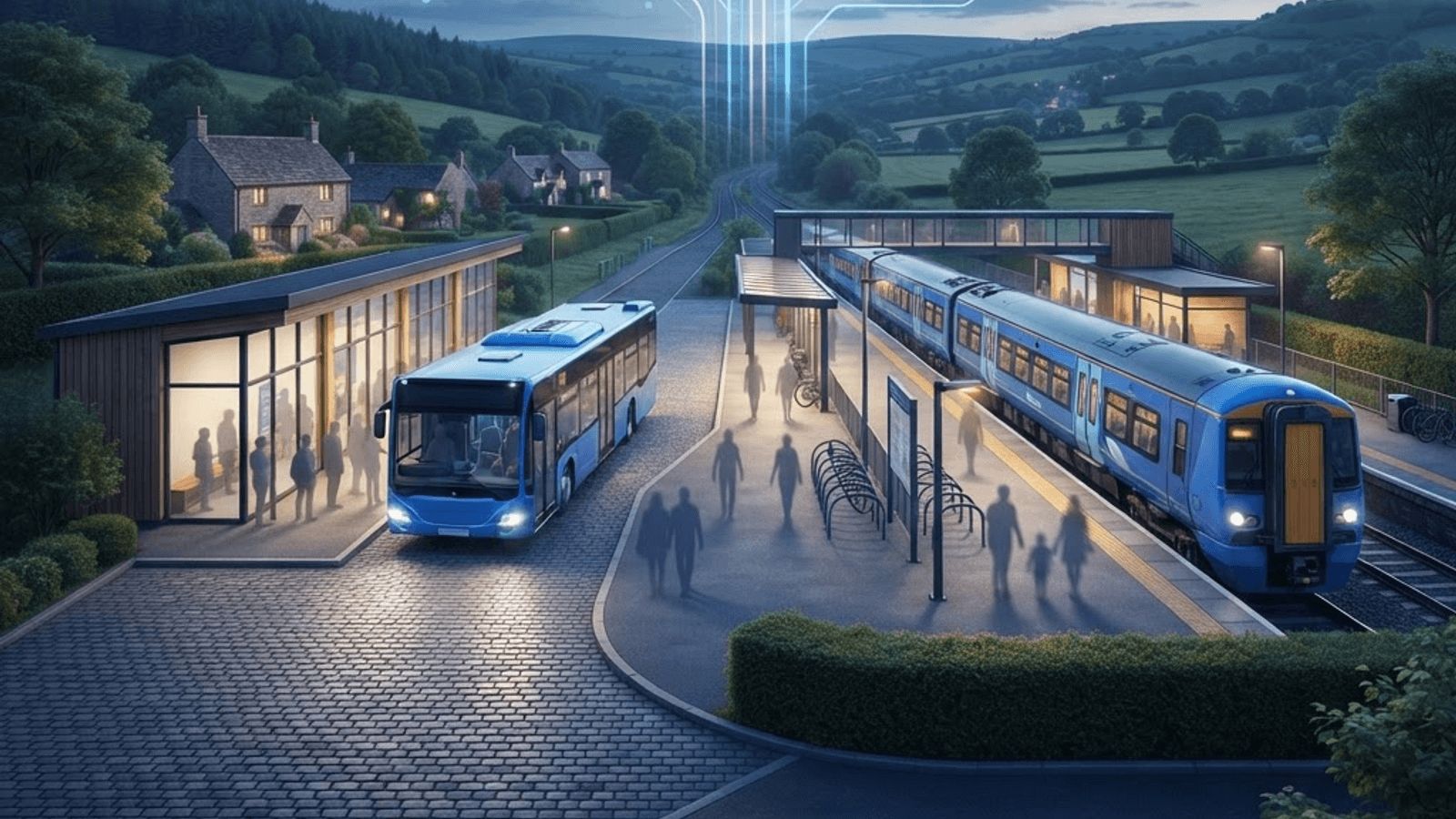
Getting Around Without a Car
West Oxfordshire presents a classic rural transport puzzle. The district covers a large area with a modest, widely distributed population. Major flows head towards Oxford for work, education and healthcare, while local trips concentrate on market towns for shopping and services. Building a public transit network that serves both patterns economically is genuinely difficult, and the result is a layered system in which different services do different jobs.
Understanding those layers is the key to travelling successfully. Trunk bus corridors offer frequency, the railway offers speed on its corridor, community transport offers access where commercial services cannot reach, and flexible services fill the remaining gaps.
Oxford Corridor Bus Services
The most intensively served routes link Witney and other towns with Oxford along the A40. These services run at high frequency through the day, often with early morning and late evening journeys that support shift workers. Contactless payment, day and weekly capped fares and live tracking make them straightforward to use, and they carry the majority of the district's bus passengers.
The Cotswold Line Railway
The railway through the district provides the fastest connection to Oxford, London and the West Midlands from stations including Charlbury, Hanborough and Kingham. Journey times to Oxford are short, and through trains to London mean no change is required. Station car parks and cycle facilities support access from surrounding villages, and the line is particularly popular with commuters avoiding road congestion.
Park and Ride Services
Park and ride sites on the approaches to Oxford allow residents to drive a short distance, park and complete their journey by frequent bus. This hybrid model works well for those living beyond reach of a direct bus route and avoids city centre parking costs and restrictions. Services typically run at high frequency with luggage space and onboard information.
Interurban Town Links
Services connecting the district's towns to one another, rather than to Oxford, are essential for accessing secondary schools, colleges, leisure centres and hospitals. These routes generally operate hourly or better on weekdays with reduced weekend provision, and they carry significant numbers of young people who cannot yet drive.
Village Feeder Services
Smaller villages are usually served by feeder routes that connect to a town or a railhead, often running a handful of journeys per day timed around shopping, school and employment needs. Timetables reward planning, and residents often build their week around the available services. Where commercial viability is marginal, these routes may be supported through local authority funding.
Demand-Responsive Transport
Flexible, bookable services are an increasingly important part of rural transit. Passengers request a journey through an app or phone line and a minibus routes to collect them, rather than following a fixed timetable. This model provides coverage across areas where a scheduled bus would run nearly empty, and it can connect passengers to trunk routes and stations for onward travel.
Community Transport Schemes
Dial-a-ride, volunteer car schemes and community minibuses give door-to-door mobility to residents who cannot use conventional buses. These services support hospital appointments, shopping trips and social activities, and they are frequently the main defence against isolation for older rural residents. Vehicles are wheelchair accessible and drivers trained in passenger assistance.
School and College Transport
Home-to-school transport is a substantial part of the district's transit picture, moving thousands of pupils daily from villages to secondary schools and sixth form provision. Many of these services are open to fare-paying passengers where capacity allows, providing an additional option for adults travelling the same corridors.
Airport Coach Links
Direct coach services to major airports run from Oxford and from stops along the main corridors, operating around the clock. For West Oxfordshire residents, these coaches remove the cost and hassle of airport parking and provide a reliable option for early departures and late arrivals.
Cycling and Active Travel Links
Active travel is an integral part of public transit rather than an alternative to it. Cycle parking at stations and bus interchanges, improving off-road paths and quiet lane routes allow residents to reach public transport from villages without a direct service. Combining a short cycle ride with a train journey often produces the fastest door-to-door time.
Making the Network Work for You
Plan journeys using a multi-modal journey planner rather than a single operator's app, since the best route often combines bus and rail. Check whether capped fare schemes apply, as they can reduce the cost of multiple daily trips substantially. Concessionary passes offer free off-peak bus travel for eligible older and disabled residents, and railcards deliver significant savings on rail.
Timing matters in rural areas. Last departures can be early, particularly on village routes, and Sunday service is limited. Always check the return journey before committing to the outward trip.
Challenges and Future Directions
Rural transit faces real pressures, including driver shortages, rising operating costs and the difficulty of sustaining lightly used routes. Responses include integrating ticketing across operators, using smaller vehicles more efficiently, expanding demand-responsive coverage and improving interchange quality so that connections feel reliable rather than risky.
Electrification of bus fleets is progressing, supported by air quality goals in Oxford. Better real-time information, simpler fares and coordinated timetabling between bus and rail would deliver further improvement without requiring major new infrastructure.
Conclusion
Public transit in West Oxfordshire is a layered network rather than a single system, combining frequent Oxford corridor buses, the Cotswold Line railway, park and ride, village feeders, flexible bookable services and volunteer-supported community transport. Used together, these options make car-free travel genuinely practical for many journeys, particularly with a little planning and awareness of how the layers connect.
Want your brand featured in front of decision-makers? Publish a guest post or get a link insertion in our guides through AAMAX's guest post and link insertion service.
Helpful Links
 SponsoredAAMAX — Full-Service Digital Agency
Write for Us
Share your expertise with our readers. We welcome guest contributions from industry specialists.
Pitch your idea