Public Transport in a Dispersed Rural District
Wealden is a district of contrasts for public transport users. Along its main corridors, service is genuinely good: the Uckfield rail line links Crowborough, Buxted and Uckfield towards London, the East Coastway serves Polegate and Pevensey, and frequent buses run the A22 and A26 between Eastbourne, Hailsham, Uckfield and Tunbridge Wells. Away from those spines, provision thins rapidly. Villages such as Chiddingly, Waldron, Hellingly and Five Ashes may see only a handful of buses a week, and evening services across much of the district are limited.
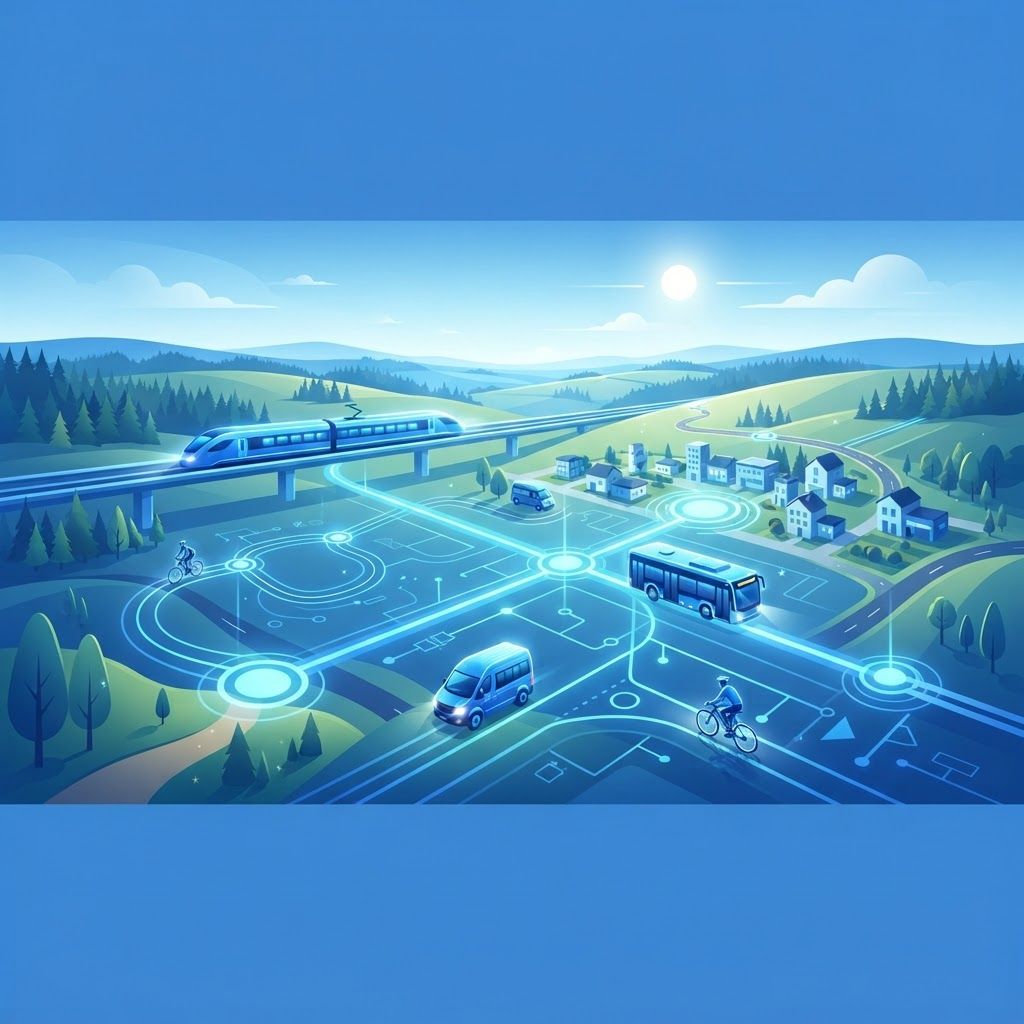
What makes Wealden interesting is the range of solutions that have grown up to fill those gaps. Community transport organisations, volunteer car schemes, demand-responsive minibuses, school bus spare capacity and well-timed rail feeder buses all form part of a genuine public transit ecosystem, even if it is not presented as a single network. Learning to use them together is the key to travelling car-free in the district.
How to Judge a Public Transit Service
Usability is a combination of frequency, span of hours, reliability and interchange quality. A bus running hourly until nine in the evening is far more useful than one running twice as often but stopping at six, because it supports return journeys. Interchange matters enormously in Wealden: a bus that arrives at Polegate or Uckfield station five minutes after the train leaves is functionally useless, while a well-timed connection unlocks a whole journey. Accessibility is essential, meaning low-floor vehicles, wheelchair spaces, audio-visual announcements and step-free station access. Information quality decides whether people even attempt a journey, and services publishing accurate real-time open data are used far more than equally good services that do not. Finally, affordability and simple ticketing, including contactless fare capping and multi-operator tickets, remove a real barrier to occasional use.
The Top 10 Public Transit Services in Wealden
1. The Uckfield rail line, operated by Southern is the single most valuable public transit asset in the district. Serving Uckfield, Buxted, Crowborough and Eridge with through services to Oxted, East Croydon and London, it carries a substantial daily commuter flow and provides a reliable spine that other services feed. Its diesel operation and single-track sections cap frequency, but journey times to London are competitive and rolling stock has improved.
2. The East Coastway line through Polegate and Pevensey and Westham gives the southern district frequent connections to Eastbourne, Lewes, Brighton, Gatwick and Hastings. Polegate in particular functions as an important interchange, combining rail with bus services across the Hailsham and Willingdon area.
3. Stagecoach South East corridor bus services form the backbone of bus travel, linking Eastbourne, Polegate, Hailsham, Uckfield and Tunbridge Wells along the A22 and A26. Contactless fare capping, live tracking through the operator app and a modernising accessible fleet make these routes the most straightforward services for newcomers to use.
4. Compass Travel local and supported services are the lifeline for rural Wealden. This Sussex independent operates many of the routes connecting villages around Uckfield, Heathfield, Horam and the surrounding parishes to their nearest towns, often on market-day patterns designed around genuine local need rather than commercial return.
5. Cuckmere Buses demonstrates what volunteer-led community transport can achieve. Operating services across the southern Weald and Cuckmere valley villages, it fills gaps left by commercial operators with locally designed timetables, and it has become a model studied by other rural areas.
6. Wealden community transport and dial-a-ride schemes provide accessible door-to-door minibus travel booked in advance for residents who cannot use conventional buses. Trained drivers, tail lifts and doorstep assistance make these services essential for independence among older and disabled residents across the district's villages.
7. Volunteer car schemes operating parish by parish deserve recognition as public transit in all but name. Coordinated locally, they use volunteer drivers to take residents to medical appointments, shops and social activities for a mileage contribution, and in some Wealden villages they are the only transport option available on a given day.
8. Demand-responsive transport pilots represent the most promising development for low-density areas. Instead of a fixed timetable, passengers book a flexible minibus by app or phone and the vehicle routes dynamically. Where implemented in comparable rural districts, these schemes have delivered far better coverage per pound of subsidy than fixed routes, and their extension across Wealden is actively pursued.
9. Brighton and Hove Buses and Metrobus services serving the western and Gatwick-facing edges of the district provide high-quality, high-frequency links towards Lewes, Brighton, Crawley and Gatwick, with some of the best integrated ticketing and real-time information in the region.
10. Cycle and active travel infrastructure including the Cuckoo Trail completes the list. The Cuckoo Trail, following a former railway alignment between Polegate, Hailsham, Horam and Heathfield, is a genuinely useful traffic-free walking and cycling route, not merely a leisure amenity. Combined with cycle parking at stations and increasing electric bike use, it functions as real transport infrastructure for local journeys.
Trends Shaping Transit in the District
Fare capping has removed much of the complexity from bus travel, letting occasional users simply tap on and off. Bus Service Improvement Plan funding has supported enhanced evening and weekend services on selected corridors and improved information at stops. Zero-emission bus funding is bringing electric vehicles into South East fleets, beginning with urban routes. Demand-responsive transport is being trialled widely as the most economically viable model for very low-density villages. Open data has transformed journey planning, with rural services now appearing accurately in mainstream apps. And integrated mobility thinking, combining bus, rail, cycle and shared transport into single journeys, is increasingly reflected in local transport planning.
Travelling Car-Free in Wealden
Build journeys around the rail spine, using buses as feeders rather than trying to cross the district entirely by bus. Check days of operation carefully, as many rural services run on selected weekdays only. Use contactless payment on buses to obtain automatic capping, and investigate multi-operator tickets for journeys involving more than one company. Confirm last departure times before committing to an evening out, and keep a local taxi number as a fallback. Register with community transport and volunteer car schemes in advance rather than at the point of need, since eligibility checks take time. Consider an electric bike for the first and last mile, as Wealden's hills are the main deterrent to cycling and electric assistance removes it. And plan around engineering works, which affect the Uckfield line and East Coastway regularly at weekends.
Public transport in Wealden takes more planning than in a city, but the combination of a useful rail spine, corridor buses, community schemes and traffic-free trails makes car-free living achievable in much of the district, particularly for those based in or near the market towns.
Want your brand featured in front of decision-makers? Publish a guest post or get a link insertion in our guides through AAMAX's guest post and link insertion service.
Helpful Links
 SponsoredAAMAX — Full-Service Digital Agency
Write for Us
Share your expertise with our readers. We welcome guest contributions from industry specialists.
Pitch your idea