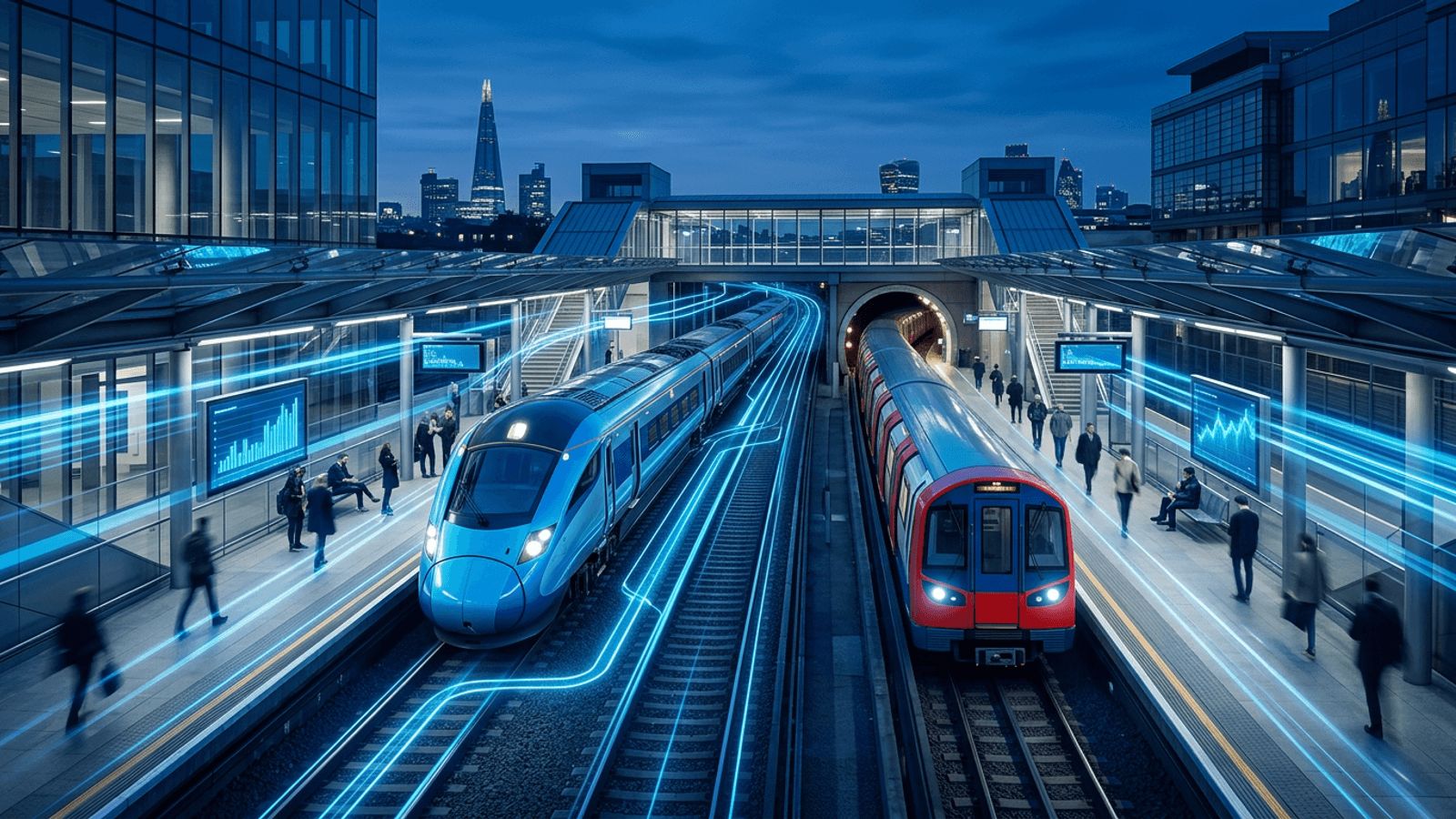
A Town That Takes Public Transport Seriously
Reading is unusual among English towns of its size in that public transport is genuinely a first choice for many residents rather than a fallback. Bus patronage per head is among the highest outside major cities, the railway station handles tens of millions of passengers a year, and the town has invested consistently in park and ride sites, bus priority lanes and a river bridge designed for buses, pedestrians and cyclists.
The reasons are partly geographical. Reading's compact core, constrained by the Thames and the Kennet, makes car travel slow at peak times, while the town's role as a rail interchange between London, the West Country, South Wales, the Midlands and the South Coast gives it connectivity that far exceeds its population. For anyone living, working or studying in the area, understanding the network properly saves both money and time.
The Ten Services That Define Reading Transport
Reading Buses is the anchor of the local network and one of the most decorated municipal bus operators in the country. Owned by the borough council but run commercially, it operates a large fleet including gas-powered and electric vehicles, with high-frequency colour-coded routes such as the claret, purple, lime and leopard services radiating across the town. Its reputation rests on frequency, cleanliness, contactless payment, live tracking and a level of customer communication that many larger operators struggle to match.
Great Western Railway is the principal train operator at Reading station, providing fast services to London Paddington, Oxford, Bristol, Cardiff, Exeter and Plymouth, alongside dense local stopping services to Newbury, Basingstoke, Henley-on-Thames and Gatwick Airport via Guildford. For commuters, the Paddington journey time of well under half an hour on express services is the single biggest reason Reading has grown as a business location.
The Elizabeth Line transformed cross-London travel when it began serving Reading. Direct trains run through central London to Canary Wharf and beyond without changing, with turn-up-and-go frequency and full step-free access at most stations. It has become the preferred option for many travellers heading to the City, the West End or Docklands.
CrossCountry links Reading to the Midlands and the North, with services towards Birmingham New Street, Manchester and Newcastle, plus southbound connections to Southampton and Bournemouth. It gives the town direct long-distance reach without needing to travel via London.
South Western Railway operates the Reading to London Waterloo route via Wokingham, Bracknell and Richmond. Slower than the Paddington line, it nonetheless serves a different set of destinations and provides valuable resilience when the main line is disrupted.
Thames Travel connects Reading with south Oxfordshire, including Wallingford, Didcot and the villages along the Thames. Its X38, X39 and X40 corridor services are a lifeline for communities without rail access and are widely used by students and commuters heading into Reading.
Carousel Buses provides links towards High Wycombe and the wider Chilterns from the northern side of the network, extending the reach of the bus system into Buckinghamshire.
First Berkshire and Arriva services add further regional coverage, connecting Reading with Bracknell, Slough, Windsor, Camberley and surrounding towns. These routes matter particularly for cross-Thames Valley commuting where rail links are indirect.
Reading's park and ride network functions as a service in its own right. Sites including Mereoak to the south, Winnersh Triangle to the east and Thames Valley Park provide free or low-cost parking with frequent bus links into the centre, and they substantially reduce congestion and parking costs for people travelling in from outside the borough.
ReadyBike and the local cycle hire and active travel network complete the picture. Reading's cycle hire scheme, together with an expanding network of shared paths along the Thames and Kennet and secure cycle parking at the station, allows genuine multi-modal journeys where a bike covers the first or last mile of a rail trip.
Ticketing, Fares and Practical Advice
Contactless tap-on payment has simplified bus travel considerably, with daily and weekly capping meaning frequent travellers automatically pay the best available rate. Reading Buses also offers a mobile app with mobile tickets, live departures and route planning. For families and groups, day tickets usually beat single fares comfortably.
On rail, advance tickets bought ahead of travel are far cheaper for long-distance journeys, while season tickets and flexible season products suit different commuting patterns in a hybrid working world. Railcards, including those for young people, older travellers, families and two adults travelling together, deliver substantial savings and are frequently underused.
Accessibility has improved markedly. Reading station is fully step-free with lifts to every platform, the bus fleet is low-floor with wheelchair space and audio-visual next-stop announcements, and assistance can be booked in advance for rail journeys. Anyone with mobility requirements should still check specific station facilities, as smaller local stops vary.
Trends Shaping the Network
Decarbonisation is the dominant theme. Reading has been an early adopter of biomethane and electric buses, and further fleet renewal is planned as charging infrastructure expands. Rail electrification on the Great Western main line has already reduced emissions and improved acceleration and reliability on the London corridor.
Integration is the second theme. Better interchange between bus and rail, joint information systems, real-time data feeds available in third-party journey planners and improved cycle facilities are all reducing the friction that traditionally made multi-modal journeys unattractive.
Demand patterns are the third. Hybrid working has flattened the traditional morning peak and increased midday and weekend travel, prompting operators to rethink timetables and fare products. Flexible season tickets and carnet-style products are a direct response.
Getting the Most From Reading Transport
Plan around frequency rather than timetables on the main bus corridors, where services run often enough that turning up works. For rail, check whether the Elizabeth Line or a fast Great Western service better suits your London destination, because the difference in total door-to-door time can be significant. If you drive in from outside the borough, price a park and ride journey against town-centre parking, and factor in the reliability of bus lanes at peak times.
Final Thoughts
Reading demonstrates what a well-funded, well-managed public transport system can achieve. Between a nationally respected bus operator, a station with genuinely national reach, cross-London through services and a growing active travel network, most journeys in and around the town can be made without a car. The services listed here are the ones worth knowing, and together they make Reading one of the easiest places in the South East to get around.
Want your brand featured in front of decision-makers? Publish a guest post or get a link insertion in our guides through AAMAX's guest post and link insertion service.
Helpful Links
 SponsoredAAMAX — Full-Service Digital Agency
Write for Us
Share your expertise with our readers. We welcome guest contributions from industry specialists.
Pitch your idea