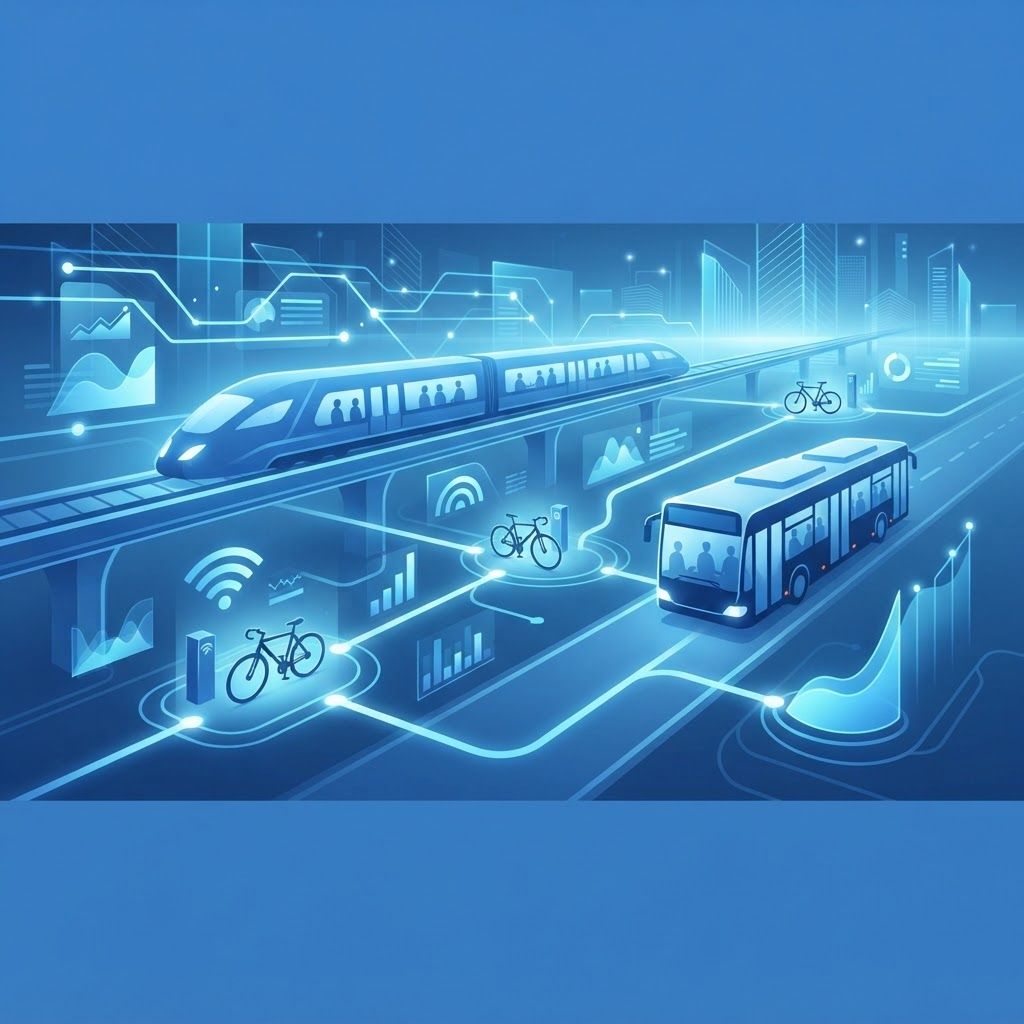
Getting Around North Hertfordshire Without a Car
North Hertfordshire presents an interesting transport picture. Along its main corridors, public transport is genuinely excellent, with frequent trains to London and Cambridge and regular buses linking the towns. Away from those corridors, in villages spread across chalk downland and farmland, provision is thinner and requires more planning. Understanding both realities is the key to travelling effectively in the district without relying on a private car.
The good news is that the range of options has broadened considerably. Alongside conventional trains and buses, residents now have access to demand-responsive minibuses, community transport, cycle hire, car clubs and increasingly integrated digital ticketing. Combining these intelligently makes car-free living viable for many households, and car-light living achievable for most.
The Top 10 Public Transit Services in North Hertfordshire
1. Thameslink Rail Services
Thameslink provides the district's most valuable single connection, running through Hitchin and Letchworth Garden City and offering cross-London services without interchange. Passengers can reach St Pancras International, Farringdon, London Bridge, Gatwick Airport and the south coast directly. Frequent departures throughout the day, modern air-conditioned trains and good accessibility make it the backbone of long-distance commuting from the district.
2. Great Northern Rail Services
Great Northern operates commuter trains from Hitchin, Letchworth, Baldock, Ashwell and Morden, and Royston into London King's Cross and Moorgate. It also provides the local link between the district's towns, which many residents use for short hops between Letchworth and Hitchin rather than driving. Season tickets and flexi-season products serve regular commuters.
3. Arriva Bus Network
Arriva runs high-frequency services linking Hitchin, Letchworth, Baldock and Stevenage, with additional routes serving residential estates and employment sites. Contactless payment with daily fare capping, real-time tracking through its app, and fully accessible low-floor vehicles make everyday bus travel straightforward on these corridors.
4. HertsLynx Demand-Responsive Transport
HertsLynx is the most significant innovation in the district's rural transport. Rather than following a fixed route, minibuses respond to bookings made through an app or by telephone, collecting passengers from convenient points and routing dynamically. This has opened up travel for village residents who previously had one or two bus journeys per day, and it connects to rail stations and town centres for onward travel.
5. Stagecoach East Services
Serving Royston, Baldock and the Cambridgeshire border, Stagecoach East links the eastern side of the district with Cambridge and surrounding towns. For residents working or studying in Cambridge who prefer bus to rail, or who live away from a station, these services are essential.
6. Centrebus and Independent Bus Operators
Centrebus and other independents operate routes that larger companies do not, including cross-boundary links to Luton and Bedfordshire and county-supported village services. These often run on specific days timed around markets and medical appointments, and they are the difference between isolation and access for many rural residents.
7. Community Transport and Dial-a-Ride Schemes
Volunteer car schemes and accessible minibus services operate across North Hertfordshire, providing door-to-door transport for people who cannot use conventional public transport. Typical journeys include hospital appointments, shopping trips and social clubs. Vehicles are wheelchair accessible and drivers assist passengers from door to door, which conventional services cannot offer.
8. School and College Transport Services
Hertfordshire County Council coordinates home-to-school transport, including dedicated school buses, subsidised passes on public services and specialist transport for pupils with additional needs. Many of these services are open to fare-paying passengers, which usefully supplements general provision in rural areas during term time.
9. Cycle Networks and Bike Hire Schemes
Cycling is a genuine transit mode in the district, especially in Letchworth Garden City, whose planned layout includes wide verges and off-road paths, and in Hitchin, where the town centre is compact. Expanded cycle parking at stations supports combined bike and rail journeys, and electric bike availability has made the chalk hills far less daunting for everyday riders.
10. Car Clubs and Shared Mobility
Car club vehicles available by the hour fill the gap for journeys that public transport cannot serve, such as bulky shopping trips or visits to rural venues. Combined with rail and bus for regular travel, a car club membership allows many households to reduce from two cars to one, or to none, without losing flexibility.
Practical Tips for Combining Services
Plan journeys using multimodal apps that display train, bus and walking options together, since the fastest route often involves two modes. Check last departure times carefully, especially for rural bus services, which frequently finish in the early evening. Use contactless payment where available for automatic capping. If you live in a village, register with HertsLynx and your local community transport scheme in advance, so the option is ready when you need it.
Accessibility Across the Network
Buses in the district are almost universally low-floor with wheelchair spaces and priority seating. Station accessibility varies, with larger stations offering step-free access and assistance bookable through the national Passenger Assist system. Community transport provides the highest level of individual support for those who need it. Anyone with specific requirements should contact operators in advance to confirm arrangements.
Trends and Future Direction
Three developments are shaping local public transport. Demand-responsive services have moved from experiment to established provision and are likely to expand further. Fleet electrification is progressing, improving air quality in town centres. And integrated digital ticketing continues to advance, moving toward a system where a single payment method covers rail, bus and shared mobility across a whole journey.
Final Thoughts
North Hertfordshire offers a more complete public transport picture than its rural character might suggest. Rail connectivity is outstanding, town bus services are frequent and accessible, and demand-responsive and community transport increasingly cover the rural gaps. With a little planning, most journeys within and beyond the district can be made without a private car.
Want your brand featured in front of decision-makers? Publish a guest post or get a link insertion in our guides through AAMAX's guest post and link insertion service.
Helpful Links
 SponsoredAAMAX — Full-Service Digital Agency
Write for Us
Share your expertise with our readers. We welcome guest contributions from industry specialists.
Pitch your idea