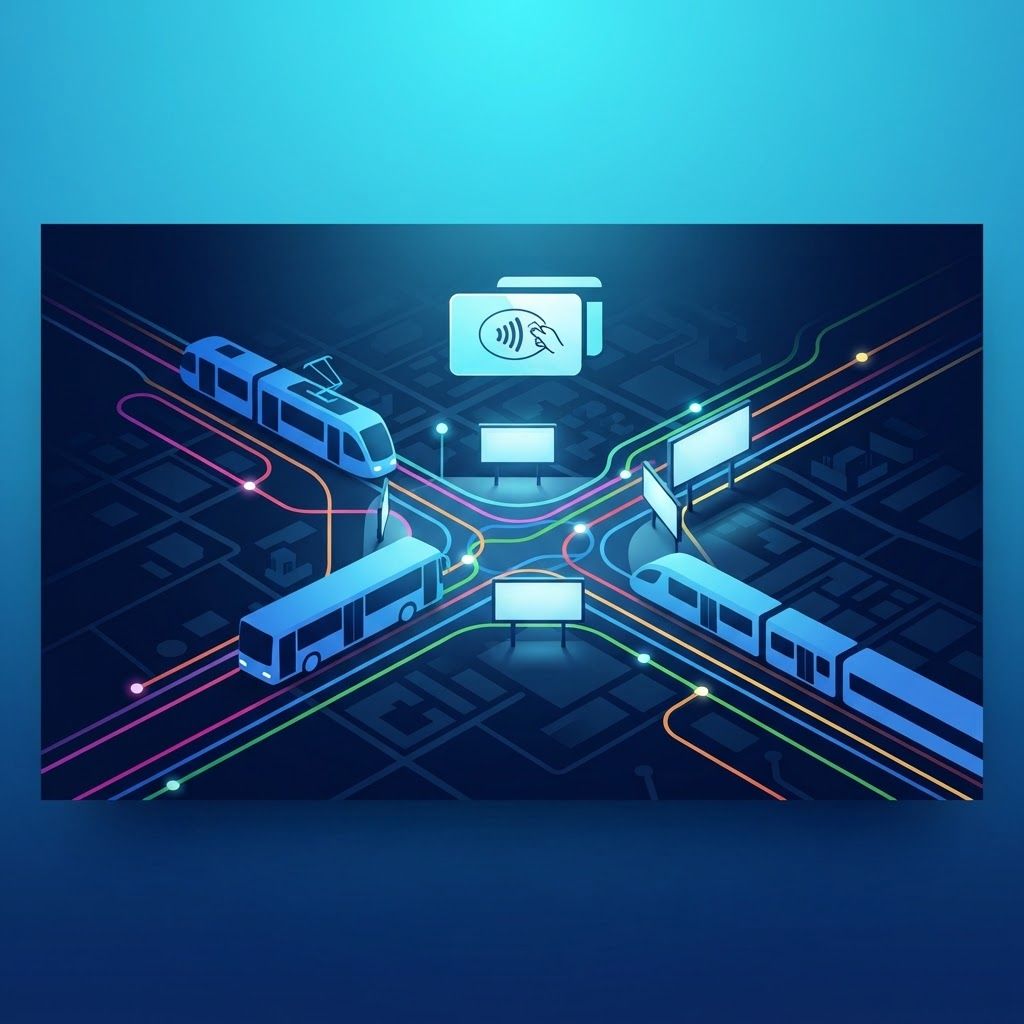
Public transport in Bury has improved markedly over the past few years, largely because of structural change rather than incremental tweaks. Greater Manchester's move to a franchised bus network under the Bee Network brand has aligned bus and tram fares, standardised vehicles and information, and introduced contactless capping that removes the guesswork from ticket buying.
Geographically, Bury benefits from being a terminus rather than a through point. The Metrolink line ends at the interchange, which means high frequencies and reliable seat availability for passengers boarding in the town centre, and bus services are built around connecting into it.
The Top 10 Public Transit Services in Bury
1. Metrolink Bury Line
The single most important transit service in the borough. Trams run from Bury Interchange through Radcliffe, Whitefield and Prestwich into Manchester city centre and onwards across the network. Services are frequent throughout the day, run late into the evening, and every stop and vehicle is step-free, which makes it genuinely accessible for wheelchair users, pushchairs and luggage.
2. Bury Interchange
More than a bus station, the interchange is the hub that makes multi-mode travel practical. Bus stands, the Metrolink terminus and the East Lancashire Railway's Bolton Street station are close together, with covered waiting areas, live departure information, staffed travelshop facilities and step-free access. Its design keeps interchange times short and sheltered.
3. Bee Network Bus Services
Franchised buses now operate across the borough under a single brand with common fares, integrated capping and consistent standards. Practically, this means you no longer need to know which company runs which route in order to buy the right ticket, and connecting between operators no longer costs extra.
4. Bee Network Contactless and Capping
The ticketing system itself deserves recognition as a service. Tapping a contactless card or device on buses and trams triggers automatic daily and weekly capping, so passengers pay no more than the relevant cap regardless of how many journeys they make. This has removed the historic risk of buying the wrong product and overpaying.
5. Local Link and Demand Responsive Transport
Serving areas where fixed routes are not viable, demand responsive services allow passengers to book journeys within defined zones, with vehicles routing according to bookings. This is valuable for outlying parts of the borough, employment sites with irregular shift patterns, and passengers with limited mobility.
6. Bury Community Transport
Providing dial-a-ride style accessible minibus journeys and group transport for community organisations, this service supports residents who cannot easily use mainstream buses. Volunteer driver schemes assist with medical appointments and shopping trips, filling a genuine social need.
7. East Lancashire Railway
While primarily a heritage attraction, the East Lancashire Railway provides real transport links between Heywood, Bury, Ramsbottom and Rawtenstall on operating days. For visitors it functions as both journey and destination, and for residents it offers an enjoyable alternative route into Rossendale.
8. Bee Network Cycle Hire and Active Travel Links
Public transport increasingly includes cycling as a first and last mile solution. Cycle hire provision, secure parking at interchanges and the growing Bee Network active travel routes allow residents to combine riding with tram travel, extending the practical catchment of each stop considerably.
9. Accessible Travel and Assistance Services
Across the network, accessibility provision has become a service in its own right: audio-visual next stop announcements, wheelchair spaces, priority seating, ramp deployment training for drivers, and travel assistance cards that help passengers communicate needs discreetly. Travel training is available for people gaining confidence using public transport.
10. School and College Transport Services
Dedicated school services and discounted young person travel products carry large numbers of pupils and students daily. These services reduce peak congestion around schools and give young people independent mobility, with photocard-based concessions keeping costs manageable for families.
Getting the Most From the Network
Use contactless rather than buying paper tickets, since capping protects you automatically and there is no need to predict your journey count. If you regularly use both bus and tram, capping applies across modes, so mixing is no longer financially penalised.
Plan around the interchange. Because it combines modes, journeys that look complicated on a map are often simple in practice. Check live departure information rather than printed timetables, particularly at peak times and during disruption, since real-time data is reliable across most of the network.
For outlying areas, check evening and Sunday frequencies before committing to a return journey by public transport. Demand responsive options may be available where scheduled services have finished.
Accessibility in Practice
Metrolink is fully step-free from street to tram, which makes it one of the most accessible modes in the region. Buses are low floor with ramps, and drivers receive training in deploying them. Passengers requiring assistance can travel with a companion under certain concessionary arrangements, and assistance cards allow needs to be communicated without lengthy explanation.
Trends Shaping Local Transit
Electrification of the bus fleet continues as depot charging infrastructure expands, reducing both emissions and noise in residential areas. Fares integration is extending towards local rail, which will complete the Bee Network vision of a single system with one ticketing approach. Real-time information and app-based journey planning have become standard expectations, and active travel infrastructure is increasingly designed as part of the public transport network rather than separately from it.
Final Thoughts
Bury's public transport is one of the borough's strongest practical assets. The combination of a tram terminus, an integrated interchange, franchised buses with capped contactless fares and community transport provision means most journeys within Greater Manchester are realistically achievable without a car. Tap in, use live information, and let the interchange do the hard work.
Want your brand featured in front of decision-makers? Publish a guest post or get a link insertion in our guides through AAMAX's guest post and link insertion service.
Helpful Links
 SponsoredAAMAX — Full-Service Digital Agency
Write for Us
Share your expertise with our readers. We welcome guest contributions from industry specialists.
Pitch your idea