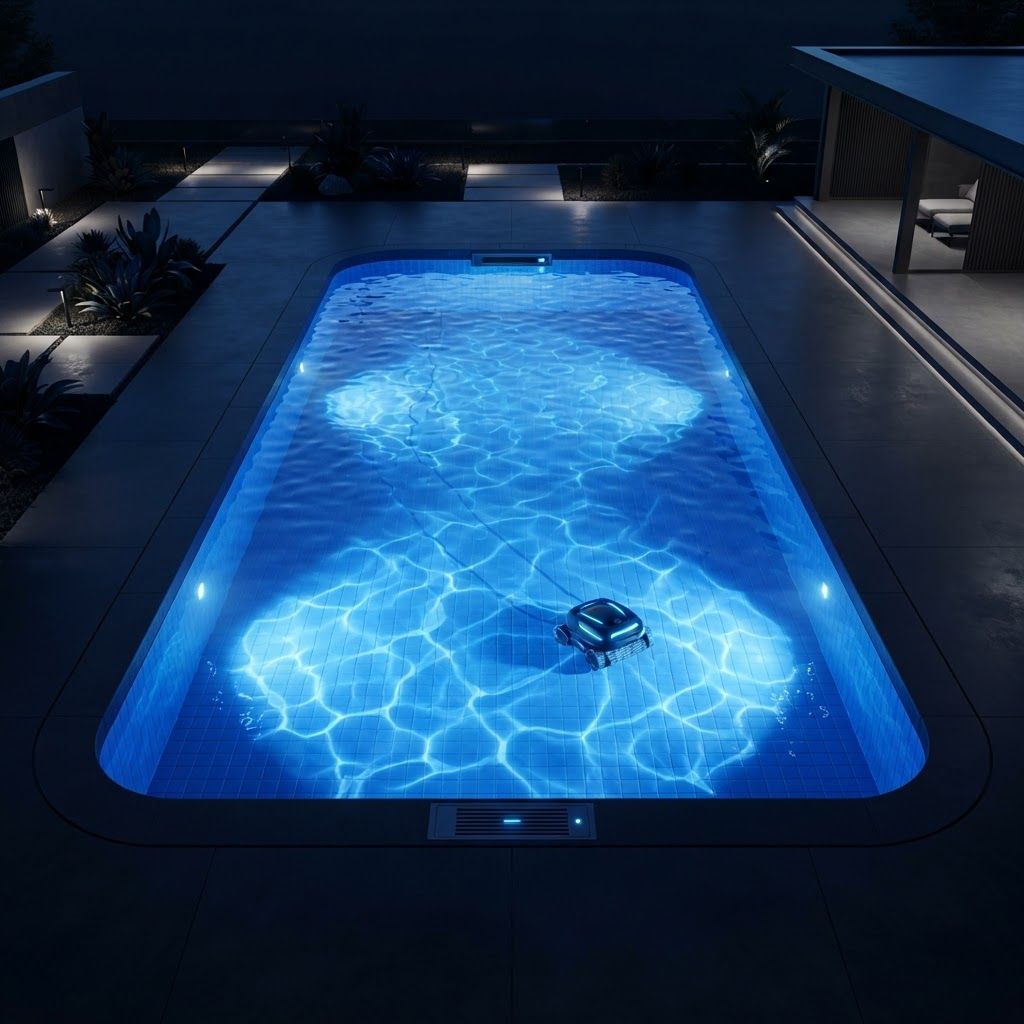
Pool Ownership in Hampshire
Swimming pools were once rare in the UK outside of a small number of country estates. That has changed markedly. Larger properties in the villages surrounding Winchester increasingly feature outdoor pools, while indoor pools and swim spas have appeared in renovated homes and new builds. Hot tubs and swim-spas are now common even in modest suburban gardens.
British pool ownership carries specific challenges. The swimming season is short, meaning pools spend much of the year covered or dormant, which creates its own maintenance demands. Temperature variation stresses equipment. Leaf fall from Hampshire's abundant mature trees loads filtration systems in autumn. And Winchester's hard chalk-derived water complicates chemical balancing significantly.
What Pool Maintenance Actually Involves
Regular service visits typically include water testing and chemical adjustment, skimming and brushing, vacuuming, emptying skimmer and pump baskets, backwashing or cleaning filters, and inspecting equipment for developing faults.
Periodic work includes deep cleaning, filter media replacement, heater servicing, pump and motor maintenance, cover repair and replacement, and leak detection. Seasonal work covers winterisation in autumn and reopening in spring, both of which materially affect pool longevity.
Ten Pool Service Providers in the Winchester Area
Winchester Pool Services offers comprehensive maintenance contracts for domestic pools, with scheduled visits and full water management. Its contract model means owners never have to think about chemistry, which is the main reason people outsource.
Itchen Valley Pools serves rural properties around the city, where larger outdoor pools and more significant leaf ingress demand robust filtration and frequent attention.
Hampshire Pool and Spa Care covers both swimming pools and hot tubs. Spa water chemistry differs considerably from pool chemistry due to higher temperatures and much smaller volumes, which makes balance more volatile.
Cathedral Aquatic Maintenance specialises in indoor pools, where ventilation, humidity control and condensation management are as important as water treatment. Poor air handling damages building fabric far faster than most owners anticipate.
St Cross Pool Engineering focuses on equipment: pumps, filters, heaters, chlorinators and control systems. Its diagnostic and repair capability complements the routine cleaning offered by service-focused firms.
Weeke Water Treatment concentrates on chemistry and alternative sanitation, including salt chlorination, UV systems and ozone treatment. Interest in reduced-chlorine systems has grown among families and those with sensitive skin.
Wessex Pool Refurbishment handles renovation work: retiling, liner replacement, coping repair and structural crack remediation. Older pools installed decades ago are now reaching the point where refurbishment is required.
Kings Worthy Hot Tub Services provides dedicated spa care, including drain-and-refill cycles, filter management and jet system cleaning. Hot tubs require more frequent water changes than pools due to bather load relative to volume.
Alresford Road Pool Covers and Safety installs and maintains covers, including thermal covers, safety covers and automatic systems. Covers reduce heat loss, evaporation and chemical consumption substantially while improving safety.
Southdown Leak Detection completes the list with specialist leak location using pressure testing and acoustic methods, avoiding the destructive excavation that guesswork causes.
Water Chemistry Explained Simply
Balanced pool water depends on several interrelated parameters. Sanitiser level, usually chlorine or bromine, controls bacteria and algae. pH determines how effectively the sanitiser works and affects comfort and equipment corrosion. Total alkalinity buffers pH against sudden swings. Calcium hardness protects surfaces and equipment from either scaling or aggressive water.
Winchester's hard water means calcium hardness is naturally high, increasing scaling risk on heaters, tiles and pool surfaces, particularly when pH drifts upward. Managing this requires consistent monitoring rather than occasional correction. Professional services test comprehensively rather than relying on simple strip tests, which are useful for spot checks but insufficient for proper management.
Seasonal Care Through the Year
Spring reopening involves removing and cleaning covers, restarting circulation, shock treating water, rebalancing chemistry and commissioning heating. Doing this properly prevents the persistent algae problems that plague rushed openings.
Summer is peak season, with higher bather loads demanding more frequent testing and filtration hours. Sunlight degrades chlorine, so stabiliser levels matter for outdoor pools.
Autumn brings leaf management. Regular skimming and net covers prevent organic matter decomposing in the water, which consumes sanitiser and stains surfaces.
Winterisation is the most consequential task. Water levels are lowered, lines are drained or protected against freezing, equipment is isolated, chemistry is adjusted for dormancy and the cover is fitted. Freeze damage to pipework and pumps is the single most expensive avoidable pool failure in the UK climate.
Running Costs and Efficiency
Pool ownership costs are dominated by heating and pump running. Variable-speed pumps deliver substantial energy savings over single-speed units by running longer at lower speeds. Heat pumps have largely replaced gas heating for outdoor pools, offering far better efficiency in mild conditions.
Thermal covers are the highest-return investment available. Evaporation is the primary heat loss mechanism in outdoor pools, and a good cover reduces heating demand dramatically while also cutting chemical consumption and cleaning workload.
Safety Responsibilities
Domestic pool owners carry real responsibility. Secure perimeter fencing or safety covers prevent unsupervised access by children. Handrails and non-slip surfaces reduce accidents. Chemicals must be stored securely, separated, and away from living areas, as some combinations react dangerously.
For properties let as holiday accommodation, additional duties apply, including risk assessment and appropriate signage, and insurers typically impose specific requirements.
Choosing a Pool Service Provider
Ask about technician qualifications, ideally including recognised pool industry training. Confirm public liability insurance. Clarify precisely what a service visit includes and how chemicals are charged, as some contracts include them while others bill separately.
Consistency matters enormously in pool care. Water chemistry responds to cumulative management, not isolated interventions, and a provider who attends reliably on schedule will deliver far better results than one who visits sporadically, regardless of technical skill.
Want your brand featured in front of decision-makers? Publish a guest post or get a link insertion in our guides through AAMAX's guest post and link insertion service.
Helpful Links
 SponsoredAAMAX — Full-Service Digital Agency
Write for Us
Share your expertise with our readers. We welcome guest contributions from industry specialists.
Pitch your idea