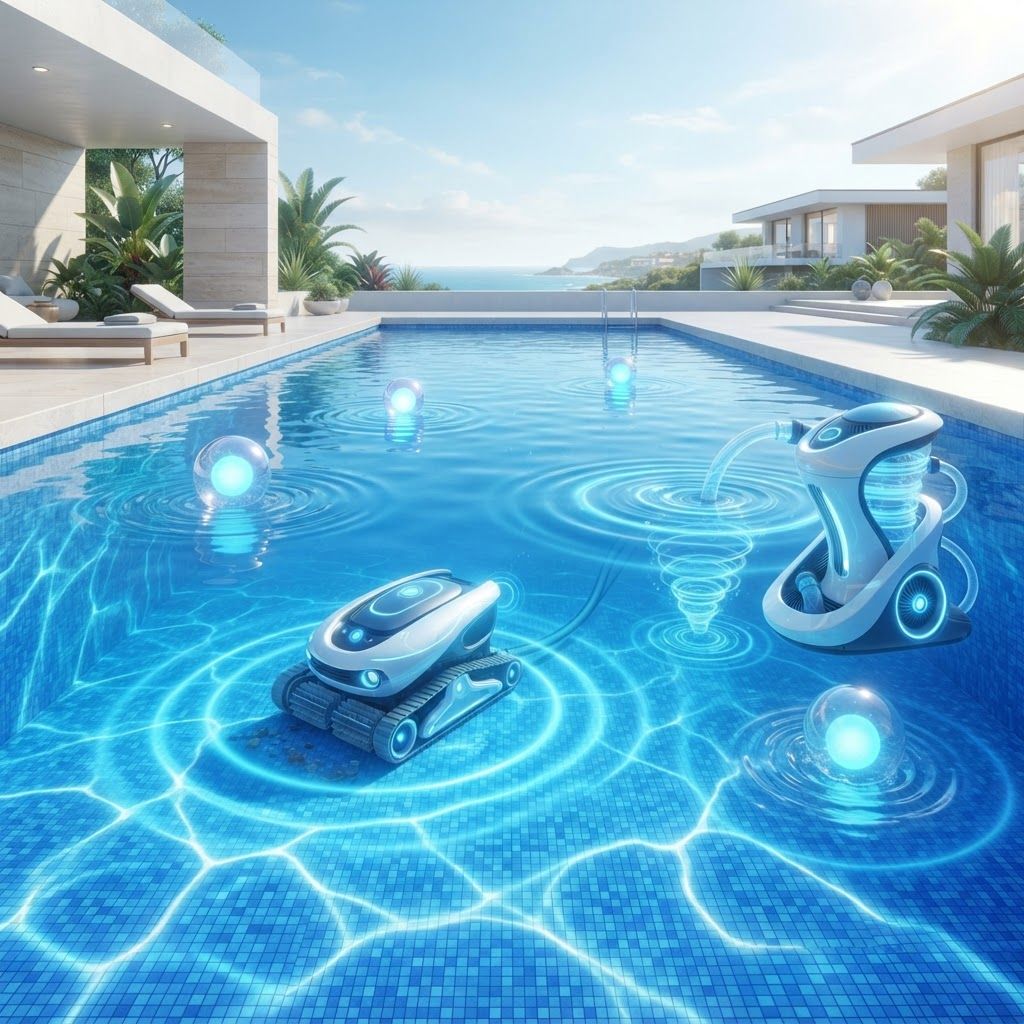
Pools in a Rural and Affluent District
North Hertfordshire's larger detached properties, converted barns and rural homes support a significant number of private swimming pools, hot tubs and swim spas. Many are outdoor pools used seasonally, while indoor pools in converted outbuildings and purpose-built pool houses operate year-round. Alongside these, a growing number of households have installed hot tubs and swim spas, which require comparable chemical management in a much smaller volume of water.
Maintaining any of these properly requires more expertise than is generally appreciated. Water chemistry, filtration, circulation, heating and sanitisation all interact, and neglect in one area quickly manifests as problems elsewhere.
Water Chemistry Fundamentals
Balanced pool water depends on several interdependent parameters. Free chlorine or an alternative sanitiser must be maintained within a defined range to control bacteria and algae. The pH must sit within a narrow band, because sanitiser effectiveness falls sharply as pH rises. Total alkalinity buffers pH against sudden swings. Calcium hardness affects whether water is corrosive or scale-forming. Cyanuric acid stabilises chlorine against ultraviolet degradation in outdoor pools.
North Hertfordshire's hard water makes calcium hardness a particular issue. Water drawn from the chalk aquifer already carries high calcium levels, and as pool water evaporates and is topped up, calcium concentrates further. The result is scale formation on tile lines, heat exchangers, pump seals and pool surfaces, along with cloudy water that resists clearing.
Professional pool technicians manage this through regular testing, partial water replacement, sequestering agents that hold calcium in solution, and careful pH control. Homeowners relying on test strips alone frequently miss the gradual drift that leads to scale.
Filtration and Circulation
Filtration removes the particulate matter that chemistry alone cannot address. Sand filters are common and require periodic backwashing and media replacement every several years. Cartridge filters offer finer filtration but need regular cleaning and eventual replacement. Diatomaceous earth filters deliver the finest filtration but demand more maintenance.
Circulation matters as much as filtration. Water must turn over completely several times daily, and dead spots where flow is poor become algae reservoirs. Technicians assess pump sizing, check for suction-side air leaks, verify flow rates and ensure that returns are directed to promote good circulation.
Variable speed pumps have become a significant efficiency upgrade. Running a pump at lower speed for longer periods uses dramatically less electricity than short bursts at full speed while delivering better filtration, and the payback period on replacement is often surprisingly short.
Sanitisation Options
Traditional chlorine dosing remains the most common approach, but alternatives have grown in popularity. Salt chlorination systems generate chlorine electrolytically from dissolved salt, producing gentler water with less handling of chemicals, though the cell requires periodic descaling, which is more frequent in hard water areas.
Ultraviolet and ozone systems reduce chlorine demand substantially by inactivating organisms as water passes through the plant room, and are popular in indoor pools where chloramine odour and eye irritation are concerns. Bromine is often preferred in hot tubs because it remains stable at higher temperatures.
Each system has trade-offs, and a good technician will explain them rather than promoting a single solution.
Seasonal Services
Outdoor pools follow an annual cycle. Spring opening involves cover removal and cleaning, reconnecting and testing plant, balancing water chemistry, shock dosing and bringing the pool up to temperature. Through the season, weekly or fortnightly maintenance visits cover testing, dosing, brushing, vacuuming, skimmer and pump basket clearing and filter management.
Winterisation is equally important. Draining vulnerable pipework, adding winter chemicals, protecting plant from frost damage and fitting an appropriate cover prevents the freeze damage that can crack pipes, pumps and heat exchangers. Poorly winterised pools generate expensive spring repairs.
Indoor pools run year-round and bring different challenges, principally humidity control. Dehumidification plant must be maintained or condensation will damage the building structure, and air handling requires periodic servicing alongside the pool itself.
Safety and Compliance
Private pools carry real safety responsibilities. Secure fencing and gates, compliant safety covers, appropriate depth markings and correctly specified drain covers that prevent entrapment are all important. Pools used by anyone beyond the immediate household, including holiday lets, which have grown in the district's rural areas, may fall under stricter requirements including water testing records and risk assessment.
Chemical storage also needs attention. Pool chemicals can react dangerously with each other and must be stored separately, in ventilated spaces, away from children and ignition sources.
Choosing a Pool Service Provider
Look for membership of the Swimming Pool and Allied Trades Association, which sets standards for the sector. Ask what qualifications technicians hold, particularly in pool water treatment and plant maintenance, and confirm insurance.
Clarify what a maintenance contract includes: visit frequency, chemicals supplied or charged separately, testing methodology, what is covered in the event of equipment failure and what response times apply. Providers who leave a written report after each visit, recording test results and actions taken, allow you to see trends and hold them accountable.
Ask specifically about experience with hard water. Providers working regularly in this district will discuss calcium management unprompted.
Energy Efficiency and Running Costs
Pool heating dominates running costs. Good insulation, a well-fitted cover that reduces evaporation dramatically, variable speed pumps, efficient heat pump heating and sensible temperature setpoints together transform operating expense. Many providers now offer efficiency audits alongside maintenance.
Final Thoughts
The best pool cleaning and maintenance services in North Hertfordshire combine qualified water chemistry expertise with practical plant knowledge and a clear understanding of the local hard water challenge. Regular professional maintenance protects both water quality and the substantial investment that a pool or spa represents.
Want your brand featured in front of decision-makers? Publish a guest post or get a link insertion in our guides through AAMAX's guest post and link insertion service.
Helpful Links
 SponsoredAAMAX — Full-Service Digital Agency
Write for Us
Share your expertise with our readers. We welcome guest contributions from industry specialists.
Pitch your idea