

Pool Care in North East Lincolnshire
Swimming pools are less common in North East Lincolnshire than in warmer regions, but the market is steady and growing. Private indoor pools in larger properties around Waltham, Humberston, Healing and the Wolds-edge villages, outdoor pools at holiday parks and caravan sites along the Cleethorpes coast, hot tubs and swim spas in domestic gardens, and commercial pools in hotels, gyms and leisure centres all require regular professional attention. The borough's climate makes that attention more important rather than less: a cool, damp maritime environment encourages algae growth in outdoor water and places heavy demands on ventilation, dehumidification and heating in indoor pool halls.
Pool maintenance is a genuinely technical discipline. It combines water chemistry, filtration engineering, mechanical plant knowledge and, for commercial sites, legal compliance with public health standards. Owners who treat it as simple cleaning tend to encounter cloudy water, damaged surfaces, corroded plant and, in the worst cases, health risks.
Routine Cleaning and Maintenance Services
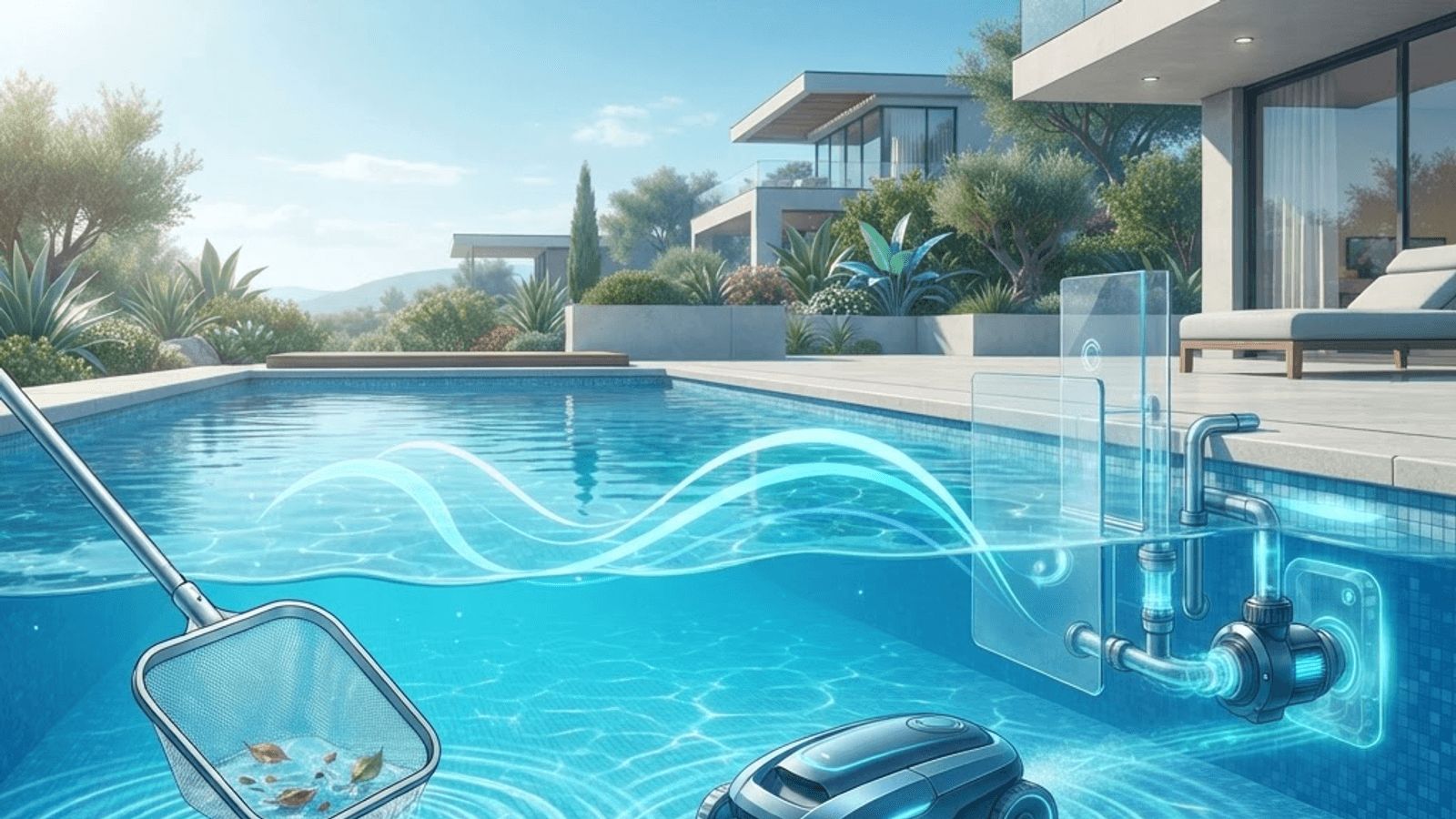
A standard maintenance visit covers a defined set of tasks. Technicians skim floating debris, brush walls and waterline tiles to prevent biofilm, vacuum the floor manually or with robotic units, empty skimmer and pump strainer baskets, and backwash or clean filters according to pressure readings. They test and balance the water, top up chemicals, inspect pumps and heaters for unusual noise or leakage, and check that circulation and turnover rates remain correct.
Service frequency depends on use. A heavily used commercial pool may need daily attention with professional visits several times a week. A private indoor pool commonly runs on weekly or fortnightly visits. Outdoor pools require intensive care in summer and reduced but still essential attention during closure. Hot tubs, with their small water volume and high bather load relative to that volume, need disciplined weekly checks and periodic full drain-downs.
Water Chemistry and Why It Matters
Balanced water is the foundation of everything else. Sanitiser levels, whether chlorine, bromine or a salt-chlorination system, must be sufficient to control bacteria without becoming irritating. pH must be held within a narrow band, because water that drifts too acidic corrodes metal components, grout and pool surfaces, while water that drifts too alkaline causes scale, cloudiness and dramatically reduces sanitiser effectiveness.
Total alkalinity acts as a buffer preventing rapid pH swings, calcium hardness protects plaster and tile grout from being leached by soft water, and cyanuric acid stabilises chlorine in outdoor pools exposed to sunlight. Professional technicians test all of these rather than relying on a simple two-factor strip, and they interpret the results as a system. Combined chlorine, which produces the harsh smell often mistaken for too much chlorine, actually indicates insufficient free chlorine and the need for shock treatment or improved ventilation.
Plant Room, Filtration and Heating
Behind every well-run pool is a plant room. Circulation pumps, sand or cartridge filters, heat exchangers or heat pumps, dosing systems, UV or ozone secondary disinfection units and control panels all need servicing. Sand media in filters degrades and requires replacement periodically. Cartridge elements need deep cleaning and eventual renewal. Pump seals wear, pipework develops leaks and control probes drift out of calibration.
Heating is a significant consideration locally. Given regional energy costs and cool ambient temperatures, many owners have moved to air-source heat pumps, high-efficiency boilers and, crucially, good insulating covers. A quality thermal cover is the single most cost-effective upgrade for most pools, dramatically reducing evaporation and heat loss. Specialists in the borough increasingly advise on energy efficiency as a core part of their service rather than an afterthought.
Indoor Pool Environments
Indoor pools in this climate create a specific challenge: humidity. Warm water evaporating into an enclosed hall condenses on cold surfaces, causing corrosion of metalwork, damage to plaster and timber, mould growth and, over time, structural problems. Proper air handling with dehumidification, correct air-to-water temperature differentials and adequate ventilation are essential. Experienced local companies assess the pool hall environment as a whole, not just the water, because a beautifully maintained pool inside a poorly ventilated building will still generate expensive damage.
Seasonal Opening and Closing
Outdoor pools in North East Lincolnshire typically operate for a limited season. Closing involves balancing the water, adding winterising chemicals, lowering the level below skimmers, draining and protecting pipework and plant against freezing, and fitting a secure winter cover. Skipping any of these steps risks cracked pipework and pump damage during the hard frosts the region experiences.
Opening in spring reverses the process: removing and cleaning the cover, refilling, restarting and priming the plant, deep cleaning surfaces, shock treating and then rebalancing the water over several days. Professional opening and closing services are popular precisely because a mistake at either stage can cost far more than the service fee.
Commercial Compliance
Pools open to the public, including those at hotels, holiday parks, gyms and schools across the borough, carry legal duties. Operators must follow recognised guidance on pool water treatment, maintain written operating procedures, keep testing records, carry out microbiological sampling and manage risks including Legionella in associated systems. Specialist contractors support this with documented service visits, laboratory sampling, staff training and audit-ready record keeping. For commercial clients this compliance support is often more valuable than the physical cleaning itself.
Repairs, Refurbishment and Upgrades
Beyond maintenance, pool specialists handle leak detection, liner replacement, tile and grout repair, resurfacing, pump and filter replacement, upgrading to variable-speed pumps and automated dosing, and installing modern lighting and controls. Leak detection in particular is a skilled task, using pressure testing and dye methods to locate losses that might otherwise be dismissed as evaporation.
Choosing a Pool Service Provider
Look for technicians with recognised pool industry qualifications and membership of a professional body such as the trade association covering the British pool and spa sector. Confirm public liability insurance and, for commercial work, evidence of relevant water hygiene competence. Ask for a written schedule setting out exactly which tasks are included at each visit, how chemicals are charged, response times for breakdowns and whether plant servicing is inside or outside the contract.
Local knowledge counts. A provider who already services pools in the borough understands the water supply characteristics, the humidity challenges of indoor halls near the coast and the realities of a short outdoor season. Request references from comparable installations and review the detail of their reporting, because clear documentation is the mark of a professional operation.
Final Thoughts
Pool ownership in North East Lincolnshire is entirely practical with the right support. Consistent water chemistry, well-maintained plant, sensible energy management and proper seasonal procedures protect both the investment and the enjoyment of the facility. Whether managing a private indoor pool, a garden hot tub or a commercial leisure suite, appointing a qualified, insured and properly documented specialist is the most reliable route to clean, safe and cost-efficient water all year round.
Want your brand featured in front of decision-makers? Publish a guest post or get a link insertion in our guides through AAMAX's guest post and link insertion service.
Helpful Links
 SponsoredAAMAX — Full-Service Digital Agency
Write for Us
Share your expertise with our readers. We welcome guest contributions from industry specialists.
Pitch your idea

