Pool Care in a Climate That Demands Indoor Thinking
Swimming pools in Fermanagh and Omagh are almost entirely indoor or enclosed. The district's rainfall and modest summer temperatures make open-air pools impractical for most of the year, so the local market centres on indoor domestic pools, hotel and guesthouse leisure facilities, spa pools, swim spas and a very large number of domestic hot tubs.
That indoor emphasis changes the maintenance picture considerably. Enclosed pools bring humidity control, ventilation, condensation management and air quality into the equation alongside water chemistry. A pool hall with inadequate dehumidification will corrode fittings, damage the building structure and produce the harsh chloramine smell that people wrongly attribute to excessive chlorine.
Hot tubs deserve particular mention. Their small water volume and high temperature make chemistry far less forgiving than a full-size pool, and neglected tubs develop bacterial problems quickly. Professional servicing is genuinely worthwhile.
What Professional Pool Maintenance Involves
Water chemistry is the core discipline. Sanitiser levels, pH, total alkalinity, calcium hardness, cyanuric acid where relevant and combined chlorine all interact. Getting one wrong undermines the others, which is why systematic testing rather than guesswork is essential.
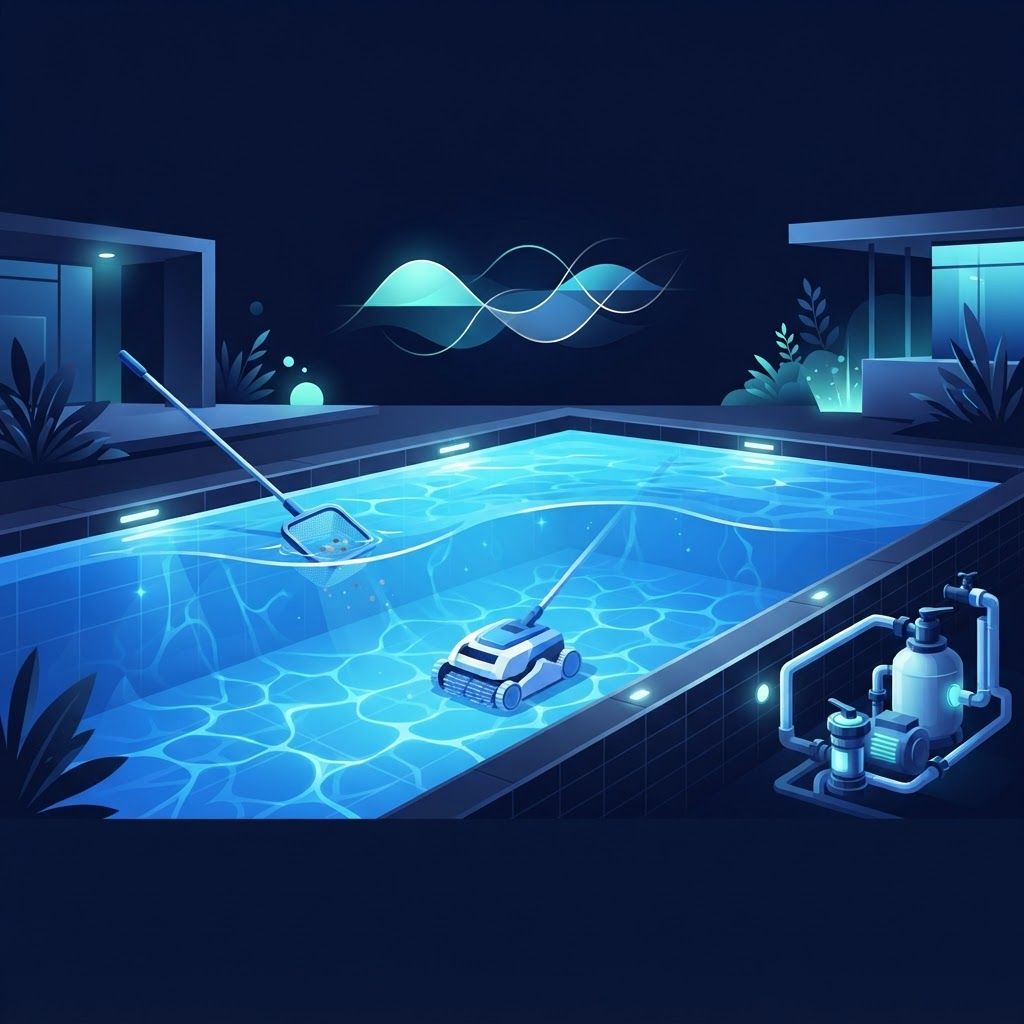
Physical cleaning covers brushing walls and floor, vacuuming, skimming the surface, emptying skimmer and pump baskets, and cleaning the waterline where oils and residues accumulate.
Filtration management includes backwashing sand filters, cleaning or replacing cartridge elements, checking pressure differentials and verifying turnover rates so the entire volume is filtered at the correct frequency.
Equipment servicing takes in pumps, heaters, heat pumps, dosing systems, UV and ozone units, actuators and controllers. Preventative servicing avoids the mid-season failures that close a pool.
Plant room and air handling checks complete the picture for indoor pools, covering dehumidification performance, ventilation rates and condensation control.
Ten Pool and Spa Service Providers
1. Erne Pool Services maintains domestic and commercial pools around Enniskillen with scheduled visits, full water testing and written reports after each service, giving owners a clear record of water quality over time.
2. Omagh Spa and Hot Tub Care specialises in hot tubs and swim spas, offering drain-and-refill services, filter replacement, chemical supply and repair work across the wider Tyrone area.
3. Lakeland Leisure Maintenance serves hotels, guesthouses and holiday complexes around the Erne with commercial pool contracts, plant maintenance and the record keeping that commercial operation requires.
4. Tyrone Pool Plant Engineers focuses on equipment: pumps, filters, heaters, dosing systems and controllers, handling both breakdown repair and planned replacement.
5. Fermanagh Water Treatment concentrates on chemistry and water quality, advising on sanitiser selection, salt chlorination, UV supplementation and balancing problems that resist routine correction.
6. Strule Pool Installations designs and builds indoor pools and swim spas, and maintains what it installs, which gives owners continuity of knowledge about their specific system.
7. Clogher Valley Hot Tub Services provides mobile servicing across the eastern district, valued for prompt response and for teaching owners proper routine care rather than fostering dependence.
8. Sperrin Pool Covers and Energy supplies covers, heat retention solutions, heat pump upgrades and insulation improvements, reducing the substantial running costs of heating an indoor pool.
9. Enniskillen Aquatic Repairs handles leak detection, liner repair and replacement, tiling and structural repair, resolving the water loss problems that can otherwise persist for years.
10. Drumragh Commercial Pool Compliance supports operators with testing regimes, microbiological sampling, record keeping and the operational procedures required for public and semi-public facilities.
Understanding Water Chemistry Simply
Sanitiser, most commonly chlorine or bromine, kills bacteria and oxidises contaminants. Its effectiveness depends heavily on pH, which should sit in a narrow band. Too high and chlorine becomes sluggish; too low and it dissipates quickly while corroding equipment and irritating skin.
Total alkalinity buffers pH against sudden swings. Without adequate alkalinity, pH bounces unpredictably with every addition of chemicals or fresh water. Correcting alkalinity before chasing pH is a fundamental principle.
Calcium hardness protects surfaces. Water that is too soft becomes aggressive and attacks grout, plaster and metal fittings, while excessive hardness causes scaling on heaters and tiles.
Combined chlorine, often called chloramine, results from chlorine reacting with organic contaminants such as sweat, cosmetics and urine. It is the source of the harsh smell and eye irritation associated with poorly managed pools, and the remedy is more effective oxidation and better ventilation rather than less chlorine.
Safety and Regulatory Considerations
Commercial and semi-public pools, including those in hotels, guesthouses and holiday complexes, operate under significant obligations. Written operating procedures, trained staff, regular microbiological testing and documented chemical records are expected, and insurers increasingly require evidence of professional maintenance.
Chemical handling carries real risk. Concentrated pool chemicals must be stored separately, never mixed, and handled with appropriate protection. Incidents involving acid and hypochlorite stored together are entirely avoidable and occasionally serious.
Physical safety matters equally. Secure covers, controlled access, correct depth marking and functioning emergency equipment protect users, particularly where children are present.
Energy Efficiency and Running Costs
Heating dominates pool running costs. A well-fitted thermal cover used whenever the pool is not in use is by far the highest-return investment available, cutting evaporation and heat loss dramatically.
Variable speed pumps offer substantial savings over fixed-speed units, running slowly for longer periods rather than at full power for shorter ones. Because power consumption rises sharply with speed, the savings are considerable.
Air source heat pumps have become the standard heating choice for pools, delivering several units of heat per unit of electricity consumed. For indoor pools, combined dehumidification and heat recovery systems recapture energy that would otherwise be vented.
Insulating pipework, optimising filtration run times and maintaining clean filters all contribute meaningfully to reducing consumption.
Getting the Most From a Service Contract
Define the frequency honestly. A heavily used hotel pool needs daily attention, a domestic indoor pool typically weekly or fortnightly, and a lightly used hot tub perhaps monthly with owner testing between visits.
Ensure reports are provided. A written record of readings and actions allows trends to be spotted before they become problems, and it forms the evidence base commercial operators need.
Ask what is included. Chemicals, filter media, consumables and callout response may be within the contract or charged separately, and clarity prevents disputes.
Finally, learn the basics yourself. Owners who understand their own test readings catch problems between visits and use their service provider more effectively. Across Fermanagh and Omagh, the best pool companies actively encourage that knowledge rather than guarding it.
Want your brand featured in front of decision-makers? Publish a guest post or get a link insertion in our guides through AAMAX's guest post and link insertion service.
Helpful Links
 SponsoredAAMAX — Full-Service Digital Agency
Write for Us
Share your expertise with our readers. We welcome guest contributions from industry specialists.
Pitch your idea