Plastics as an Engineering Material
Plastics have an image problem, yet in engineering terms they remain remarkable materials: light, corrosion resistant, electrically insulating, formable into complex geometries and, increasingly, recyclable. Across West Lancashire they appear in agricultural equipment, food packaging, electronics housings, medical components, construction products and point of sale displays.
The borough's plastics sector reflects this breadth. Rather than a handful of large converters, it consists of specialist businesses covering distinct processes: injection moulding for high-volume precision parts, vacuum forming for larger shallow components, extrusion for continuous profiles, rotational moulding for hollow products, and fabrication for one-off or low-volume work. Understanding which process suits a given part is often the most valuable decision a buyer makes.
Matching Process and Material to the Application
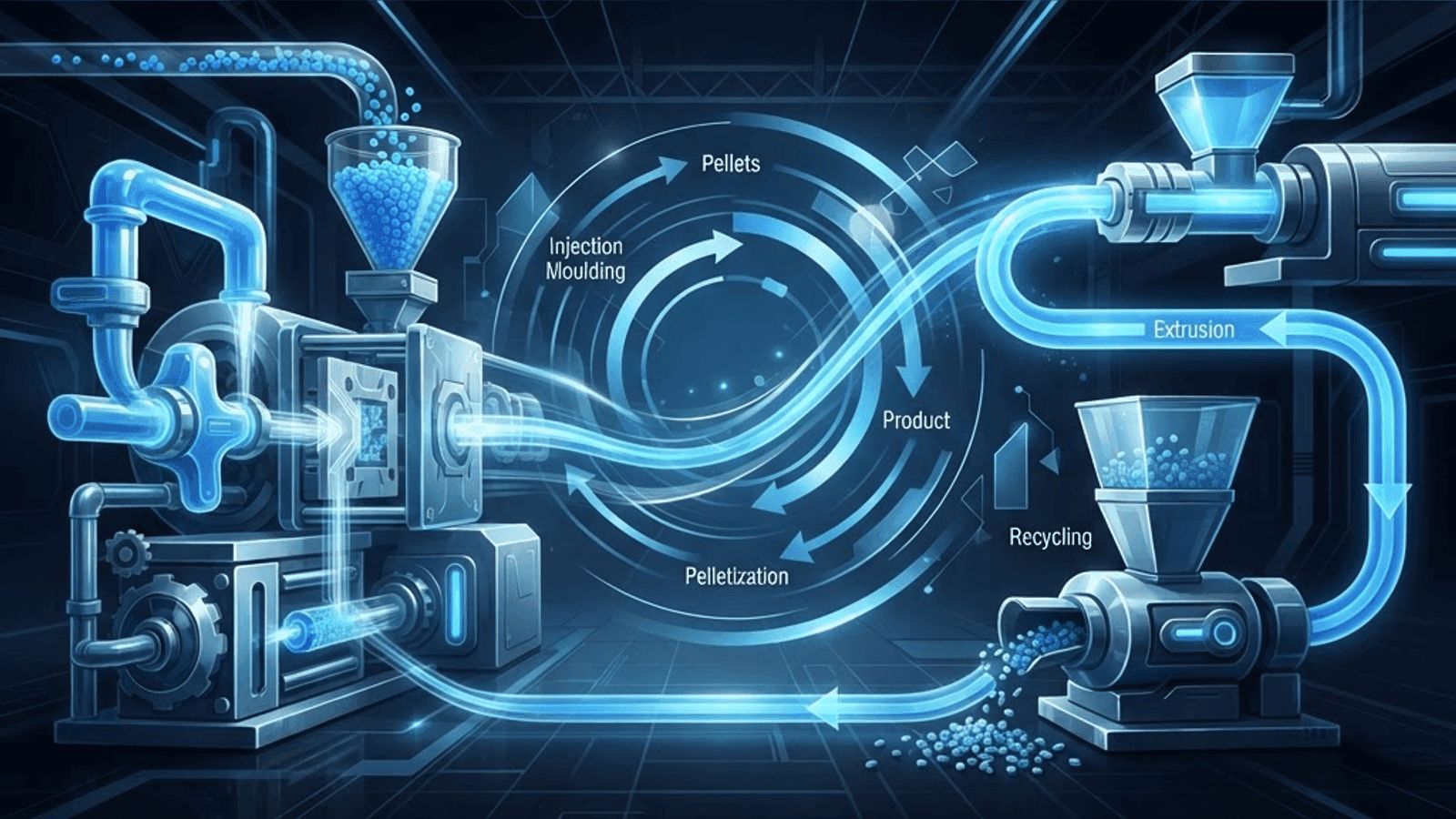
Injection moulding delivers excellent repeatability and low unit cost at volume, but requires significant tooling investment, making it unsuitable for small quantities. Vacuum forming uses much cheaper tooling and suits larger, simpler shapes in modest volumes. Extrusion produces continuous profiles, pipes and sheet economically. Rotational moulding creates large hollow items such as tanks. Fabrication from sheet material, using cutting, bending and welding, serves prototypes and low volumes where tooling cannot be justified.
Material choice is equally consequential. Food contact applications demand approved grades with full documentation. Outdoor products need ultraviolet stabilisation. Engineering components may require specific stiffness, impact resistance or temperature tolerance. A competent manufacturer will guide these decisions rather than simply quoting whatever the customer specifies.
The Top 10 Plastic Manufacturers in West Lancashire
1. West Lancs Plastics
An injection moulding business producing technical components for industrial and consumer applications, with in-house tool maintenance and dimensional inspection supporting consistent quality.
2. Skelmersdale Moulding Company
Focused on precision injection moulding for electronics and medical customers, operating cleaner production areas and maintaining full batch traceability for regulated work.
3. Ormskirk Vacuum Forming
Specialists in vacuum and pressure forming for machine guards, trays, covers and point of sale displays, with low tooling costs making short runs viable.
4. Burscough Extrusions
Producing extruded profiles, tubing and sheet in a range of polymers, including custom profile development for construction and industrial customers.
5. Pimbo Polymer Fabrication
A fabrication specialist cutting, bending and welding plastic sheet into tanks, enclosures, guards and ducting, ideal for bespoke and low-volume requirements.
6. Douglas Valley Rotational Moulding
Manufacturers of large hollow products including storage tanks, containers and agricultural components, built for durability in outdoor environments.
7. Tarleton Horticultural Plastics
Supplying growing trays, crates, film and irrigation components to the borough's horticultural sector, with products designed around the realities of intensive crop production.
8. Lathom Packaging Plastics
Producing food-grade packaging, trays and containers with appropriate certification, alongside advice on material reduction and recyclability.
9. Up Holland Engineering Plastics
Machining components from engineering polymers such as nylon, acetal and polyurethane, frequently replacing metal parts where weight or corrosion resistance matters.
10. Rufford Recycled Polymers
Focused on reprocessing post-industrial plastic waste into usable material, supporting manufacturers seeking recycled content without compromising performance.
Sustainability and Other Sector Trends
The circular economy now dominates industry discussion. Packaging taxes linked to recycled content, retailer commitments and consumer expectation have all pushed recycled material from a fringe option toward mainstream specification. Manufacturers able to process recycled feedstock consistently hold a real competitive advantage.
Material reduction runs alongside this, with lightweighting and thinner wall sections reducing both cost and environmental impact. Mono-material design, avoiding mixed plastics that cannot be recycled together, is increasingly requested. Bioplastics continue to develop, though performance and end-of-life infrastructure remain limiting factors. Automation and improved process monitoring have meanwhile raised quality consistency while controlling costs.
How to Choose a Plastics Manufacturer
Define the application thoroughly before approaching suppliers, including quantity, service environment, regulatory requirements and expected lifespan. Quantity is particularly decisive, since it determines whether tooling investment is sensible.
Discuss tooling ownership explicitly, confirming who pays, who owns the tool and what happens if you change supplier later. Ask for design for manufacture input early, as small geometry changes often improve quality and reduce cost significantly. Request material certification for regulated applications, and check inspection procedures. Finally, assess recycling and waste handling practices if sustainability forms part of your own reporting obligations.
Designing Parts for Successful Moulding
Many plastic component problems originate in design rather than production. Uniform wall thickness is the single most important principle, because thick sections cool more slowly than thin ones, producing sink marks, internal voids and warping. Where thickness must vary, gradual transitions perform far better than abrupt steps.
Draft angles allow parts to release cleanly from tooling, and omitting them causes drag marks or, worse, parts that jam in the mould. Generous internal radii reduce stress concentration and improve material flow, while sharp internal corners create weak points that fail under load. Ribs add stiffness far more efficiently than increasing wall thickness, provided they are proportioned correctly to avoid visible sink marks on the opposite face.
Gate position determines how material fills the cavity and therefore where weld lines and cosmetic marks appear. Experienced manufacturers in the borough routinely run flow simulation before tooling is cut, identifying these issues while changes still cost nothing. Involving them at concept stage rather than presenting a finished drawing consistently produces better parts at lower cost.
Final Thoughts
Plastics manufacturers in West Lancashire offer an unusually complete range of processes within a small area, from precision moulding and extrusion to fabrication and recycling. The right choice depends far more on matching process to application than on finding the lowest quote. Engaging a manufacturer early, sharing full requirements and taking their engineering advice seriously will almost always produce a better and more sustainable result.
Want your brand featured in front of decision-makers? Publish a guest post or get a link insertion in our guides through AAMAX's guest post and link insertion service.
Helpful Links
 SponsoredAAMAX — Full-Service Digital Agency
Write for Us
Share your expertise with our readers. We welcome guest contributions from industry specialists.
Pitch your idea