

Plastics: An Industry Under Scrutiny and Reinventing Itself
No manufacturing sector faces sharper public scrutiny than plastics, and none has changed more quickly in response. The industry in St. Helens reflects that shift. Producers here have moved from simply making parts as cheaply as possible to designing for recyclability, incorporating recycled feedstock, reducing wall thickness and material use, and helping customers replace unnecessary packaging with more durable alternatives.
It is worth being precise about what plastics do well. In medical devices, food safety, vehicle lightweighting, insulation, water infrastructure and electrical safety, polymers deliver performance that alternatives cannot match at acceptable cost or weight. The problem has rarely been the material itself but its use in short-lived, unrecoverable applications. The best plastics manufacturers understand that distinction and advise customers accordingly.
The Processes Behind the Products
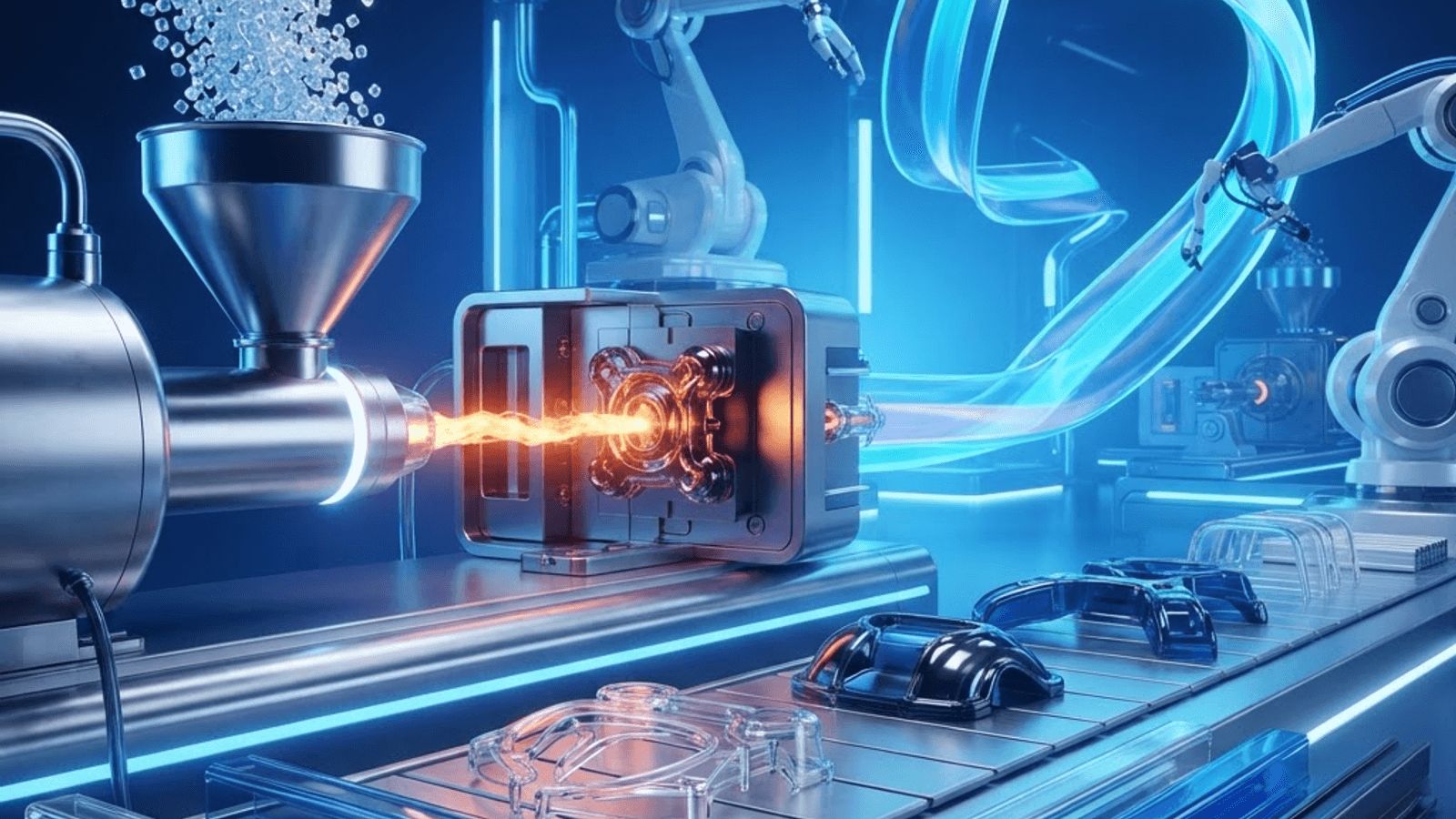
Plastic manufacturing covers several distinct disciplines, and few firms excel at all of them. Injection moulding produces high volumes of dimensionally precise parts but requires expensive tooling, making it suited to established, long-run products. Extrusion produces continuous profiles, pipe, sheet and film with lower tooling cost. Thermoforming and vacuum forming suit larger, shallower parts in lower volumes. Rotational moulding produces hollow items such as tanks. Fabrication — cutting, bending, welding and machining sheet plastic — suits one-offs and bespoke work with no tooling at all.
Choosing the right process is the single most consequential decision in a plastics project, and it depends primarily on annual volume, part geometry and tolerance requirements. A knowledgeable manufacturer will sometimes tell you their own process is wrong for your part, which is a strong signal of trustworthiness.
The Ten Leading Plastic Manufacturers in St. Helens
1. Ravenhead Injection Moulding — A technical moulder running a range of machine tonnages for engineering and consumer components, with in-house tool maintenance and quality inspection. Its focus on engineering polymers rather than commodity parts suits customers needing dimensional stability, chemical resistance or mechanical strength.
2. Mersey Plastic Extrusions — Produces extruded profiles, tube, trunking, sealing sections and edge trims for construction, transport and industrial customers. Extrusion tooling is comparatively affordable, making bespoke profiles viable at moderate volumes — a fact many designers overlook when they default to standard sections.
3. Sutton Thermoforming — Specialises in vacuum forming and pressure forming of large panels, trays, machine covers, point-of-sale units and transport packaging. For low-to-medium volume large parts, thermoforming often beats injection moulding decisively on total project cost because tooling is a fraction of the price.
4. Haydock Plastic Fabrication — Cuts, bends, welds and machines acrylic, polycarbonate, PVC and engineering sheet into guards, tanks, enclosures, screens and display units. With no tooling required, fabrication is the natural choice for prototypes, one-offs and industrial guarding, and the quality of solvent and hot-gas welding determines whether tanks and enclosures hold.
5. Newton Packaging Plastics — Manufactures containers, closures, trays and protective packaging, with a growing portfolio using recycled content and mono-material designs that simplify recycling. Packaging customers now specify recyclability alongside cost and protection, and the firm's design-for-recycling advice has become a selling point.
6. Rainford Rotational Moulding — Produces hollow items including water tanks, chemical storage vessels, bins, kayaks and street furniture. Rotational moulding creates seamless, stress-free hollow parts with uniform wall thickness, ideal where durability outdoors over decades is the requirement.
7. Earlestown Precision Plastics — Machines plastic components from stock shapes using CNC turning and milling, producing bearings, bushes, wear pads, gears and food-industry components. Machined plastics are essential in engineering applications requiring low friction, corrosion resistance or electrical insulation without the cost of tooling.
8. Thatto Heath Polymer Compounding — Blends and compounds polymer feedstock, adding colourants, fillers, flame retardants and stabilisers to specification, including processing recycled material into usable grades. Compounders sit at a critical point in the circular economy, determining whether recycled polymer can meet technical requirements.
9. Merseyside Plastics Recycling — Collects, sorts, washes, granulates and repelletises post-industrial and post-consumer plastic into reusable feedstock. Reprocessing capacity is the practical bottleneck in UK plastics circularity, and firms doing this work well have become strategically important to manufacturers under recycled-content obligations.
10. St. Helens Tooling & Mouldmaking — Designs and manufactures injection moulds, extrusion dies and forming tools, plus tool repair and modification. Tooling quality determines part quality, cycle time and mould life, and having a toolmaker locally means a damaged mould can be back in production in days rather than weeks.
How to Evaluate a Plastics Manufacturer
Begin with material and process advice. A good manufacturer will ask about operating temperature, chemical exposure, load, UV exposure, regulatory requirements and expected life before recommending a polymer. Beware anyone who recommends a material before asking those questions.
Tooling deserves careful contractual attention. Establish who owns the tool, where it is stored, who insures it, how many parts it is rated for and what maintenance is included. Tool ownership disputes are among the most common and damaging problems in plastics supply, and they are entirely avoidable with clear written terms at the outset.
On quality, ask about dimensional inspection capability, process monitoring, batch traceability and material certification. For food-contact, medical or potable-water applications, confirm the specific approvals and documentation available. Then ask for a sample run rather than a single hand-finished sample, because consistency across a production batch is the real test.
Sustainability and Regulation
Regulatory pressure on plastics continues to intensify, particularly around packaging. Manufacturers and their customers need to understand recycled-content thresholds, packaging waste obligations, restrictions on certain single-use items and design requirements for recyclability. Suppliers who track these changes and advise proactively save their customers costly redesigns.
Practical sustainability improvements available today include lightweighting parts, switching from multi-material to mono-material constructions, designing for disassembly, replacing virgin polymer with mechanically recycled grades where properties allow, and setting up closed-loop returns for industrial packaging. Each is more effective than simply substituting one material for another without analysis.
The Local Picture
St. Helens is well positioned for plastics manufacturing: strong industrial customers nearby, good motorway access for distribution, and an engineering workforce comfortable with process manufacturing. The sector's future here lies in technical, durable applications and in the recycling and compounding capacity that makes circularity real rather than aspirational. For buyers, the advice is simple — engage a manufacturer during design, be explicit about performance and end-of-life expectations, and treat tooling and material choices as long-term decisions rather than purchasing details.
Want your brand featured in front of decision-makers? Publish a guest post or get a link insertion in our guides through AAMAX's guest post and link insertion service.
Helpful Links
 SponsoredAAMAX — Full-Service Digital Agency
Write for Us
Share your expertise with our readers. We welcome guest contributions from industry specialists.
Pitch your idea

