Plastics as Industrial Infrastructure
Plastics manufacturing in South Derbyshire is closely tied to the district's wider industrial base. Automotive components, building products, packaging for food and industrial goods, drainage and pipe systems, agricultural equipment parts and technical components for machinery all depend on polymer processing. The area's clay pipe heritage evolved in part into plastic pipe manufacture as materials changed, providing a direct line of continuity from the district's Victorian industry to its modern equivalent.
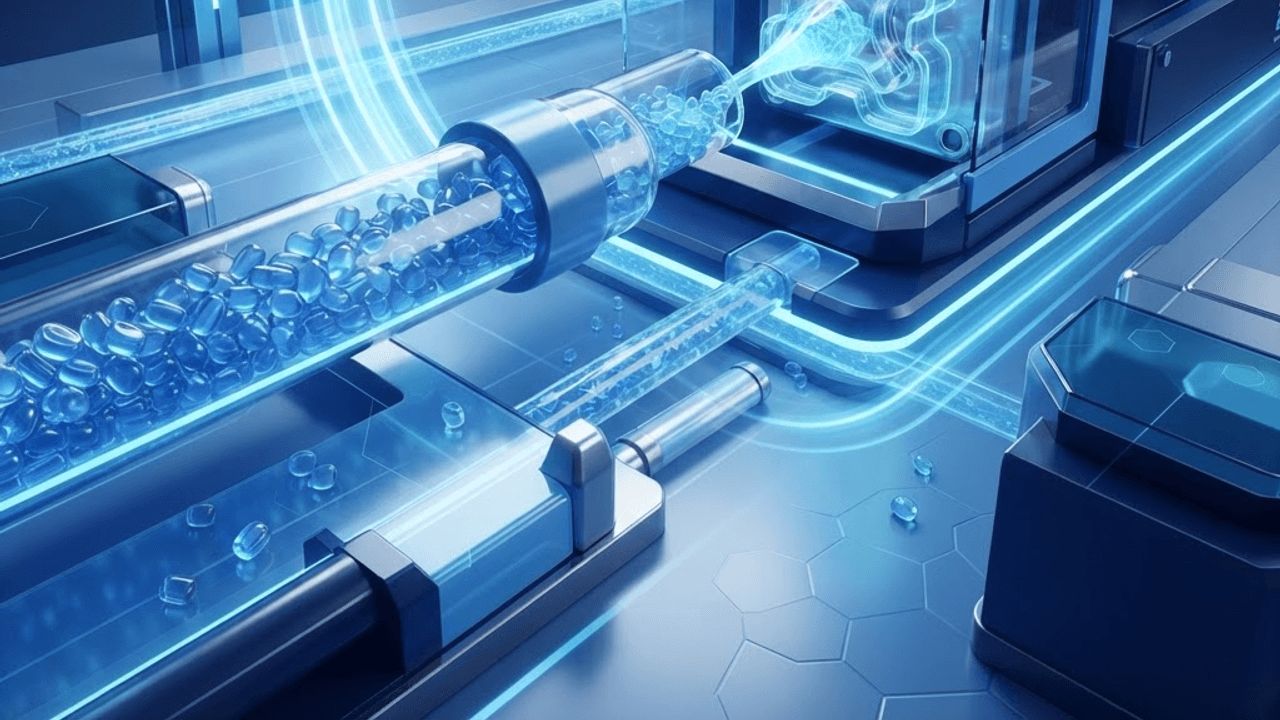
The sector encompasses several distinct processes. Injection moulding produces high volumes of dimensionally precise parts and dominates automotive and consumer component production. Extrusion creates continuous profiles including pipe, sheet, window systems and cable insulation. Blow moulding forms hollow containers. Rotational moulding produces large seamless tanks and containers. Thermoforming and vacuum forming create trays, housings and packaging. Plastic fabrication and machining serve low-volume and prototype requirements.
Ten Plastics Manufacturers With Regional Relevance
1. Wavin manufactures plastic pipe and drainage systems used extensively in construction and infrastructure, with UK operations that connect directly to the region's history of pipe production.
2. Polypipe produces plastic piping, drainage and ventilation systems for residential and commercial construction, supplying the substantial housebuilding activity underway across South Derbyshire.
3. Epwin Group manufactures extruded polymer building products including window systems, cladding and rainwater goods, serving construction supply chains throughout the Midlands.
4. Rotoplas and comparable rotational moulders produce large tanks, bunded containers and specialist mouldings for agricultural, water treatment and industrial applications common across rural Derbyshire.
5. RPC bpi group produces polythene films and packaging, including agricultural films used on farms across the Trent Valley and industrial packaging for regional manufacturers.
6. Berry Global operates substantial UK plastics packaging manufacturing, supplying rigid and flexible formats to food, pharmaceutical and industrial customers.
7. Ultrapolymers and similar polymer distributors supply raw material and technical guidance to moulders across the region, playing an important role in material selection and substitution.
8. Amari Plastics distributes and fabricates semi-finished plastics including sheet, rod and tube, supporting engineering businesses that require machined polymer components.
9. Plastic Extrusion Technologies and regional custom extruders produce bespoke profiles for industrial, transport and construction customers where standard sections do not meet requirements.
10. Sub-contract injection moulders across the East Midlands provide tooling, moulding and assembly services to automotive and industrial customers, forming the backbone of regional polymer component supply.
Material Selection Fundamentals
Choosing the right polymer determines whether a component performs or fails, and the decision involves balancing several properties simultaneously.
Commodity polymers such as polypropylene, polyethylene and polystyrene offer low cost and good processability, suiting packaging and general components. Engineering polymers including polyamide, polycarbonate, ABS and acetal provide better mechanical strength, temperature resistance and dimensional stability for functional parts. High-performance polymers such as PEEK and PPS serve demanding applications where chemical resistance and continuous operating temperature exceed what engineering grades can deliver.
Additives and fillers change behaviour substantially. Glass fibre reinforcement increases stiffness and strength but reduces impact resistance and increases tool wear. Flame retardants are required in electrical and transport applications. Ultraviolet stabilisers are essential for outdoor products, and their absence is a common cause of premature failure in construction components.
Design for manufacture is equally important. Consistent wall thickness prevents sink marks and warpage, generous radii reduce stress concentration, and appropriate draft angles allow parts to release from tooling. Experienced moulders contribute enormously at the design stage, and involving them early typically reduces both tooling cost and part cost.
Recycling and Circular Economy Pressures
Plastics face intense scrutiny, and the regulatory response has been substantial. The plastic packaging tax applies to packaging containing less than a defined proportion of recycled content, creating direct financial incentive for recycled material use. Extended producer responsibility shifts the cost of collection and processing onto those placing packaging on the market.
Manufacturers have responded by increasing recycled content, though this brings technical challenges. Post-consumer recycled material carries greater variability in melt flow, colour and contamination than virgin polymer, requiring tighter process control and often additional filtration. Food contact applications face particular constraints on approved recycled sources.
Design for recyclability has become a genuine differentiator. Mono-material construction, avoiding mixed polymer laminates and difficult-to-separate labels and adhesives, dramatically improves recovery rates. Products designed as single polymer types can enter existing recycling streams cleanly.
Chemical recycling, which breaks polymers back to monomer or feedstock, offers a route for materials that mechanical recycling cannot handle. Capacity remains limited but is developing, and it is likely to become an important complement rather than a replacement for mechanical recovery.
Process Efficiency and Energy
Polymer processing is energy intensive, dominated by heating material to melt and then cooling the formed part. Energy costs have therefore become a major competitive factor.
All-electric injection moulding machines have largely displaced hydraulic equipment in new investment, offering substantially lower energy consumption, better repeatability and cleaner operation. Variable speed drives on ancillary equipment, insulated barrel jackets, and optimised chiller operation all deliver meaningful savings.
Scrap reduction is equally important since every rejected part represents wasted energy and material. Process monitoring with cavity pressure sensing and automated inspection catches drift before it produces defects, and in-house regrind of sprues and runners recovers material that would otherwise be lost.
Regulation and Compliance
Plastics supplied for food contact must comply with specific migration limits and be supported by declarations of compliance. Medical applications require biocompatibility evidence. Construction products need declarations of performance against harmonised standards. Automotive components must meet customer-specific requirements alongside sector quality standards.
Restrictions on specific substances continue to tighten, with attention on certain flame retardants, plasticisers and per- and polyfluoroalkyl substances. Manufacturers who maintain full material declarations through their supply chain are far better placed to respond when a substance is restricted.
Selecting a Plastics Partner
Match the process to the volume. Injection moulding tooling represents substantial upfront cost justified only at volume, while machining or vacuum forming suits low quantities. Ask about tooling ownership explicitly, since who holds the tool determines your freedom to move production later.
Assess technical support during design, quality systems and inspection capability, and material traceability. For South Derbyshire manufacturers, a regional moulder who can attend a design review and turn around a trial shot quickly delivers value that a distant lower-cost supplier rarely matches.
Want your brand featured in front of decision-makers? Publish a guest post or get a link insertion in our guides through AAMAX's guest post and link insertion service.
Helpful Links
 SponsoredAAMAX — Full-Service Digital Agency
Write for Us
Share your expertise with our readers. We welcome guest contributions from industry specialists.
Pitch your idea