

Polymer Processing in the Heart of the Marches
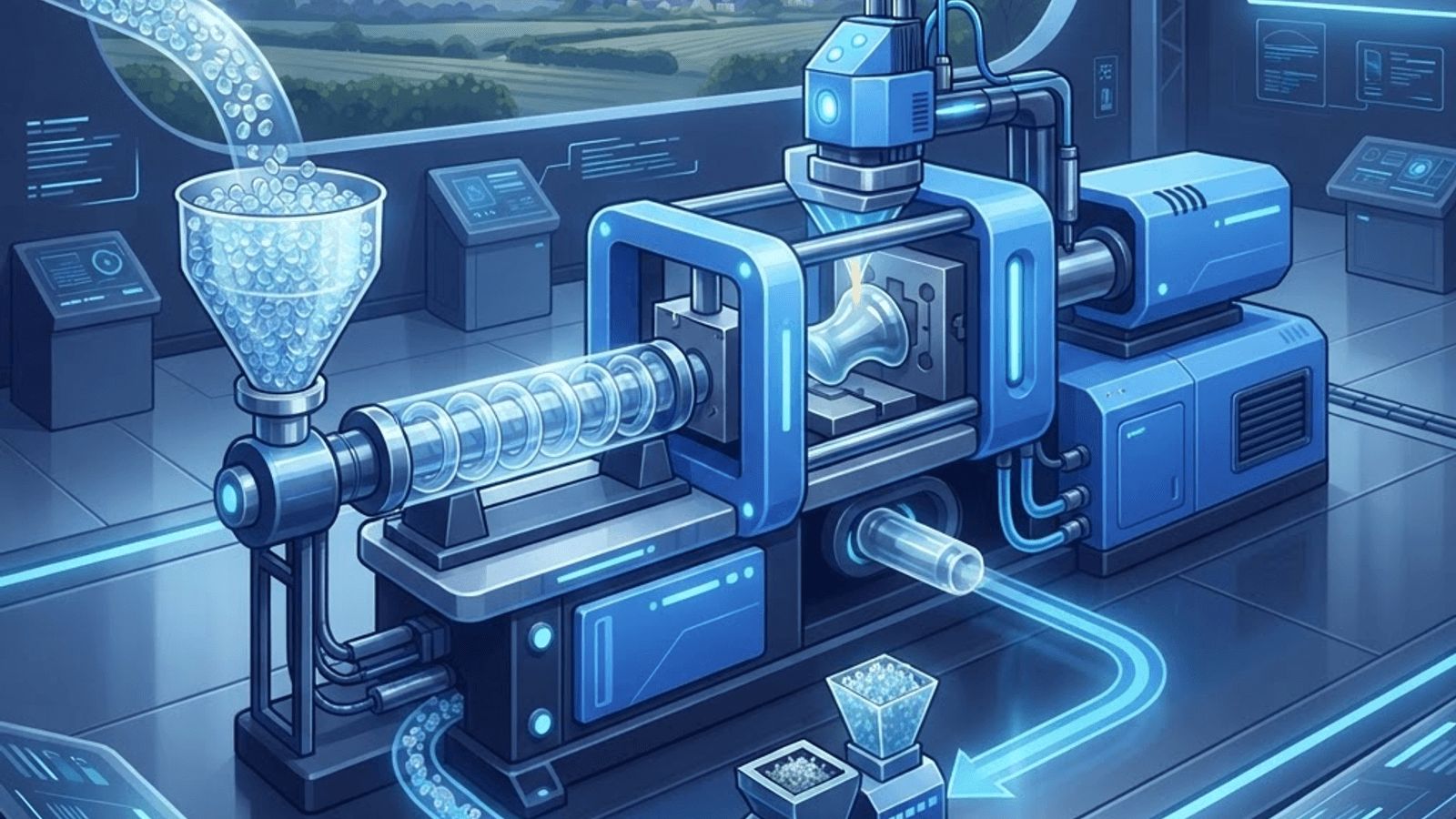
Plastics manufacturing rarely features in descriptions of Herefordshire, yet the county hosts a genuinely broad spread of polymer processing capability. Rotational moulding, injection moulding, vacuum forming, extrusion, GRP composite fabrication and plastic machining are all carried out here, largely by owner-managed businesses supplying construction, agriculture, water management, packaging and industrial equipment markets.
The reasons are practical. Plastics processing needs space for machines, tooling storage and finished stock, plus a reliable power supply and good road access. Herefordshire's business parks around Hereford, Leominster and Rotherwas offer all of that at costs well below the West Midlands conurbation, while the M50 and A49 give access to national customers. Local demand from farming, food and construction provides a stable base load, and specialist knowledge accumulated over decades keeps the county competitive against low-cost imports.
The Top 10 Plastic Manufacturers in Herefordshire
1. Kingspan Water & Energy, Hereford
The Hereford operation is one of the UK's leading producers of moulded and GRP tanks, pumping stations, septic tanks and rainwater harvesting equipment. Large-scale rotational moulding is combined with mechanical assembly, testing and certification, so products arrive on site ready to install. Its scale, technical documentation and compliance record make it the county's flagship plastics business.
2. Rotherwas Polymer Solutions, Hereford
Based on the Rotherwas Enterprise Zone, this injection moulder produces technical components in engineering polymers for automotive, electrical and industrial customers. Capability spans tool sourcing and validation, moulding on a range of clamp tonnages, insert moulding and assembly. Process discipline is strong, with scientific moulding methods and in-line inspection used to hold dimensional tolerances.
3. Wye Valley Plastics, Ross-on-Wye
A fabricator and machinist rather than a moulder, Wye Valley Plastics cuts, bends, welds and CNC machines sheet materials such as acrylic, polycarbonate, HDPE, PVC and PTFE. Its output includes machine guarding, tanks, chutes, wear parts, display units and point-of-sale fixtures. Rapid turnaround on one-off items has made it a favourite among local engineering firms.
4. Marches Rotomoulding, Leominster
This specialist rotational moulder produces large hollow products including agricultural feeders, water bowsers, chemical tanks, kayaks and street furniture. Rotomoulding suits low to medium volumes with relatively inexpensive tooling, so the company works closely with customers developing new products who cannot justify injection mould tooling costs.
5. Border Vacuum Forming, Herefordshire
Vacuum and pressure forming are the core processes here, producing trays, machine panels, vehicle interior parts, medical device housings and horticultural packaging. Tooling can be produced quickly in resin or aluminium, and the firm offers trimming, printing and assembly, giving product designers a fast, low-risk route from prototype to production.
6. Severnside Extrusions, Herefordshire
Severnside Extrusions manufactures profiles, tube and edge trims in rigid and flexible PVC, polypropylene and polyethylene. Custom die design is offered alongside a standard profile range, serving glazing, shopfitting, transport and agricultural customers. Co-extrusion capability allows dual hardness and dual colour profiles in a single pass.
7. Herefordshire Composites and GRP
Working in glass-reinforced plastic, this business hand-lays and infuses enclosures, kiosks, ducting, cladding panels and bespoke covers. GRP's strength-to-weight ratio and corrosion resistance make it ideal for water treatment, utilities and coastal applications, and the company's mould-making skills allow complex geometries that would be impossible to injection mould.
8. Orchard Packaging Mouldings, Ledbury
Serving the county's fruit, cider and food producers, this manufacturer supplies thermoformed punnets, trays, closures and returnable transit packaging. Food-contact compliance, hygiene design and increasing use of recycled PET and mono-material structures are central to its offer, as retailers tighten packaging specifications.
9. Bromyard Plastic Engineering
This precision plastics machinist turns and mills components from engineering thermoplastics such as nylon, acetal, PEEK and UHMWPE. Bearings, bushes, rollers, wear strips and gears are typical output, replacing metal parts to reduce weight, noise and lubrication needs. Machinery builders and conveyor manufacturers are core customers.
10. Golden Valley Recycled Polymers
Focused on the circular economy, this business reprocesses post-industrial polymer waste into regrind and compounded pellets, and moulds durable products such as sheeting, boards, planks and site accessories from recycled feedstock. Its work helps local manufacturers divert scrap from disposal and hit recycled content targets in tenders.
Understanding the Main Plastics Processes
Choosing the right process is the single biggest determinant of unit cost and lead time. Injection moulding delivers the lowest piece price and tightest tolerances but demands expensive steel tooling, so it suits volumes in the tens of thousands and above. Rotational moulding produces large, seamless hollow parts with cheap tooling and is ideal for hundreds rather than thousands. Vacuum forming sits between the two for shallow-draw panels and trays. Extrusion is the answer for continuous profiles and tube. Fabrication and machining from sheet or rod win outright for one-offs, prototypes and very large items.
Sustainability and Regulation
Plastics manufacturers face intense scrutiny, and Herefordshire's better operators respond with substance rather than slogans. Practical measures include designing for mono-material recyclability, reducing wall thickness through structural ribbing, incorporating post-consumer recycled content where performance allows, closing the loop on in-house sprue and trim, and switching to returnable transit packaging. The UK Plastic Packaging Tax has sharpened focus on achieving at least thirty percent recycled content in packaging, while food-contact applications must still satisfy strict migration rules. Ask suppliers for material declarations and, where relevant, evidence of recycled content certification.
How to Brief a Plastics Supplier
Provide function before form. Specify the loads, temperatures, chemicals, UV exposure and expected service life, and let the supplier recommend a polymer. Share 3D data where possible, but be open to design for manufacture changes such as draft angles, uniform wall sections and generous radii, which improve quality and reduce cost. Agree tooling ownership, storage and maintenance responsibilities in writing at the outset. Establish quality expectations with a first article inspection and a clear specification for cosmetic surfaces. Finally, discuss forecasting: plastics processors buy polymer in bulk, and honest volume visibility usually converts directly into better pricing and shorter lead times.
Conclusion
Herefordshire's plastics manufacturers cover an impressive range of processes and markets, from utility-scale tanks to precision machined bearings and recycled-content boards. For product developers and buyers, the county offers accessible engineering support, realistic minimum order quantities and suppliers close enough to visit, which remains one of the most reliable predictors of a successful plastics project.
Want your brand featured in front of decision-makers? Publish a guest post or get a link insertion in our guides through AAMAX's guest post and link insertion service.
Helpful Links
 SponsoredAAMAX — Full-Service Digital Agency
Write for Us
Share your expertise with our readers. We welcome guest contributions from industry specialists.
Pitch your idea

