Plastics as a Quiet Local Industry
Plastics manufacturing rarely features in discussions of the Fermanagh and Omagh economy, yet it supports a considerable amount of activity across the district. Water tanks and slurry storage for farms, drainage and ducting pipe for civil engineering, food packaging for the agri-food sector, protective components for machinery manufacturers, signage and glazing for construction, and a growing recycling and reprocessing activity all depend on polymer processing businesses.
The sector here is characterised by practicality. It produces things the local economy needs, often in modest volumes, frequently customised, and generally engineered for durability in outdoor agricultural and industrial environments. That is a different proposition from high-volume consumer plastics, and it plays to the strengths of flexible, technically capable regional manufacturers.
The Main Plastic Processing Technologies
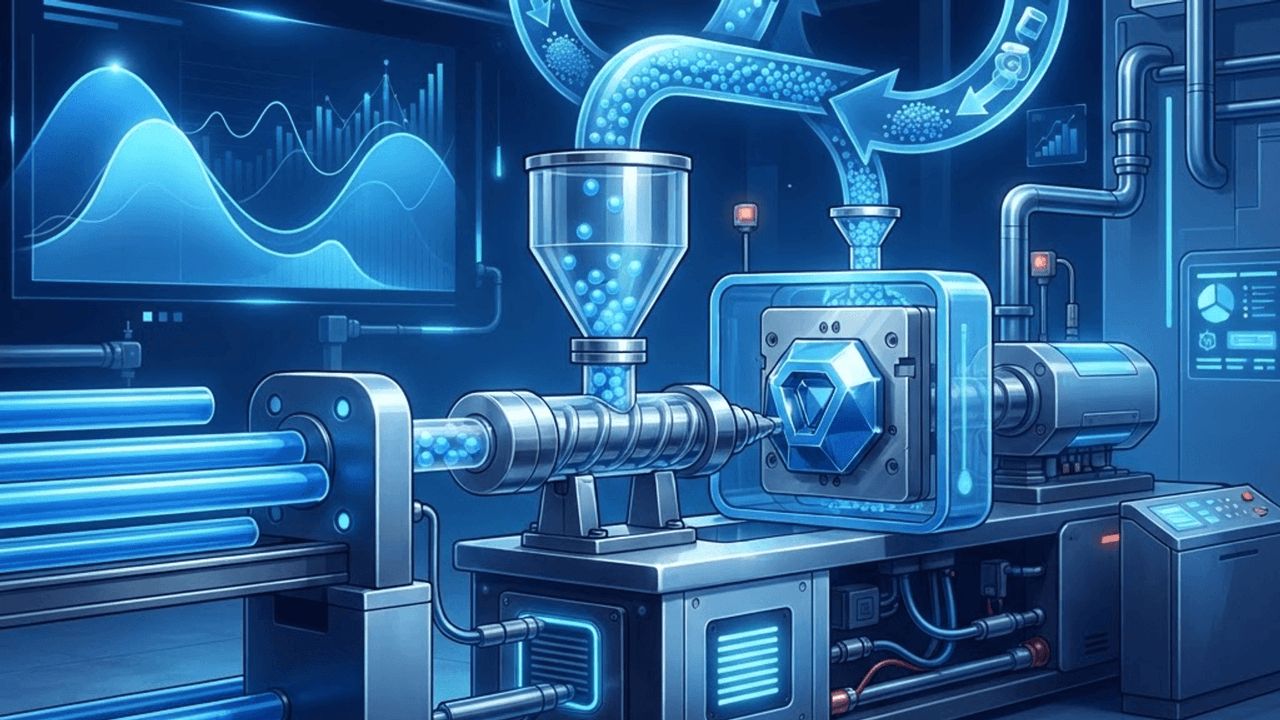
Several distinct processes serve different needs. Injection moulding produces high volumes of precise components from a steel tool and suits parts made in thousands. Rotational moulding creates large hollow items such as water tanks, chemical storage vessels and agricultural troughs with relatively low tooling cost, making it ideal for lower volumes of big products. Extrusion produces continuous profiles including pipe, ducting, cable trunking and sheet. Vacuum forming and thermoforming shape heated sheet over a mould, useful for trays, guards and covers. Plastic fabrication involves cutting, bending, welding and bonding sheet materials into tanks, enclosures and bespoke items. And rigid sheet processing covers acrylic, polycarbonate and PVC work for glazing, signage and machine guarding.
The Top 10 Plastic Manufacturers in Fermanagh and Omagh
1. JFC Manufacturing
A leading manufacturer of plastic products for agriculture, construction and environmental applications across Ireland. Rotationally moulded water tanks, feed troughs, drainage products and calf hutches from manufacturers of this type are found on virtually every farm in Fermanagh and Tyrone, valued for durability under hard outdoor use.
2. Cherry Pipes
A Northern Ireland manufacturer of plastic pipe systems for drainage, water supply, ducting and civil engineering. Locally produced pipe supports the district's construction and utilities work, and domestic manufacture gives contractors shorter lead times and easier technical support than importing.
3. Wavin Northern Ireland Operations
A major supplier of plastic piping systems for water management, drainage, plumbing and underfloor heating. Products of this kind form the hidden infrastructure of every new build and refurbishment across Omagh, Enniskillen and the district's villages.
4. Caldan and Regional Injection Moulding Companies
Injection moulders serving Northern Ireland produce technical components for the engineering, electrical and consumer sectors. Moulders working with the district's machinery manufacturers supply housings, handles, bushings, guards and functional components that would be uneconomic to machine from metal.
5. Molloy Precision and Technical Moulders
Precision moulding for medical, electronics and technical applications represents the higher-value end of the Northern Ireland plastics sector. Cleanroom capability, tight tolerance control and rigorous quality systems distinguish these operations, and they draw on engineering talent across the province.
6. Omagh Plastic Fabrication Workshops
Fabricators across west Tyrone cut, bend and weld acrylic, polycarbonate, polypropylene and PVC sheet into machine guards, tanks, bunds, display units, signage and protective screens. This is genuinely bespoke work, frequently a single item made to a drawing or even a sketch, and local availability is a real asset to manufacturers.
7. Erne Rotational Moulding
Rotational moulders serving Fermanagh produce large hollow plastic products including water storage tanks, oil tanks, chemical containers, kayaks and agricultural equipment. The process suits the district's demand profile well, offering large products in moderate volumes with affordable tooling.
8. Agri-Plastics Suppliers and Manufacturers
Silage wrap, bale netting, crop covers, silage sheeting and mulch films are consumed in enormous quantities across the district's farms. Manufacturers and distributors in this segment increasingly pair supply with collection and recycling schemes for used farm plastics, which has become an environmental priority.
9. Packaging Manufacturers for the Agri-Food Sector
The district's food processors require trays, films, crates, labels and protective packaging meeting food contact standards. Packaging manufacturers serving this market must combine hygiene compliance with reliable supply and are increasingly asked to deliver recyclable or reduced-material alternatives.
10. Plastic Recycling and Reprocessing Operators
Recyclers collecting and reprocessing farm plastics, industrial waste polymer and post-consumer material form an increasingly important part of the sector. Collected film and rigid plastic is baled, cleaned, granulated and returned to manufacture, closing a loop that was largely open a decade ago.
Sustainability and the Future of Plastics
The plastics industry faces real and legitimate pressure, and the serious operators are responding rather than resisting. Recycled content is rising across many product lines, with some pipe, tank and packaging products now incorporating substantial post-consumer or post-industrial material. Design for recyclability is improving, with mono-material packaging replacing multi-layer laminates that cannot be separated.
Extended producer responsibility and packaging waste regulations are changing commercial calculations, making material reduction financially as well as environmentally attractive. Farm plastic collection schemes across Northern Ireland have dramatically reduced the historic problem of on-farm burning and burial of silage wrap.
It is also worth noting where plastics remain the right material. A rotationally moulded water tank lasts decades in ultraviolet exposure and freezing conditions where alternatives corrode. Plastic pipe does not rust and installs faster with fewer joints. Lightweight packaging reduces food waste and transport emissions. The sensible objective is appropriate use, high recovery rates and elimination of genuinely unnecessary single-use items.
Choosing a Plastics Supplier
Specify the polymer properly, because the difference between polypropylene, polyethylene, PVC and polycarbonate determines chemical resistance, impact strength, temperature tolerance and ultraviolet stability. Discuss ultraviolet stabilisation explicitly for outdoor products, as unstabilised plastic degrades rapidly in sunlight. Understand tooling costs and who owns the tool, which is a frequent source of dispute. For food applications, confirm food contact compliance documentation. Ask about recycled content availability and end-of-life recovery options. And for fabricated items, provide clear drawings and discuss tolerances, since plastic behaves differently from metal during fabrication and in service.
Conclusion
Plastics manufacturing across Fermanagh and Omagh is a practical, unglamorous industry that quietly supports farming, construction, food processing and engineering throughout the district. Its operators range from major pipe and tank producers to small fabrication workshops making one-off guards and enclosures. As recycled content, recovery schemes and smarter material choices continue to advance, the sector is becoming demonstrably more sustainable while remaining indispensable to the local economy.
Want your brand featured in front of decision-makers? Publish a guest post or get a link insertion in our guides through AAMAX's guest post and link insertion service.
Helpful Links
 SponsoredAAMAX — Full-Service Digital Agency
Write for Us
Share your expertise with our readers. We welcome guest contributions from industry specialists.
Pitch your idea