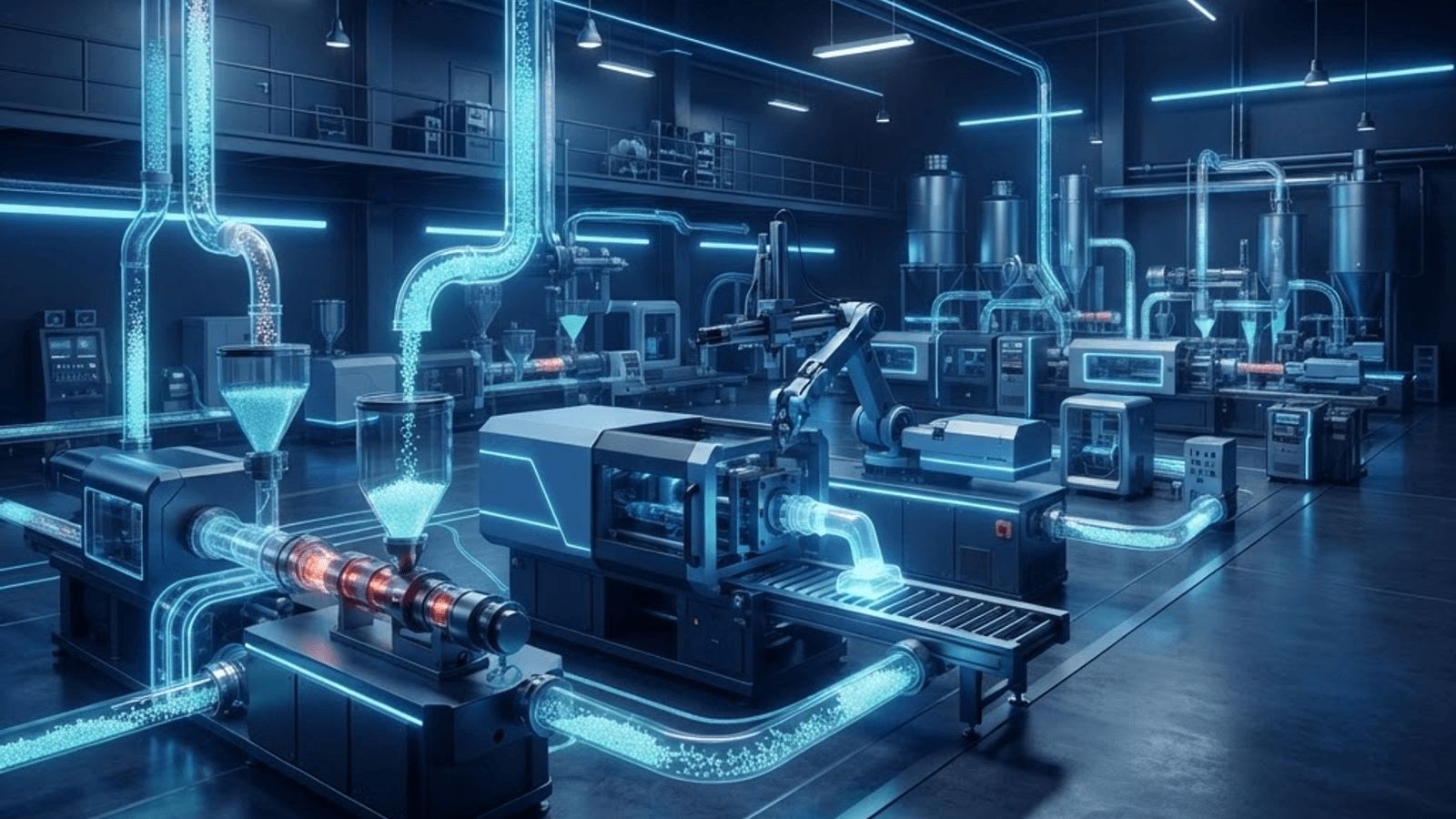
The Polymer Sector in the North West
Plastic manufacturing rarely features in tourism brochures, but it is a substantial part of the industrial base in Derry City and Strabane. The district hosts injection moulders, extruders, vacuum formers and fabricators supplying customers in medical devices, construction products, agriculture, food packaging and general engineering. Much of that output leaves the district entirely, feeding assembly lines across Ireland, Great Britain and continental Europe.
Several factors underpin the sector locally. Manufacturing floorspace is available at reasonable cost, the port and road links towards Belfast and Dublin are workable for palletised freight, and the local skills base includes toolmaking and process engineering built up over decades. The proximity of medical technology clusters in the wider North West has been especially important, since medical moulding demands the kind of validated, cleanroom-capable production that rewards long-term investment.
Understanding the Main Processes
Buyers benefit from knowing which process suits their product. Injection moulding is the right choice for high-volume, dimensionally precise components, with tooling costs amortised across large runs. Extrusion suits continuous profiles such as pipe, trunking, edge banding and sheet. Vacuum forming and thermoforming handle larger, thinner shapes at much lower tooling cost, making them ideal for trays, covers and prototype housings. Fabrication, involving cutting, bending and welding of acrylic and polycarbonate sheet, covers signage, guarding and display work.
Material selection matters just as much. Polypropylene, polyethylene, ABS, acrylic, polycarbonate, nylon and medical-grade polymers all behave differently under stress, temperature and UV exposure. A capable manufacturer will advise on grade selection rather than simply quoting on whatever the customer names.
The Leading Plastic Manufacturers in Derry City and Strabane
1. Foyle Polymer Technologies operates as a technical injection moulder serving medical device and precision engineering customers. Its offering includes design-for-manufacture consultancy, in-house tool maintenance and controlled production environments. Traceability documentation and validated processes are central to how the business wins work in regulated sectors.
2. Strabane Plastics Manufacturing focuses on extruded profiles and pipe products for the construction and agricultural markets. Typical output covers drainage systems, ducting, cable management profiles and custom trims. The company's strength is its willingness to run relatively short bespoke profile orders that larger national extruders decline.
3. Northwest Moulding Solutions is a general-purpose injection moulder covering housewares, automotive sub-components and industrial parts. It maintains a range of press sizes, which allows it to quote competitively on both small technical parts and larger crate and container mouldings from the same site.
4. Sperrin Thermoforming specialises in vacuum forming and pressure forming for machine covers, point-of-sale units, transit trays and horticultural products. Because tooling is comparatively inexpensive, the business is a natural partner for customers developing new products who need a few hundred parts rather than tens of thousands.
5. Derry Acrylics and Fabrication works in sheet plastics, producing display cases, protective guarding, illuminated signage panels, dispensers and bespoke enclosures. Laser cutting, CNC routing, line bending and solvent welding are all handled in-house, giving the firm fast turnaround on one-off and small-batch work.
6. Culmore Packaging Plastics supplies rigid and semi-rigid packaging to food producers, bakeries and distributors across the district. Food-contact compliance, hygiene management and consistent tolerance control for sealing lines are the technical demands of this segment, and the business is structured around meeting them reliably.
7. Glenshane Rotational Moulding produces large hollow components including tanks, bins, floats and agricultural feeders. Rotational moulding delivers seamless, impact-resistant parts in sizes that injection moulding cannot economically reach, which makes this manufacturer a common choice for farm and water management products.
8. Lisnagelvin Precision Plastics covers CNC machining of engineering polymers such as nylon, acetal, PTFE and UHMWPE. Rather than moulding, the business machines finished components from stock material, which suits low-volume, high-specification parts for pumps, conveyors and processing equipment.
9. Tyrone Border Polymer Recycling processes post-industrial plastic waste into reprocessed granules and manufactures products from recycled content. Its work supports the circular economy ambitions of local manufacturers who need to demonstrate recycled input percentages in their own products and reporting.
10. Foyleside Composite and Plastics combines GRP composite fabrication with plastic sheet work, producing tanks, ducting, cladding panels and chemically resistant enclosures. Composite capability lets the business serve water treatment and process industry customers whose requirements exceed what standard thermoplastics can handle.
Trends Reshaping Plastic Manufacturing
Regulatory pressure around single-use plastics has pushed local manufacturers towards recyclable mono-material designs, thinner wall sections and recycled feedstock. Firms that adapted early have found it a commercial advantage rather than a burden, since major customers now audit supply chains on exactly these criteria.
Energy efficiency is the second major theme. Electric and hybrid moulding machines consume substantially less power than older hydraulic presses, and with energy a leading cost line, reinvestment in newer machinery has become a competitive necessity. The third trend is reshoring. Supply chain disruption has encouraged buyers to place work with manufacturers within a day's freight of their assembly plants, and Derry City and Strabane moulders have won business as a direct result.
How to Select a Plastics Partner
Start with process fit, then examine quality systems. Ask about dimensional inspection methods, batch traceability and how the manufacturer handles a tooling modification mid-programme. For any regulated application, confirm the relevant certifications before discussing price. Tooling ownership is another point worth settling in writing at the outset, since it determines your freedom to move production later.
Finally, treat early technical engagement as a value indicator. The manufacturers that add most across a product's life are those who challenge a drawing at quotation stage, suggesting a draft angle change or a material substitution that reduces cost or improves durability. That kind of input is a reliable sign of genuine engineering depth.
Want your brand featured in front of decision-makers? Publish a guest post or get a link insertion in our guides through AAMAX's guest post and link insertion service.
Helpful Links
 SponsoredAAMAX — Full-Service Digital Agency
Write for Us
Share your expertise with our readers. We welcome guest contributions from industry specialists.
Pitch your idea