

The Role of Plastics Manufacturing in Ashfield
Plastics are the invisible infrastructure of almost every other industry. The housing on a piece of medical equipment, the crate that moves produce, the trim inside a vehicle, the pipe buried under a road, the packaging protecting a product in transit, all of it comes from moulders and fabricators. Ashfield supports a surprisingly deep cluster of these businesses, serving local manufacturers, construction firms, food producers and equipment makers.
What makes the local sector interesting is its breadth. Within a relatively small area you can find high-volume injection moulders running automated cells around the clock, and small fabrication shops hand-welding acrylic display units. Both are plastics manufacturers, but they solve entirely different problems and buying from the wrong one is an expensive mistake.
Understanding the Main Manufacturing Processes
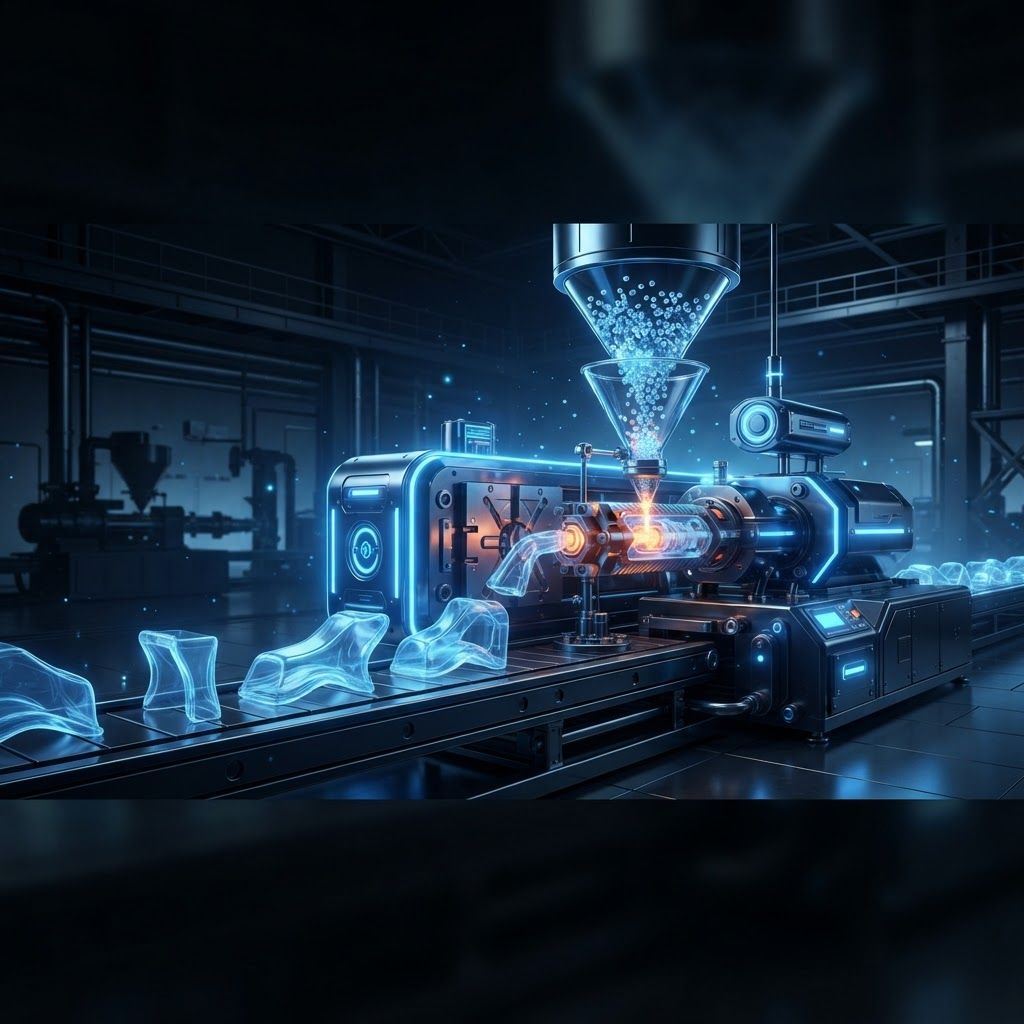
Injection moulding dominates high-volume production. Molten polymer is forced into a steel tool, cooled and ejected, producing identical parts in seconds. Tooling is expensive upfront but the per-unit cost at volume is extremely low. It suits components needed in the tens of thousands.
Extrusion produces continuous profiles: pipe, tubing, sheet, window sections and edging. The cost structure is different again, driven by die design and line speed rather than cycle time.
Vacuum forming and thermoforming heat a sheet and draw it over a mould. Tooling is far cheaper than injection tooling, making it the practical choice for larger parts in lower volumes, such as machine covers, trays and packaging inserts.
Rotational moulding creates hollow, seamless items like tanks and large containers. CNC fabrication and plastic welding, meanwhile, handle one-offs and small batches by machining and joining stock sheet and rod.
The Ten Leading Plastic Manufacturers in Ashfield
1. Ashfield Polymer Industries is among the larger injection moulding operations locally, running a broad tonnage range of machines that allows it to handle both small precision components and substantial mouldings. Its in-house toolroom is a genuine advantage, because tool maintenance and modification can be done without shipping steel elsewhere.
2. Northline Extrusions focuses on profile and pipe extrusion for construction and industrial customers. The business maintains a large library of existing dies, which means many customers avoid new tooling costs entirely by adapting an existing profile.
3. Clearform Acrylics specialises in transparent plastics: acrylic, polycarbonate and PETG. Retail displays, machine guarding, protective screens and signage make up the bulk of its output, produced through laser cutting, line bending and solvent welding.
4. Vantage Thermoforming covers vacuum and pressure forming for medium-volume work. It is a common choice for equipment manufacturers needing enclosures and covers where injection tooling would never pay for itself.
5. Meridian Precision Plastics serves regulated sectors, particularly medical and instrumentation. Cleanliness controls, documented process validation and full material traceability are built into its workflow, and that documentation discipline is the actual product as much as the parts are.
6. Rotocast Containers produces rotationally moulded tanks, bins and bulk containers. Seamless construction and impact resistance make its products popular in agriculture, water storage and waste handling.
7. Ecoform Recycled Plastics has built a business around reprocessed polymer, manufacturing products such as outdoor furniture components, boards and industrial fittings from recycled feedstock. It is a practical answer for buyers with sustainability targets who still need functional parts.
8. Ashfield Plastic Fabrication handles bespoke work: tanks, ducting, fume cabinets and chemical-resistant assemblies welded from sheet. This is craft-level manufacturing, driven by drawings rather than tooling, and it fills the gap when volumes are too low for moulding.
9. Stratos Packaging Solutions produces rigid packaging, trays and protective inserts, often designed alongside the customer's product to reduce transit damage. Its design service, which models fit and stacking before any tooling is cut, saves clients repeated iterations.
10. Halcyon Compounding and Masterbatch sits slightly upstream, supplying compounded polymer and colour masterbatch to other moulders. Consistency in colour and additive dispersion is its core competency, which matters enormously to anyone producing branded parts across multiple production runs.
Trends Reshaping the Plastics Sector
Sustainability has moved from marketing to specification. Buyers increasingly ask for recycled content percentages, mono-material designs that are easier to recycle, and lightweighting that reduces material use. Manufacturers who can document material origin have a clear commercial advantage.
Automation is the second major shift. Robotic part removal, in-line vision inspection and automated packing reduce labour cost per part and, more importantly, reduce variability. For customers, this shows up as fewer rejects and tighter tolerances.
Regulatory pressure is the third. Food contact, medical and construction applications all carry compliance requirements that continue to tighten. Working with a manufacturer that already operates within a quality management framework saves an enormous amount of retrospective paperwork.
What to Evaluate Before Committing
Tooling ownership is the single most important commercial question and the one most often overlooked. Clarify in writing who owns the tool once it is paid for, where it is stored, and what happens if you move production. A tool you do not own is a relationship you cannot leave.
Material specification deserves equal attention. Polymer grade affects impact strength, UV stability, chemical resistance and temperature tolerance. A part that works perfectly indoors can become brittle within a year outdoors if the wrong grade is chosen. A competent Ashfield manufacturer will interrogate the application before recommending a material, not simply quote on whatever you name.
Ask about capacity and contingency. If a single machine is capable of running your part, what happens when it goes down? Manufacturers with multiple compatible machines offer resilience that rarely appears on a quotation but matters greatly during a supply crunch.
Finally, request sample parts and test them in the real application rather than approving on appearance. Plastics behave differently under load, heat and time, and a fifteen-minute functional test is worth more than a visual inspection. Ashfield's plastics sector is deep enough that buyers can afford to be demanding, and the better manufacturers expect exactly that.
Want your brand featured in front of decision-makers? Publish a guest post or get a link insertion in our guides through AAMAX's guest post and link insertion service.
Helpful Links
 SponsoredAAMAX — Full-Service Digital Agency
Write for Us
Share your expertise with our readers. We welcome guest contributions from industry specialists.
Pitch your idea

