Movement, Recovery and Rural Life
Physiotherapy demand in Fermanagh and Omagh reflects the working life of the district. Farming is physically demanding and injury-prone, with lifting, machinery handling and livestock work producing back, shoulder and knee problems in substantial numbers. Manufacturing and construction contribute repetitive strain and acute injury. An active sporting culture, particularly Gaelic games, generates its own steady flow of ligament, muscle and joint injuries. Meanwhile an ageing population brings osteoarthritis, falls-related injury and post-surgical rehabilitation needs.
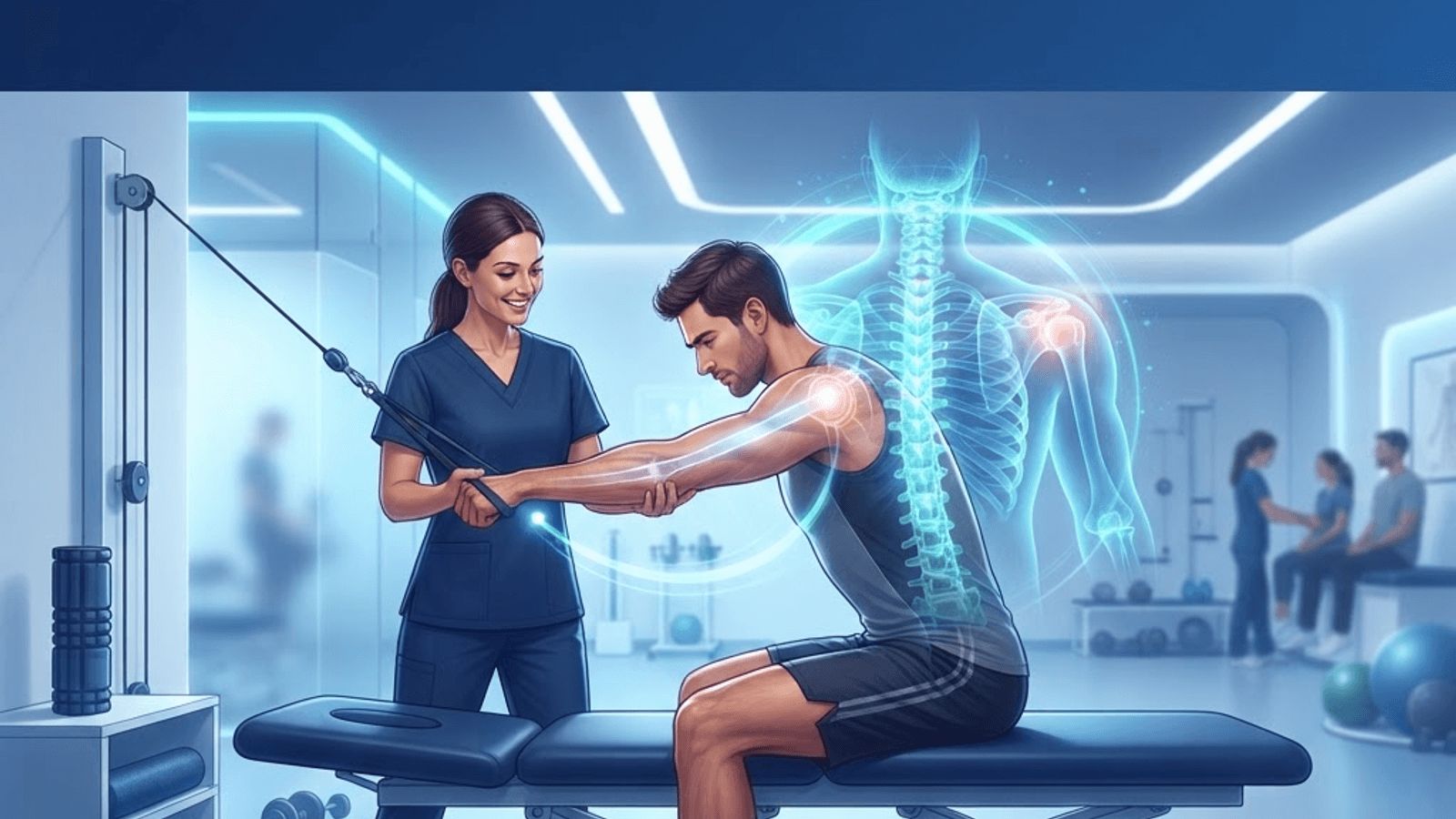
Physiotherapy has evolved considerably in response. Contemporary practice has moved away from passive treatments delivered to a patient and toward active rehabilitation where the patient does the work under expert guidance. Evidence consistently supports this shift: graded loading, progressive strengthening and education produce better long-term outcomes than manual therapy alone.
Selection Criteria
Centres were assessed on clinical qualification and specialisation, evidence-based practice, facilities and rehabilitation equipment, appointment availability, quality of patient education, and demonstrated outcomes across a range of conditions.
1. Erne Physiotherapy Clinic
A comprehensive musculoskeletal practice serving Enniskillen, Erne Physiotherapy Clinic treats back and neck pain, joint problems, tendinopathy and post-surgical recovery. Assessment is thorough, and treatment plans centre on structured exercise progression with clear home programmes. Patients are taught to understand their condition rather than simply receiving treatment.
2. Omagh Sports Injury Centre
Focused on athletic injury, this centre works extensively with Gaelic football, hurling, soccer and rugby players across the district. Services include acute injury management, return-to-play assessment, biomechanical analysis and injury prevention screening. Relationships with local clubs allow early intervention that prevents minor issues becoming season-ending.
3. Lakeland Rehabilitation Services
Specialising in recovery after major surgery, stroke and serious injury, Lakeland Rehabilitation Services provides intensive multidisciplinary programmes. Physiotherapy is delivered alongside occupational therapy and, where needed, speech and language input. The goal is functional independence rather than isolated measures of strength or range.
4. Strule Manual Therapy Practice
Combining hands-on techniques with active rehabilitation, Strule Manual Therapy Practice treats spinal and peripheral joint dysfunction. Manual therapy is used to reduce pain and restore movement sufficiently for exercise to progress, rather than as a treatment in itself, which reflects current best evidence.
5. Fermanagh Women's Health Physiotherapy
Providing specialist pelvic health services, this practice treats pelvic floor dysfunction, incontinence, prolapse, pregnancy-related pain and postnatal recovery. These conditions are extremely common yet significantly underreported, and having discreet local specialist care available makes a genuine difference to women who might otherwise suffer indefinitely.
6. Clogher Valley Mobile Physio
Delivering treatment in patients' homes across rural areas, Clogher Valley Mobile Physio serves those unable to travel including elderly, post-operative and severely limited patients. Home assessment also allows the therapist to address environmental factors and practise functional tasks in the actual setting where they matter.
7. Enniskillen Hydrotherapy Centre
Using a heated therapeutic pool, this centre provides water-based rehabilitation for arthritis, chronic pain, post-surgical recovery and neurological conditions. Buoyancy reduces joint loading while water resistance provides strengthening, allowing patients to move in ways that are impossible on land. Warmth also eases muscle guarding significantly.
8. Northwest Neurological Physiotherapy
Specialising in neurological rehabilitation, this practice treats patients with stroke, multiple sclerosis, Parkinson's disease, brain injury and spinal cord injury. Treatment focuses on movement retraining, balance, spasticity management and maintaining function over the long term. Family and carer education forms an important component.
9. Dromore Occupational Physiotherapy
Working with employers across the district, Dromore Occupational Physiotherapy provides workplace assessment, ergonomic advice, injury prevention programmes and support for employees returning to work. Manufacturing, agriculture and office environments each present distinct risks, and interventions are tailored accordingly.
10. Lough Erne Pain Management Physiotherapy
Focused on persistent pain, this service applies contemporary pain science alongside graded activity, pacing strategies and psychological approaches. Chronic pain frequently persists after tissue healing, and treatment addressing the nervous system rather than the original injury produces substantially better outcomes for this group.
What to Expect From Physiotherapy
A first appointment should involve detailed history taking, physical assessment and a clear explanation of findings. You should leave understanding what the problem is, what the plan is and roughly how long recovery should take. Treatment will usually include exercises to perform at home, and adherence to these is the single strongest predictor of outcome.
Progress is rarely linear. Some soreness after exercise progression is normal and not a sign of damage. A good therapist will explain what level of discomfort is acceptable and what should prompt you to stop. Be honest about whether you are completing your programme, as therapists adjust plans based on this and cannot help if the picture is inaccurate.
Preventing Injury in the First Place
Most musculoskeletal injury is related to load exceeding capacity, either through a single overwhelming event or accumulated overuse. Building capacity through regular resistance training is genuinely protective, particularly for those in physically demanding work. Gradual progression when increasing activity prevents the sudden load spikes that cause most overuse injury.
For agricultural and industrial workers, mechanical aids for lifting, varied task rotation and adequate recovery between heavy days reduce cumulative strain substantially. For office workers, the most important factor is movement variety rather than any particular chair or desk configuration; changing position regularly matters more than finding one perfect posture.
Developments in Physiotherapy Practice
Telehealth consultation has become established for assessment, exercise progression and follow-up, saving considerable travel in a rural district. Movement analysis technology has become more accessible, allowing objective measurement of progress. There is stronger emphasis on strength training within rehabilitation across all conditions, including older adults, where evidence for resistance exercise is now overwhelming. Pain education has become a treatment in its own right for persistent pain conditions.
Conclusion
The physiotherapy centres of Fermanagh and Omagh provide well-qualified, evidence-informed care across musculoskeletal, sporting, neurological, pelvic health and occupational needs. Seeking assessment early rather than waiting for a problem to resolve on its own generally shortens recovery, and committing properly to the exercise programme is what ultimately determines the result.
Want your brand featured in front of decision-makers? Publish a guest post or get a link insertion in our guides through AAMAX's guest post and link insertion service.
Helpful Links
 SponsoredAAMAX — Full-Service Digital Agency
Write for Us
Share your expertise with our readers. We welcome guest contributions from industry specialists.
Pitch your idea