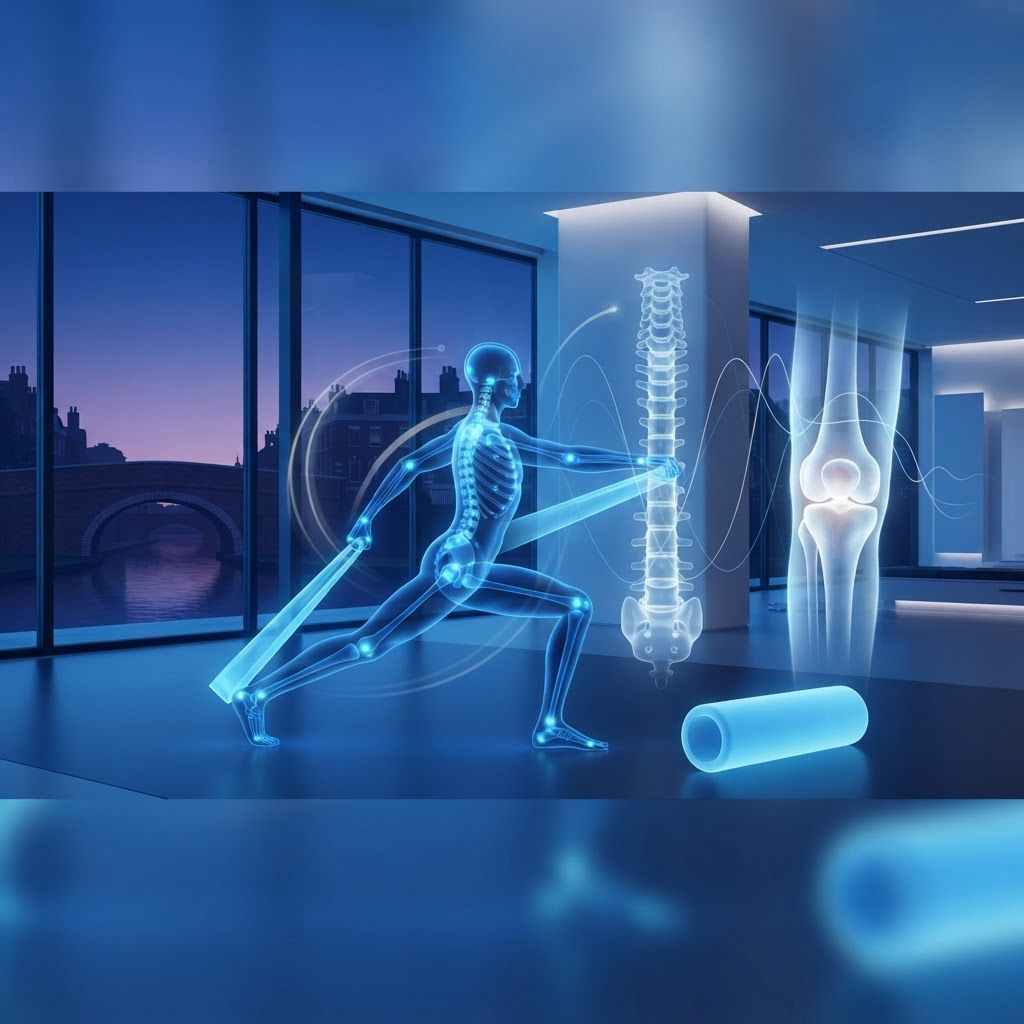
Why Physiotherapy Demand Is High in Camden
Camden combines two populations that generate a great deal of musculoskeletal need. The first is highly active: cyclists commuting through Bloomsbury, runners circling Regent's Park and Primrose Hill, climbers, dancers and gym users drawn to the borough's dense fitness infrastructure. The second is sedentary in a specific and damaging way: knowledge workers spending long hours at screens in the office clusters around King's Cross, Euston and Holborn, often on laptops in poorly configured home setups.
The result is a clinic landscape geared towards two problem sets. Acute sports injuries such as ankle sprains, hamstring tears, rotator cuff irritation and patellofemoral pain sit alongside chronic postural complaints including cervical and thoracic stiffness, low back pain, tension headaches and repetitive strain in the forearm and wrist. Camden's best physiotherapy centres handle both, but their emphases differ, and matching the clinic to your problem materially changes results.
What Good Physiotherapy Actually Looks Like
Modern physiotherapy is far more than massage and heat packs. Evidence strongly supports active rehabilitation: progressive loading, strength development, movement retraining and graded return to activity. Manual therapy has a role, particularly for short-term pain relief and improving tolerance to exercise, but a clinic that relies exclusively on hands-on treatment without giving you an exercise programme is not practising to current standards.
A thorough first appointment should include detailed history taking, objective measurement of range and strength, functional testing relevant to your goals, an explanation of the likely diagnosis in plain language and a realistic timeline. You should leave with something to do. Reassessment at subsequent visits should reference those baseline measurements rather than relying on subjective impressions alone.
Verify that clinicians are registered with the Health and Care Professions Council and belong to the Chartered Society of Physiotherapy. For sports work, additional qualifications in strength and conditioning or sports rehabilitation are meaningful. For persistent pain, training in pain neuroscience education and cognitive functional therapy is increasingly valuable.
1. Camden Sports and Spinal Physiotherapy
Clinics of this type form the core of the borough's provision, combining musculoskeletal assessment with rehabilitation gym space. Their advantage is the ability to progress patients from early pain management through to loaded strength work in the same building, without an awkward handover to an external trainer. Spinal specialisms, shoulder rehabilitation and running assessment are typical strengths.
2. Bloomsbury Physiotherapy and Rehabilitation
Serving the university and hospital quarter, these practices often draw clinicians with hospital or academic backgrounds. That shows in documentation quality and diagnostic caution: appropriate referral for imaging, awareness of inflammatory and neurological conditions that mimic mechanical pain, and clear communication with medical colleagues. A good choice when a diagnosis is uncertain.
3. Kentish Town Physio and Pilates Studios
Integrating clinical Pilates with physiotherapy has become one of the most effective approaches for chronic low back and pelvic pain. Reformer-based rehabilitation allows precise load control and postural retraining that floor exercises struggle to replicate. Kentish Town and Camden Town host several studios offering one-to-one clinical sessions before graduating patients into small supervised classes.
4. King's Cross Musculoskeletal Clinics
The regenerated King's Cross district supports clinics designed around the working day: early morning and late evening appointments, rapid access, and a heavy emphasis on desk-related complaints. Ergonomic assessment, workstation advice and short high-frequency treatment blocks suit patients who cannot commit to lengthy programmes. Many offer occupational health contracts to nearby employers.
5. Sports Injury and Performance Centres
Performance-oriented centres serve amateur and semi-professional athletes with running gait analysis, force plate testing, isokinetic strength assessment and return-to-sport criteria rather than arbitrary time-based clearance. For anyone recovering from an anterior cruciate ligament reconstruction, Achilles rupture or recurrent hamstring injury, objective discharge testing significantly reduces reinjury risk.
6. Neurological Physiotherapy Services
Camden's proximity to major neurological centres has produced specialist neuro-physiotherapy provision for stroke recovery, multiple sclerosis, Parkinson's disease and spinal cord injury. Treatment focuses on functional independence: transfers, gait re-education, balance, spasticity management and fatigue pacing. Home-based sessions are commonly available where travel is difficult.
7. Women's Health and Pelvic Physiotherapy
Pelvic health physiotherapy addresses pregnancy-related pain, postnatal recovery, abdominal separation, incontinence, pelvic organ prolapse and pelvic pain conditions. Camden clinics offering this specialism typically provide internal assessment where clinically appropriate, real-time ultrasound biofeedback and structured pelvic floor training. Demand has grown quickly as awareness has improved, and outcomes for conservative treatment are strong.
8. Hand Therapy and Upper Limb Clinics
Hand and wrist rehabilitation is a distinct discipline requiring custom splinting, scar management, precise tendon-loading protocols and detailed knowledge of surgical repair timelines. Clinics in central Camden serve post-surgical patients as well as musicians and craftspeople, a notable population given the borough's creative industries.
9. NHS Community Physiotherapy Services
Community musculoskeletal services in Camden provide assessment, group rehabilitation classes and self-management education without cost. Waiting times vary and appointment numbers are limited, but the clinical standard is high and the group class model is genuinely effective for conditions such as knee osteoarthritis and chronic low back pain, where supervised exercise is the primary evidence-based treatment.
10. Mobile and Home-Visit Physiotherapy
Home-visiting physiotherapists serve older residents, post-operative patients and anyone with limited mobility. The clinical advantage is contextual: assessing stairs, chairs, bathroom access and daily routines in the actual environment produces more relevant recommendations than any clinic assessment can. Falls prevention programmes delivered at home have particularly good evidence behind them.
Current Trends in Physiotherapy
Tele-rehabilitation has settled into a permanent role, particularly for exercise progression and check-in appointments between hands-on sessions. Load management thinking, borrowed from elite sport, has spread into general practice: rather than resting an injury completely, therapists now calibrate activity to keep tissue adapting. Shockwave therapy, blood flow restriction training and dry needling have all found niches, though each works best as an adjunct rather than a standalone solution.
Pain science education has changed the conversation around persistent pain. Explaining sensitisation, and separating pain from tissue damage, helps patients re-engage with movement rather than avoid it. Clinics that invest time in this education generally report better outcomes in long-standing cases.
How Many Sessions Should You Expect
Simple acute injuries often resolve within three to six sessions alongside a home programme. Chronic conditions and post-surgical rehabilitation may require several months, though visit frequency should decrease as independence increases. Be cautious of clinics that sell large session packages upfront or schedule open-ended weekly appointments without reassessment; effective physiotherapy aims to make itself unnecessary.
Choosing a Clinic in Camden
Define your goal precisely, whether that is returning to running a certain distance, lifting a child without pain, or sitting through a working day comfortably. Ask prospective clinics how they measure progress towards that goal and how many patients with your specific problem they see. Confirm session length, whether you see the same clinician each time, and whether rehabilitation gym access is included. In a borough with this much choice, insisting on an active, measurable and goal-driven approach is entirely reasonable.
Want your brand featured in front of decision-makers? Publish a guest post or get a link insertion in our guides through AAMAX's guest post and link insertion service.
Helpful Links
 SponsoredAAMAX — Full-Service Digital Agency
Write for Us
Share your expertise with our readers. We welcome guest contributions from industry specialists.
Pitch your idea