

Paper and the Medway Valley
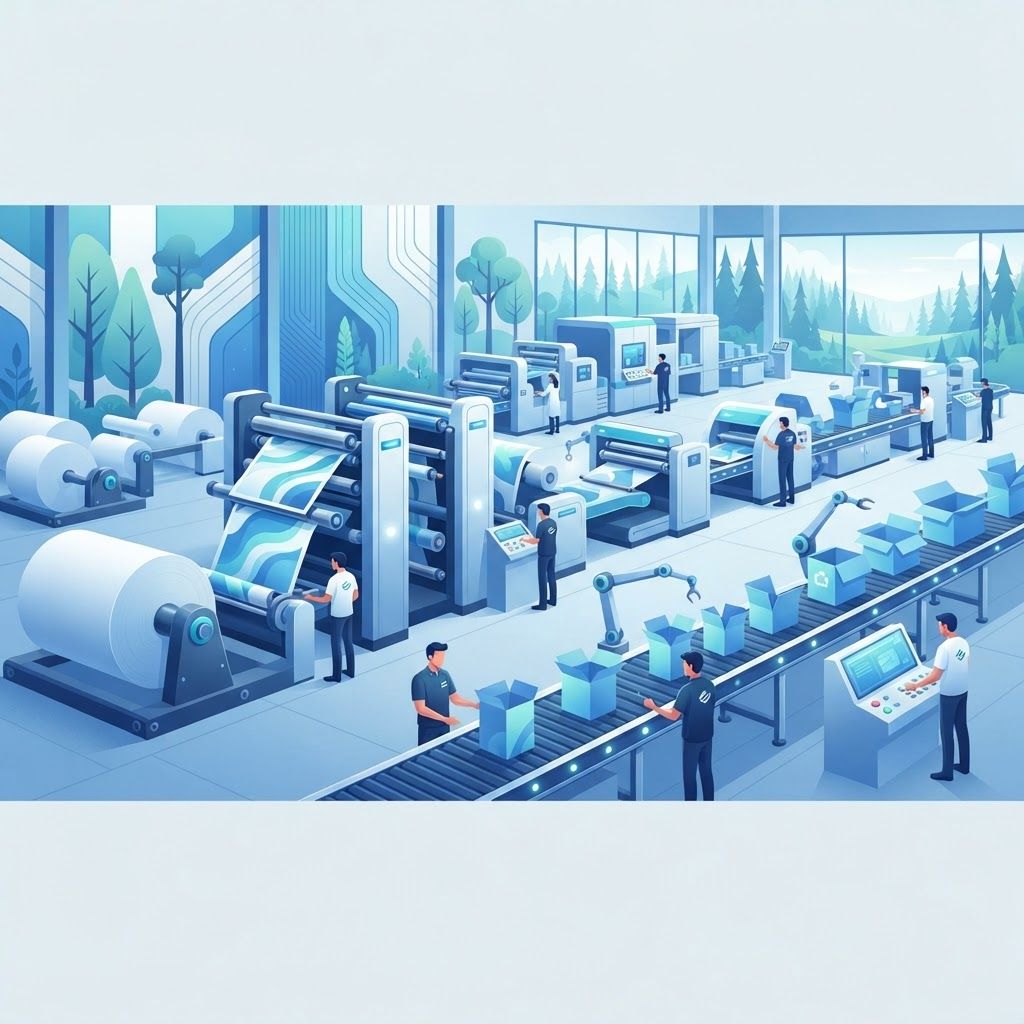
Few industries are as historically tied to this part of Kent as papermaking. The Medway Valley, with its abundant clean water and good transport links, supported paper mills for generations, and places such as Snodland and Aylesford became genuine centres of the trade. That industrial heritage has not disappeared; it has evolved. Today the sector in Tonbridge and Malling is dominated by converting, printing, packaging manufacture and recycling rather than by large-scale pulping, but the skills, infrastructure and supply relationships built over decades remain a real asset.
The modern paper goods industry here serves food producers, e-commerce businesses, pharmaceutical companies, retailers and industrial manufacturers. It produces corrugated cases, folding cartons, labels, hygiene products, stationery, specialist papers and bespoke protective packaging. It is also one of the most genuinely circular industries in the country, with recovered fibre forming a large proportion of feedstock.
What Defines a Strong Paper Goods Manufacturer
Material understanding is fundamental. Board grade, flute profile, liner weight, coating and fibre source all affect strength, printability and cost. A manufacturer who asks detailed questions about what the packaging must protect, how it will be transported, how it will be stored and how it will be opened is applying real expertise.
Print quality and consistency matter increasingly, as packaging has become a primary brand communication surface. Flexographic, litho-laminated and digital printing each have different strengths in terms of quality, setup cost and minimum run, and the right choice depends on volume and design complexity.
Certification is important to most commercial buyers. Chain of custody certification for responsibly sourced fibre, food contact compliance for packaging that touches food, and quality and environmental management certification are standard expectations in business-to-business supply.
Structural design capability adds significant value. A converter with a design studio and sample-cutting table can prototype a carton or case, test it, and refine it before committing to tooling, which saves both money and material.
Ten Leading Paper Goods Manufacturers Serving the Borough
Medway Corrugated Packaging manufactures corrugated cases, trays and transit packaging, offering structural design, print and rapid sample turnaround for food, e-commerce and industrial customers.
Snodland Paper Converting operates slitting, sheeting, laminating and rewinding lines, converting parent reels into formats suited to printers, packaging producers and industrial users.
Aylesford Recycled Fibre Products focuses on high recycled content paper and board products, working closely with recovered paper streams to supply converters seeking recycled material with consistent performance.
Tonbridge Carton Manufacturing produces folding cartons and rigid boxes for retail, cosmetics, food and pharmaceutical clients, with finishing options including foiling, embossing and specialist coatings.
Kings Hill Label Printing manufactures self-adhesive and wet-glue labels across digital and flexographic presses, serving food, drink, cosmetics and industrial product markets with short and medium runs.
Weald Hygiene Paper Products produces tissue, wiping and hygiene paper products for commercial, healthcare and washroom markets, including dispenser-compatible formats.
Malling Commercial Print offers litho and digital printing for brochures, manuals, stationery and marketing materials, with in-house finishing and fulfilment.
North Downs Speciality Papers supplies and converts technical papers including greaseproof, barrier-coated, release liner and archival grades for specialist industrial and food applications.
Borough Green Protective Packaging manufactures paper-based void fill, moulded pulp inserts and honeycomb protective packaging, offering plastic-free alternatives for fragile goods.
Larkfield Paper Recycling collects, sorts and bales recovered paper and board from commercial premises, feeding it back into the manufacturing supply chain and providing waste reporting for customers.
Trends in the Paper and Packaging Industry
The shift away from plastic packaging is the single biggest driver of growth. Retailers and brands under pressure to reduce plastic have turned to paper and board alternatives for everything from protective wrap to product trays. This has created genuine innovation in barrier coatings that resist grease and moisture while remaining recyclable in standard paper streams, a technically demanding balance.
E-commerce continues to reshape demand. Packaging must now survive a parcel network rather than a palletised retail supply chain, and it must also provide a good unboxing experience. Right-sizing to reduce void space cuts both material use and shipping cost, and automated box-making equipment that produces bespoke case sizes on demand is becoming more common.
Extended producer responsibility has changed the economics of packaging decisions. Producers now bear more of the cost of managing packaging waste, which rewards lightweighting, recyclability and clear labelling. Converters that can advise on the compliance implications of a design choice are increasingly valued.
Energy and fibre costs remain volatile, and paper manufacturing is energy intensive. Mills and converters have invested heavily in efficiency, heat recovery and on-site generation, and many now report carbon data alongside product specification.
Getting the Best from a Paper Goods Supplier
Describe the job rather than just the product. Tell the supplier what goes inside, how heavy it is, how it is handled, what temperatures and humidity it will experience and how it must present on shelf or on arrival. Good converters will often propose a simpler, cheaper or stronger solution than the one you had in mind.
Request physical samples and test them realistically, including transit trials where the packaging protects something valuable or fragile. Confirm recyclability claims against actual kerbside and commercial recycling capability rather than theoretical recyclability.
For ongoing supply, agree call-off arrangements and stock holding so you are not exposed to long lead times, and review artwork and specification versions carefully to prevent outdated designs being produced in bulk.
Final Thoughts
Paper goods manufacturing in Tonbridge and Malling connects a proud Medway Valley heritage to a modern, circular and fast-changing packaging industry. The companies profiled here cover corrugated packaging, converting, cartons, labels, hygiene products, print, speciality papers, protective packaging and recycling. As buyers move away from plastic and face tighter producer responsibility rules, the technical advice these firms offer is becoming as valuable as the products themselves.
Want your brand featured in front of decision-makers? Publish a guest post or get a link insertion in our guides through AAMAX's guest post and link insertion service.
Helpful Links
 SponsoredAAMAX — Full-Service Digital Agency
Write for Us
Share your expertise with our readers. We welcome guest contributions from industry specialists.
Pitch your idea

