

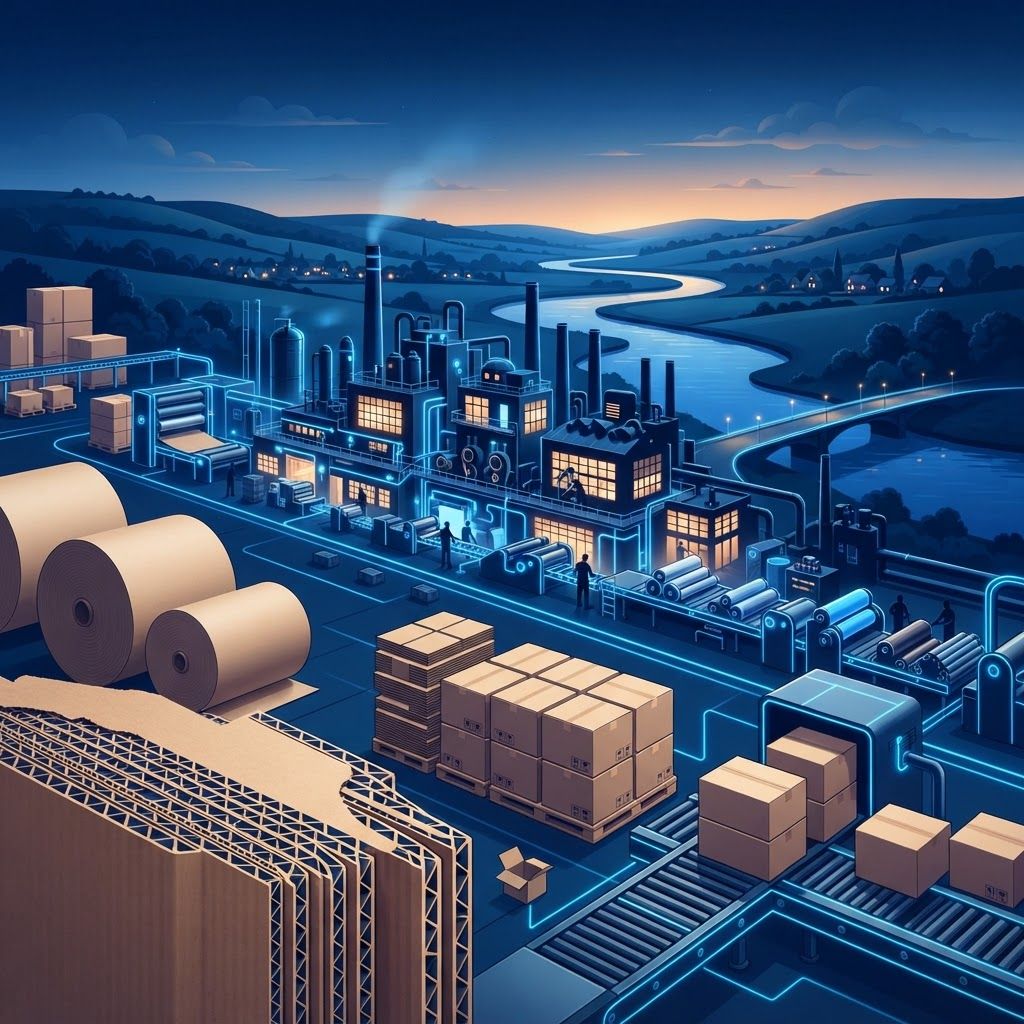
Centuries of Papermaking on the Medway
Few industries are as historically bound to Maidstone as papermaking. The River Medway provided the clean water and power that early mills required, and by the eighteenth and nineteenth centuries the Maidstone area had become one of England's most significant papermaking districts, producing everything from writing paper to specialist grades used in banknotes and printing. That heritage is not merely a museum story. It left behind industrial infrastructure, technical skills and supply relationships that continue to support a substantial paper and packaging sector in the town today.
The modern industry looks different from its predecessors. Rather than large integrated mills alone, the sector now comprises corrugated packaging converters, carton makers, tissue and hygiene producers, print finishers, label manufacturers and stationery specialists. Together they serve Kent's food producers, e-commerce operations, agricultural packers, retailers and offices, and they have found themselves unexpectedly well positioned by the global shift away from plastic packaging.
The Ten Leading Paper Goods Manufacturers
1. Maidstone Paper Mills represents the traditional heart of the sector, producing paper and board grades for conversion into packaging and print products. Modern operations centre on efficient use of recovered fibre, careful water management and consistent grade quality, the three factors that determine competitiveness in contemporary papermaking.
2. Medway Corrugated Packaging manufactures corrugated cases, trays, shelf-ready packaging and transit protection. With Kent's fruit growers and food processors needing large volumes of seasonal packaging, the company's ability to produce bespoke case sizes quickly is a decisive advantage.
3. Kent Carton and Folding Box produces printed folding cartons for food, drink, cosmetics and retail products. Structural design expertise sits alongside high-quality print, allowing customers to develop packs that protect the product, run reliably on packing lines and present well on shelf.
4. Invicta Tissue and Hygiene Products converts parent reels into hand towels, toilet tissue, centrefeed rolls and wiping products for the washroom and janitorial market. Contract and facilities management customers value consistent quality, dependable delivery and increasingly the recycled content of the finished product.
5. Weald Label and Print Manufacturing produces self-adhesive labels, sleeves and tags for food, drink and industrial clients. Digital printing has transformed this niche, making short runs, seasonal variants and variable data labelling commercially viable for even small producers.
6. Maidstone Stationery and Office Paper manufactures and converts notebooks, pads, envelopes, files and business stationery. Corporate demand for well-designed, sustainably certified stationery has proved surprisingly resilient in an era of digital documents, particularly for client-facing and branded materials.
7. Bearsted Speciality Papers supplies technical grades including greaseproof, release liners, filter media and papers engineered for particular industrial processes. These are low-volume, high-knowledge products where technical service matters far more than price per tonne.
8. Kentish Paper Bags and Wrapping manufactures paper carrier bags, food service bags, wrapping sheets and greaseproof liners. As retailers and food outlets have moved away from plastic, this segment has seen some of the strongest growth in the entire sector.
9. Loose Valley Print Finishing provides die cutting, laminating, foiling, embossing, folding and gluing services to printers and packaging producers across the South East. Finishing is where a printed sheet becomes a functional product, and specialist capability of this kind supports the whole regional cluster.
10. Boughton Recycled Fibre Processing collects, sorts and processes recovered paper and board for use as mill feedstock. Its role closes the loop locally, converting waste from Kent businesses back into raw material for regional manufacturing rather than exporting it.
The Sustainable Packaging Boom
The single largest force acting on this industry is substitution away from plastic. Regulatory changes, retailer commitments and consumer preference have driven a sustained transfer of packaging volume from polymer to paper and board. Paper's advantage is that established kerbside collection and recycling systems handle it well, and recycled fibre content in packaging grades is already high.
That opportunity comes with technical challenges. Paper must be engineered to resist grease, moisture and mechanical stress in applications previously served by plastic film, and barrier coatings must themselves remain recyclable. Local converters have invested considerable development effort in water-based and dispersion barrier coatings that provide protection without compromising repulpability.
Design for circularity has become a discipline in its own right. Mono-material packs, elimination of plastic windows, water-based inks, easy separation of components and right-sizing to reduce material and transport volume all now feature in briefs. E-commerce has added its own requirements, since packaging must survive parcel networks, minimise void space and, ideally, present well when opened.
Energy and water use remain the industry's principal environmental burden. Progress has come from heat recovery, improved dewatering, closed-loop water systems and renewable electricity procurement, and buyers increasingly ask suppliers to report on these metrics as part of their own reporting obligations.
Specifying Paper Products Successfully
Start with the performance requirement rather than a familiar specification. Define the weight to be carried, stacking height, humidity and temperature conditions, shelf life, transport method and any food contact requirement. A competent converter will translate that into an appropriate board grade and structure, often identifying a lighter, cheaper option than the customer expected.
Request samples and test them realistically. Fill them, stack them, transport them and open them as a customer would. Laboratory data is useful, but real handling reveals problems that specifications hide.
Check certification if sustainability claims matter to your business. Recognised chain-of-custody certification for fibre sourcing, verified recycled content figures and clear recyclability guidance all support credible customer communication and reduce the risk of misleading claims.
Consider print and finishing early. Board grade influences print quality, and coating choices influence both appearance and recyclability. Involving the converter at the design stage avoids expensive redesigns after artwork has been approved.
Finally, plan for volume and lead time. Paper and board pricing moves with fibre and energy markets, so discuss stock holding, call-off arrangements and price review mechanisms. For seasonal Kent businesses, particularly in agriculture and food, agreeing capacity ahead of the peak is essential.
Heritage With a Future
Maidstone's paper goods manufacturers combine an industrial heritage stretching back centuries with a product set that suits contemporary environmental priorities remarkably well. As packaging continues its shift toward fibre-based solutions and businesses seek suppliers who can evidence responsible sourcing and efficient production, the town's papermaking cluster remains not just relevant but genuinely advantaged.
Want your brand featured in front of decision-makers? Publish a guest post or get a link insertion in our guides through AAMAX's guest post and link insertion service.
Helpful Links
 SponsoredAAMAX — Full-Service Digital Agency
Write for Us
Share your expertise with our readers. We welcome guest contributions from industry specialists.
Pitch your idea

