Paper Goods Manufacturing in Gedling
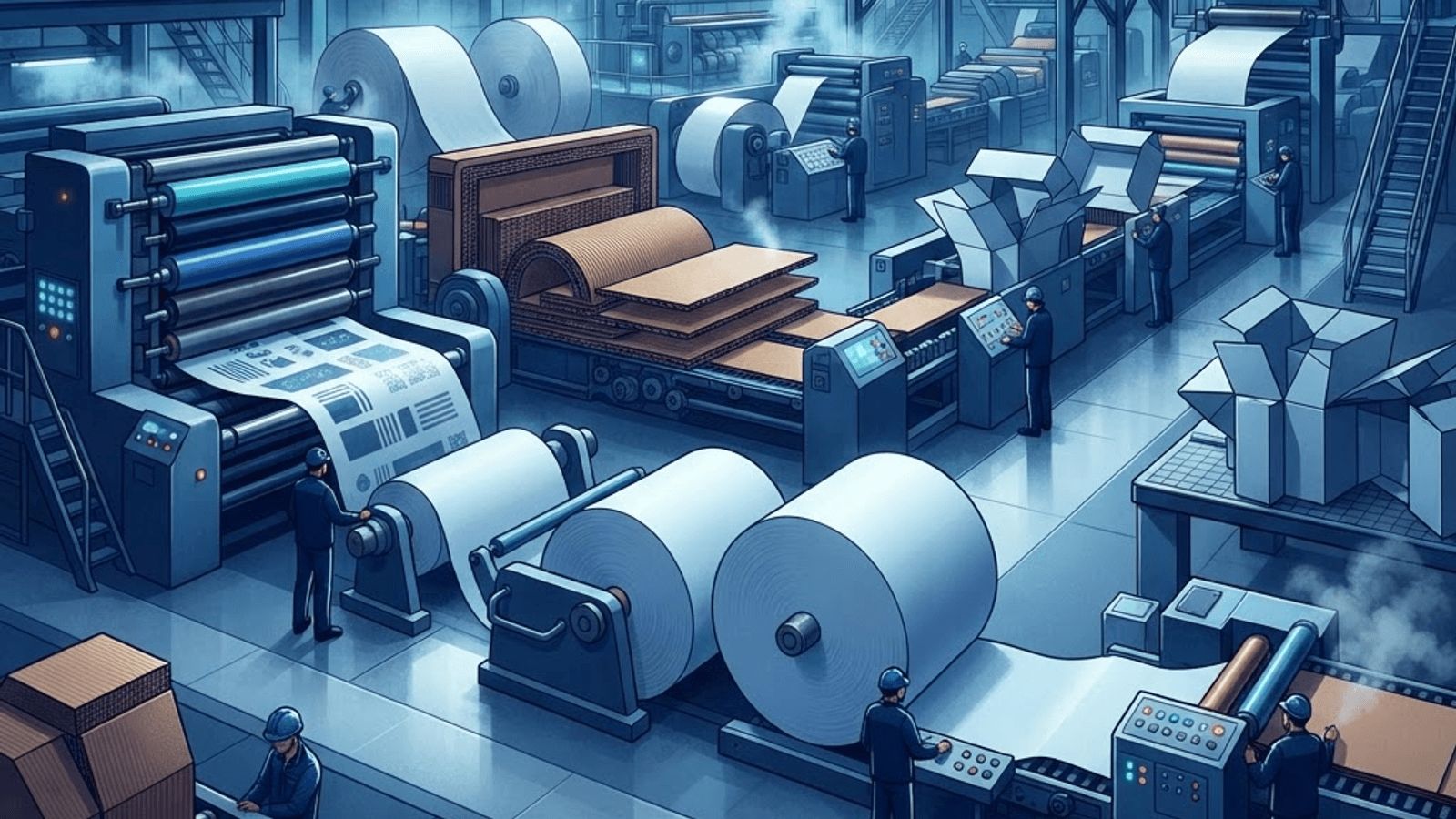
Paper has proved remarkably resilient. Predictions of a paperless economy have repeatedly underestimated how many essential functions paper and board perform, from protecting goods in transit to labelling, hygiene, filtration and print communication. In Gedling, a cluster of converters, printers and packaging manufacturers continues to serve customers across the East Midlands with exactly these products.
Nottinghamshire's printing and packaging heritage runs deep, and the borough's proximity to major distribution corridors makes it a sensible base for businesses whose products are bulky relative to their value. Corrugated boxes, in particular, do not travel economically over long distances, which gives local manufacturers a structural advantage over distant competitors.
What Local Paper Goods Manufacturers Produce
Corrugated packaging is the largest category, covering shipping cases, die-cut retail-ready packaging, protective inserts and bespoke transit solutions. Folding cartons serve food, cosmetics and retail products. Commercial printing produces brochures, catalogues, stationery and marketing materials. Label manufacturing covers self-adhesive, wraparound and thermal transfer labels. Tissue and hygiene converting produces wipes, towels and dispenser products. Finally, speciality converting includes envelope manufacture, paper bags, cores, tubes and protective void fill.
The Top 10 Paper Goods Manufacturers Serving Gedling
1. Gedling Corrugated Packaging
Designs and manufactures corrugated cases and die-cut packaging, with in-house structural design and sample-making so customers can test a physical prototype before committing to tooling.
2. Colwick Carton Company
Produces printed folding cartons for food, confectionery and consumer goods, offering litho and digital print with a range of finishing effects.
3. Netherfield Print Works
A commercial printer handling brochures, catalogues, business stationery and marketing collateral, combining offset litho for volume with digital presses for short runs and personalisation.
4. Arnold Label Manufacturing
Manufactures self-adhesive labels for food, industrial and logistics applications, including variable data, barcode and tamper-evident formats.
5. Carlton Protective Packaging
Specialises in transit protection, producing fitted corrugated inserts, moulded pulp packaging and paper-based void fill as alternatives to plastic protective materials.
6. Mapperley Hygiene Converting
Converts parent reels of tissue into towels, wipes and dispenser products for washroom, catering and industrial cleaning markets.
7. Burton Joyce Paper Bags
Manufactures printed and plain paper bags, carriers and sacks for retail, food service and takeaway customers, an area that has grown strongly as plastic carriers declined.
8. Lambley Cores and Tubes
Produces spirally wound paper cores, tubes and edge protectors used across the packaging, textile and film industries.
9. Ravenshead Stationery Manufacturing
Makes notebooks, pads, folders and filing products, supplying both branded office suppliers and bespoke corporate customers.
10. Gedling Recycling and Paper Recovery
Collects, bales and processes waste paper and board from local businesses, returning it into the papermaking supply chain and closing the loop for the borough's manufacturers.
Sustainability as a Competitive Advantage
Paper's position in the sustainability debate has improved markedly. As brands replace plastic packaging with fibre-based alternatives, demand for corrugated, moulded pulp and paper-based protective materials has risen substantially. Paper is widely recycled, biodegradable and derived from a renewable resource, which makes it an attractive substitution target.
That said, credible environmental performance requires more than the material itself. Responsible manufacturers hold FSC or PEFC chain-of-custody certification, verifying that fibre comes from sustainably managed forests. They minimise material use through intelligent structural design rather than simply over-engineering packs. They select water-based and vegetable-based inks and avoid plastic laminates and windows that compromise recyclability.
Extended producer responsibility has sharpened commercial focus here. Because businesses now bear the cost of managing the packaging they place on the market, packaging that is lighter and genuinely recyclable is cheaper to be responsible for. This aligns environmental and financial incentives in a way that is driving real design change.
Print Technology and Short-Run Economics
Digital printing has transformed the economics of short runs. Where litho printing requires plates and significant make-ready, digital presses print economically from a single copy, enabling versioning, regional variation, seasonal packaging and personalised print that was previously impossible.
Digital corrugated printing has extended this to packaging, allowing brands to produce small quantities of highly decorated boxes for e-commerce, subscription services and product launches. For customers, this means testing packaging designs at low volume before committing to large runs.
Litho remains dominant for high volumes where per-unit cost matters most, and flexographic printing continues to serve corrugated and label applications. The practical implication for buyers is to state the quantity and the number of design variants upfront, as these determine which technology delivers the best value.
How to Choose a Paper Goods Manufacturer
Involve the manufacturer at the design stage. Structural designers can often reduce board grade, improve pallet utilisation and cut material cost substantially while improving protection. These savings are unavailable once a design is fixed.
Request physical samples. Board feels different in the hand than on screen, and a sample box tested with your actual product reveals problems that drawings will not.
Consider logistics carefully. Packaging is bulky, so storage, delivery scheduling and call-off arrangements affect your costs. Many local manufacturers offer stockholding and scheduled call-off, which frees warehouse space.
Verify certification claims. If you intend to make recyclability or sustainable sourcing claims to your customers, you need documentary evidence from your supplier to support them.
Conclusion
Gedling's paper goods manufacturers occupy an increasingly favourable position as fibre-based materials replace plastics across packaging applications. Their combination of structural design expertise, flexible print technology and local logistics advantage makes them a natural first port of call for businesses across Nottinghamshire and the wider region.
Want your brand featured in front of decision-makers? Publish a guest post or get a link insertion in our guides through AAMAX's guest post and link insertion service.
Helpful Links
 SponsoredAAMAX — Full-Service Digital Agency
Write for Us
Share your expertise with our readers. We welcome guest contributions from industry specialists.
Pitch your idea