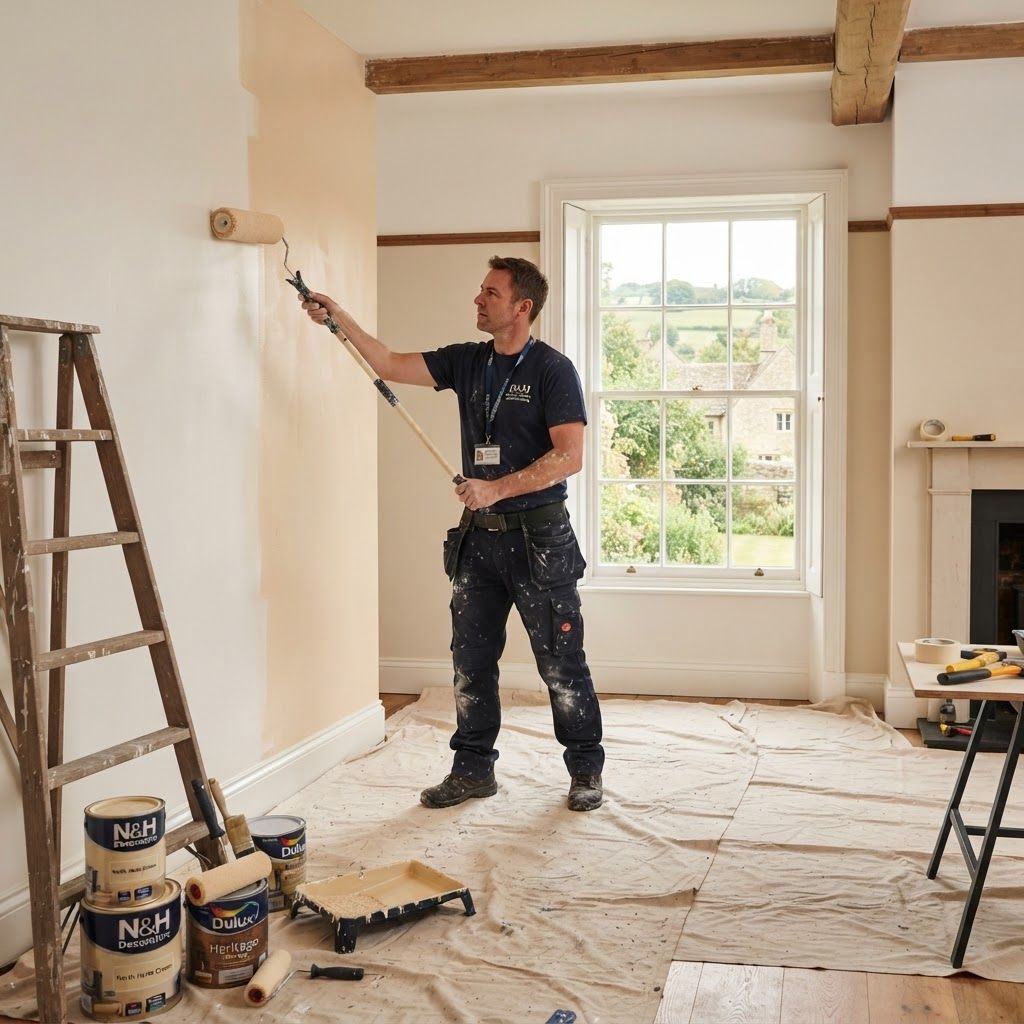
Why Painting Is More Technical Than It Looks
Decorating is often dismissed as the simplest of the building trades, yet it is the one where the gap between competent and poor work becomes visible fastest. A badly prepared wall will show every flaw under low winter light. An unsuitable coating on lime plaster will blister within two seasons. External woodwork painted without proper priming will fail at the joints inside three years.
In North Hertfordshire, where a substantial proportion of the housing stock predates modern construction methods, these considerations carry real weight. The district's best painting contractors are distinguished less by how they apply paint than by how they prepare surfaces and how carefully they specify products.
Breathable Finishes for Historic Buildings
Older properties in Hitchin, Baldock, Ashwell and the surrounding villages were built to manage moisture by allowing it to evaporate through porous materials. Solid walls, lime plaster and lime render all rely on this breathability. Applying modern acrylic or vinyl emulsions over these surfaces traps moisture, leading to blown plaster, salt crystallisation, peeling paint and in severe cases timber decay behind the wall face.
Experienced contractors in the district specify vapour-permeable systems for these buildings: limewash, clay paints, silicate mineral paints and breathable emulsions from specialist manufacturers. They also understand that these products behave differently during application, requiring more coats, careful control of drying conditions and realistic expectations about finish uniformity. A contractor who suggests standard vinyl matt for a lime-plastered cottage wall is signalling a lack of relevant experience.
Preparation: Where Quality Is Actually Determined
Industry estimates consistently place preparation at around seventy per cent of the total labour on a quality decorating job. On interiors that means filling and sanding cracks, caulking junctions, spot priming bare patches, degreasing kitchen surfaces, abrading previously glossed woodwork and applying appropriate primers or mist coats to new plaster.
On exteriors, preparation is even more demanding. Loose and flaking coatings must be removed back to a sound edge, timber must be checked for rot and repaired or spliced, resin must be sealed on knots, and masonry must be cleaned of algae and biological growth and allowed to dry thoroughly. Contractors who quote low prices almost always achieve them by compressing this stage, and the consequences appear within a couple of years.
Modern Coating Technology
Paint technology has advanced considerably. Water-based satinwoods and eggshells for woodwork have largely replaced solvent-based gloss in domestic work, offering far lower odour, faster recoat times and crucially resistance to the yellowing that afflicted traditional oil-based whites. Early water-based products were criticised for durability, but current formulations from leading manufacturers perform well when correctly primed.
Elastomeric and flexible masonry coatings have their place on rendered elevations subject to hairline cracking, though they should be used cautiously on solid wall construction where breathability is required. Anti-mould coatings for bathrooms, scrubbable finishes for hallways and stain-blocking primers for water-damaged ceilings are all routine parts of a well-equipped contractor's specification toolkit.
Spray Application and Commercial Work
Airless spray application has transformed larger projects. On empty properties, new builds and commercial premises, spraying delivers a flawless finish far faster than brush and roller, with excellent coverage on textured surfaces and complex joinery. It demands extensive masking and containment, so it is rarely economical on small occupied rooms, but for a whole-house refurbishment before move-in it can significantly reduce both cost and programme.
Commercial decorating across the district's offices, schools, retail units and healthcare premises brings additional requirements: out-of-hours working, low-odour and fast-drying products, compliance with health and safety documentation, and sometimes specialist coatings for hygiene or fire performance.
Exterior Decorating and Local Weather
Exterior repainting cycles in North Hertfordshire typically run at five to seven years for timber and rather longer for good quality masonry coatings, though south and west elevations weather noticeably faster. The optimum working window runs from late spring through early autumn, when surface temperatures stay above the minimum application threshold and humidity allows proper curing.
Good contractors plan external work seasonally, monitor forecasts rather than pushing on through poor conditions, and use appropriate access equipment. Scaffold or mobile towers rather than precarious ladder work indicate a firm that takes safety and finish quality seriously.
Choosing a Painting Contractor
Ask for a written specification rather than a single lump sum. It should state the number of coats, the products by manufacturer and range, the preparation included, how furniture and floors will be protected and how long the work will take. Two quotes that differ by thirty per cent usually differ in specification, not simply in profit margin.
Look for membership of the Painting and Decorating Association or Dulux Select Decorator and Johnstone's Trade accreditation schemes, all of which involve some vetting of work standards. Confirm public liability insurance and ask about guarantees, which typically run from two to five years on external work when a full specified system has been applied.
Colour Consultation and Design Trends
Many contractors now offer colour consultation, which is genuinely valuable in period properties where light levels and wall texture change how a colour reads. Current preferences across the district's renovation projects lean towards muted earth tones, soft off-whites with warm undertones, deep heritage greens and blues in studies and dining rooms, and painted woodwork in tones related to but distinct from the walls rather than default brilliant white.
Final Thoughts
The best painting contractors in North Hertfordshire earn their reputations through preparation discipline and correct product specification, particularly on the district's substantial stock of older buildings. A detailed written specification, verifiable accreditation and a clear explanation of why particular coatings are proposed are the strongest indicators that a finish will still look good years after the dust sheets come up.
Want your brand featured in front of decision-makers? Publish a guest post or get a link insertion in our guides through AAMAX's guest post and link insertion service.
Helpful Links
 SponsoredAAMAX — Full-Service Digital Agency
Write for Us
Share your expertise with our readers. We welcome guest contributions from industry specialists.
Pitch your idea