

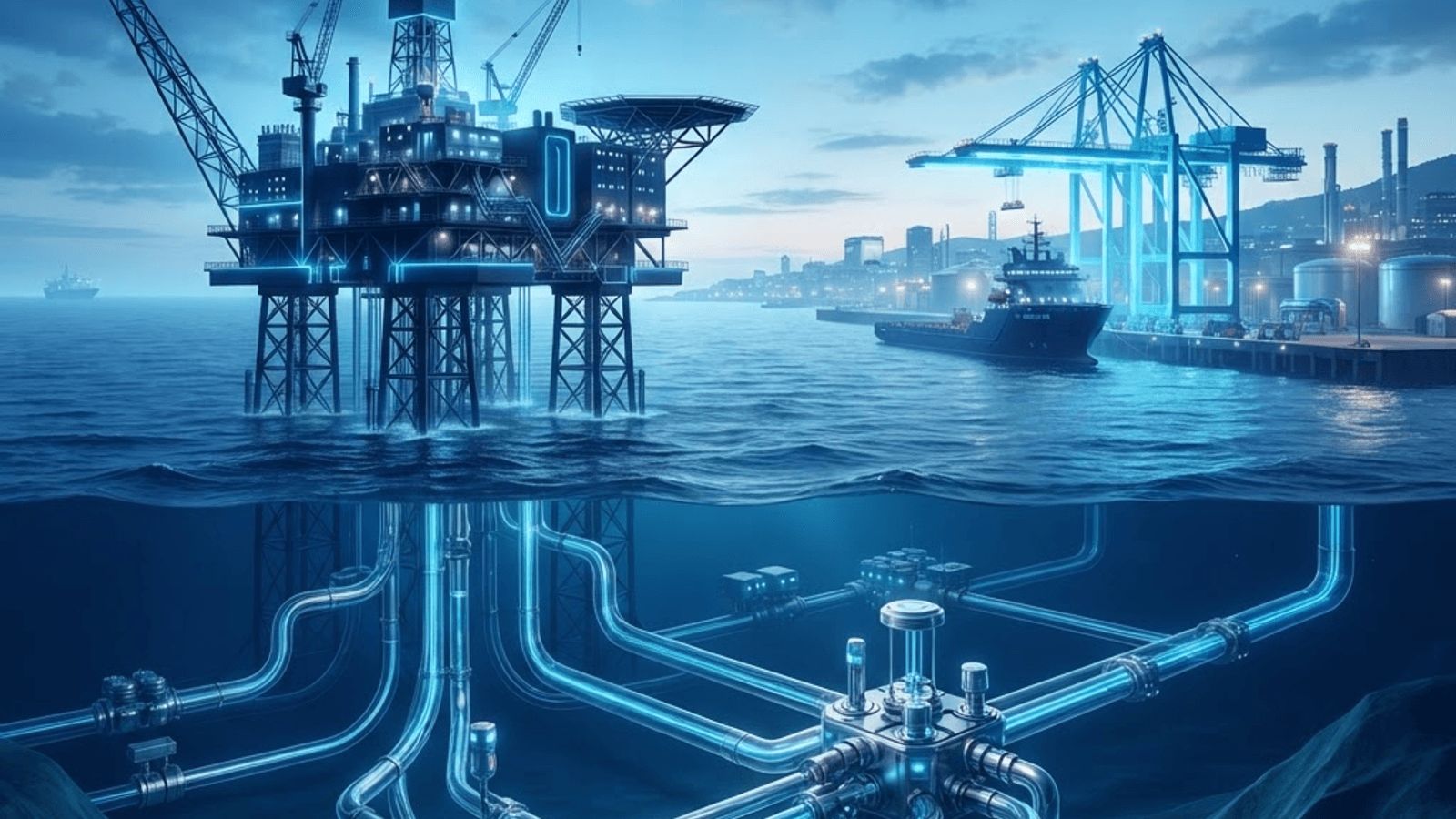
An Established Energy Services Base
While attention has understandably shifted toward renewables, oil and gas remains a significant employer and revenue generator across Tyneside's engineering sector. North Sea operations still require fabrication, subsea equipment, valve and pipeline services, inspection, decommissioning and specialist logistics, and South Tyneside's riverside industrial estates house numerous businesses whose order books span both hydrocarbons and clean energy.
That dual capability is a strategic strength rather than a contradiction. The tolerances, certification regimes, safety culture and materials expertise developed in oil and gas transfer directly into offshore wind and, increasingly, hydrogen and carbon capture projects. Many borough firms describe themselves as energy engineering businesses rather than oil and gas suppliers, reflecting how deliberately they have diversified.
The Segments of the Oil and Gas Supply Chain
Upstream services support exploration and production, including drilling equipment, wellhead components and intervention tooling. Subsea covers manifolds, control systems, connectors, remotely operated vehicle support and installation engineering. Pipelines and flow assurance cover valves, pumps, pigging, corrosion management and integrity inspection. Topside and structural work covers module fabrication, piping spools, structural steel and coatings. Decommissioning covers platform removal, well plugging support, cutting, lifting and onshore dismantling and recycling. Support services cover inspection, non-destructive testing, training, logistics and specialist labour supply.
The Top 10 Oil and Gas Companies in South Tyneside
1. Tyne Subsea Engineering
A precision subsea equipment manufacturer producing connectors, control components and pressure-containing assemblies to demanding offshore specifications, with in-house test facilities that allow full qualification before dispatch.
2. Riverside Valve & Flow Services
Riverside supplies, refurbishes and tests valves and actuators for offshore and onshore installations, offering site-based servicing, pressure testing and obsolescence management for ageing assets.
3. Jarrow Offshore Fabrication
Jarrow Offshore Fabrication produces piping spools, structural modules, skids and pressure vessels under recognised welding and coating standards, drawing on the borough's deep fabrication labour pool.
4. Shields Inspection & Integrity
Providing non-destructive testing, rope access inspection, corrosion mapping, weld verification and integrity reporting, Shields Inspection & Integrity supports both operational assets and pre-decommissioning assessment.
5. Boldon Drilling Support Services
Boldon supplies drilling equipment servicing, downhole tool refurbishment, handling equipment recertification and rental of specialist tooling for intervention campaigns.
6. Hebburn Decommissioning Solutions
Focused on late-life assets, Hebburn Decommissioning Solutions provides cutting and severance services, lift planning support, onshore dismantling, waste segregation and material recovery with documented recycling rates.
7. Simonside Process Engineering
Simonside undertakes process and mechanical design, hazard identification support, piping and instrumentation development, and brownfield modification engineering for existing facilities.
8. Coast Marine Logistics & Supply Base
Coast manages quayside storage, project cargo handling, customs documentation, vessel loading and offshore supply coordination through Tyne facilities.
9. Cleadon Energy Recruitment & Training
Cleadon supplies technical personnel including welders, pipefitters, instrument technicians and inspectors, alongside competence assessment and offshore certification training.
10. Harbour Carbon Capture & Transition Engineering
Harbour applies oil and gas engineering capability to carbon capture, transport and storage projects, hydrogen infrastructure and industrial decarbonisation studies, representing the sector's clearest transition pathway.
Why Engineering Standards Are So Demanding
Oil and gas work carries tolerances that seem unforgiving until the operating environment is understood. Equipment must function reliably at high pressure and temperature, in corrosive saltwater conditions, often subsea and beyond easy reach for repair. A failed weld or an incorrectly specified alloy can create safety, environmental and production consequences measured in millions, so material certification, welder qualification records, heat treatment documentation, non-destructive testing reports and coating inspection records accompany almost every component. This documentation culture is exactly why borough firms transfer so successfully into offshore wind, hydrogen and carbon capture work, where clients apply comparable assurance regimes. The discipline itself, rather than the specific product, has become the exportable asset for South Tyneside engineering businesses.
Trends in the Sector
Decommissioning has become a major and growing workstream as North Sea infrastructure ages, generating decades of onshore dismantling and recycling activity. Asset life extension is equally significant, with integrity engineering and inspection demand rising on platforms operating well beyond original design assumptions. Diversification into wind, hydrogen and carbon capture is now standard commercial strategy rather than aspiration. Supply chain localisation has strengthened as operators seek shorter, more resilient sourcing routes. Emissions reduction on existing operations, including platform electrification, is receiving substantial investment.
Procurement and Partnership Considerations
Certification and traceability dominate supplier qualification in this sector, and documentation gaps disqualify otherwise capable firms. Safety performance records are examined closely, as are quality management systems and welding procedure qualifications. Lead times for specialist materials remain long, so early engagement on procurement is essential. For companies entering the sector, subcontracting to an established supplier while building certification is the realistic entry route. For operators, suppliers with genuine dual-market capability offer better long-term continuity as portfolios shift.
Final Thoughts
Oil and gas continues to underpin a substantial share of South Tyneside's engineering employment while simultaneously funding and de-risking the borough's move into clean energy. The companies best positioned are those treating subsea, fabrication, inspection and decommissioning expertise as transferable assets, and on current trajectories that flexibility will define the local energy economy for the next decade.
Want your brand featured in front of decision-makers? Publish a guest post or get a link insertion in our guides through AAMAX's guest post and link insertion service.
Helpful Links
 SponsoredAAMAX — Full-Service Digital Agency
Write for Us
Share your expertise with our readers. We welcome guest contributions from industry specialists.
Pitch your idea

