

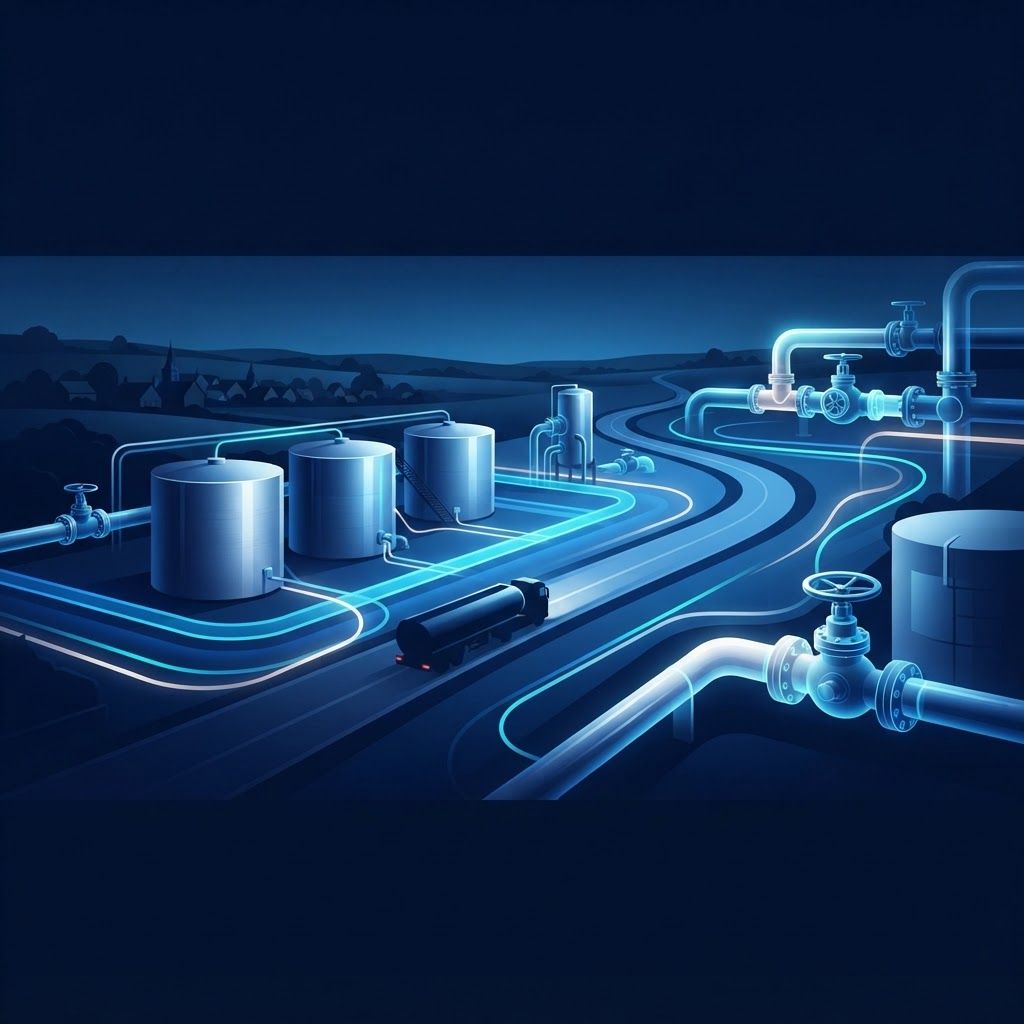
An Unexpected Role in the Energy Chain
South Oxfordshire is not an extraction region. There are no wells, refineries or terminals within the district, and there is no realistic prospect of any. What the district does have is a substantial downstream and technical presence: heating oil distributors serving thousands of off-grid rural homes, liquefied petroleum gas suppliers, commercial fuel and lubricant specialists, tank installation and compliance firms, and a research community working on the technologies that will eventually replace fossil fuels.
Understanding that structure matters when choosing a supplier. The businesses that serve this district are logistics, engineering and compliance operations rather than producers, and the qualities that distinguish them are reliability, transparent pricing, safety credentials and service quality during winter peaks.
Why Off-Grid Fuel Still Matters Locally
A large share of South Oxfordshire's housing stock lies beyond the mains gas network. Villages across the Chilterns and the Vale, isolated farmhouses, converted barns and many listed properties depend on kerosene heating oil, LPG or biofuel blends. Agricultural operations require red diesel for permitted uses, and commercial fleets, plant hire firms and back-up generators all need reliable liquid fuel supply.
That dependence creates practical concerns: price volatility, delivery access down narrow lanes, tank integrity, environmental risk near watercourses and the Thames floodplain, and the long-term question of how these properties will eventually decarbonise.
The Leading Oil and Gas Businesses
1. Certas Energy
One of the largest fuel distributors in the United Kingdom, supplying domestic heating oil, commercial diesel, lubricants and LPG across Oxfordshire. Its scale delivers dependable winter supply, nationwide depot coverage and account management for larger commercial users, which matters when continuity of supply is critical.
2. Watson Fuels
A well-established distributor with strong rural coverage and a reputation for consistent delivery in areas with difficult access. Its domestic heating oil service, tank monitoring options and agricultural fuel supply make it a common choice for farms and country properties in the district.
3. Rix Petroleum
Known for customer service and flexible ordering, Rix serves domestic and commercial clients with heating oil, gas oil and lubricants. Budget payment plans and top-up schemes appeal to households wanting to spread the cost of winter heating across the year.
4. Calor Gas
The dominant name in bulk and cylinder LPG for off-grid homes, rural businesses, caravan parks and hospitality venues. Its network of local dealers across Oxfordshire supports tank installation, safety inspection and appliance conversion, and it has invested in bio-LPG as a lower-carbon alternative.
5. Flogas
A significant LPG supplier competing on price and service for bulk tank customers and commercial cylinder users. Pubs, village halls, farm buildings and workshops across the district rely on suppliers of this type where mains gas is unavailable.
6. Oxfordshire Independent Heating Oil Distributors
Several family-run distributors operate from depots in and around the county. Their advantages are local knowledge, smaller tankers able to reach constrained rural driveways, and personal relationships with long-standing customers. During cold snaps, these operators frequently outperform larger competitors on responsiveness.
7. OFTEC-Registered Tank and Boiler Specialists
Installation, servicing and inspection of oil storage tanks and boilers is a regulated activity, and OFTEC-registered technicians handle it. Their work includes bunded tank replacement, oil line upgrades, spill prevention near watercourses and annual boiler servicing, all essential for insurance and environmental compliance.
8. Commercial Fuel Card and Fleet Fuel Providers
Logistics operators around Didcot and the A34 corridor use fuel card schemes for cost control, VAT reporting and route-wide access. Providers in this segment also supply on-site bunded storage and telemetry for depots and construction sites.
9. Engineering Consultancies Serving the Energy Sector
Consultancies in the Oxford and Harwell area provide subsurface modelling, materials testing, corrosion analysis, process simulation and risk assessment used by upstream and midstream operators elsewhere. This high-value technical export is the district's most substantial contribution to the global industry.
10. Energy Transition and Low Carbon Fuel Researchers
Groups at Harwell and Culham, along with private ventures nearby, work on hydrogen production and storage, carbon capture materials, synthetic fuels and hydrotreated vegetable oil as a drop-in replacement for kerosene. Their research directly affects how off-grid South Oxfordshire properties will heat themselves in future decades.
Trends Reshaping the Sector Locally
Renewable liquid fuels are the most consequential development for this district. Hydrotreated vegetable oil can substitute for heating kerosene with modest boiler modification, offering a route to major emissions reduction in hard-to-treat rural housing without full heat pump retrofit. Several distributors are trialling supply, and policy support will determine how quickly it scales.
Regulatory tightening around fuel storage is another live issue. Requirements for bunded tanks, separation distances and pollution prevention have become stricter, particularly for properties near the Thames and its tributaries. Environmental incidents can be extremely expensive, so compliance work is increasing.
A third trend is digital ordering and tank telemetry. Remote level sensors allow automatic top-up scheduling, which reduces run-out risk, improves delivery route efficiency and lowers cost. Adoption among rural households has accelerated considerably.
How to Choose a Fuel Supplier
Compare price per litre including delivery, minimum order quantity and payment terms, and be aware that unit prices fall notably on larger deliveries. Ask about winter service levels, emergency delivery availability and whether the supplier operates smaller tankers suitable for your access.
Verify credentials for any tank or boiler work. OFTEC registration, appropriate insurance and familiarity with building regulations and pollution prevention guidance are non-negotiable. Request written confirmation of compliance after installation.
Where possible, join a local oil buying group. Villages across the district operate collective purchasing arrangements that secure better rates by aggregating orders, a simple measure that often saves more than switching supplier.
Final Thoughts
The oil and gas businesses serving South Oxfordshire are essentially service organisations: distributors, engineers and compliance specialists keeping rural properties warm and commercial operations running. Alongside them, local research institutions are actively developing the alternatives. Choosing well means prioritising reliability and safety today while keeping an eye on lower-carbon options arriving soon.
Want your brand featured in front of decision-makers? Publish a guest post or get a link insertion in our guides through AAMAX's guest post and link insertion service.
Helpful Links
 SponsoredAAMAX — Full-Service Digital Agency
Write for Us
Share your expertise with our readers. We welcome guest contributions from industry specialists.
Pitch your idea

