

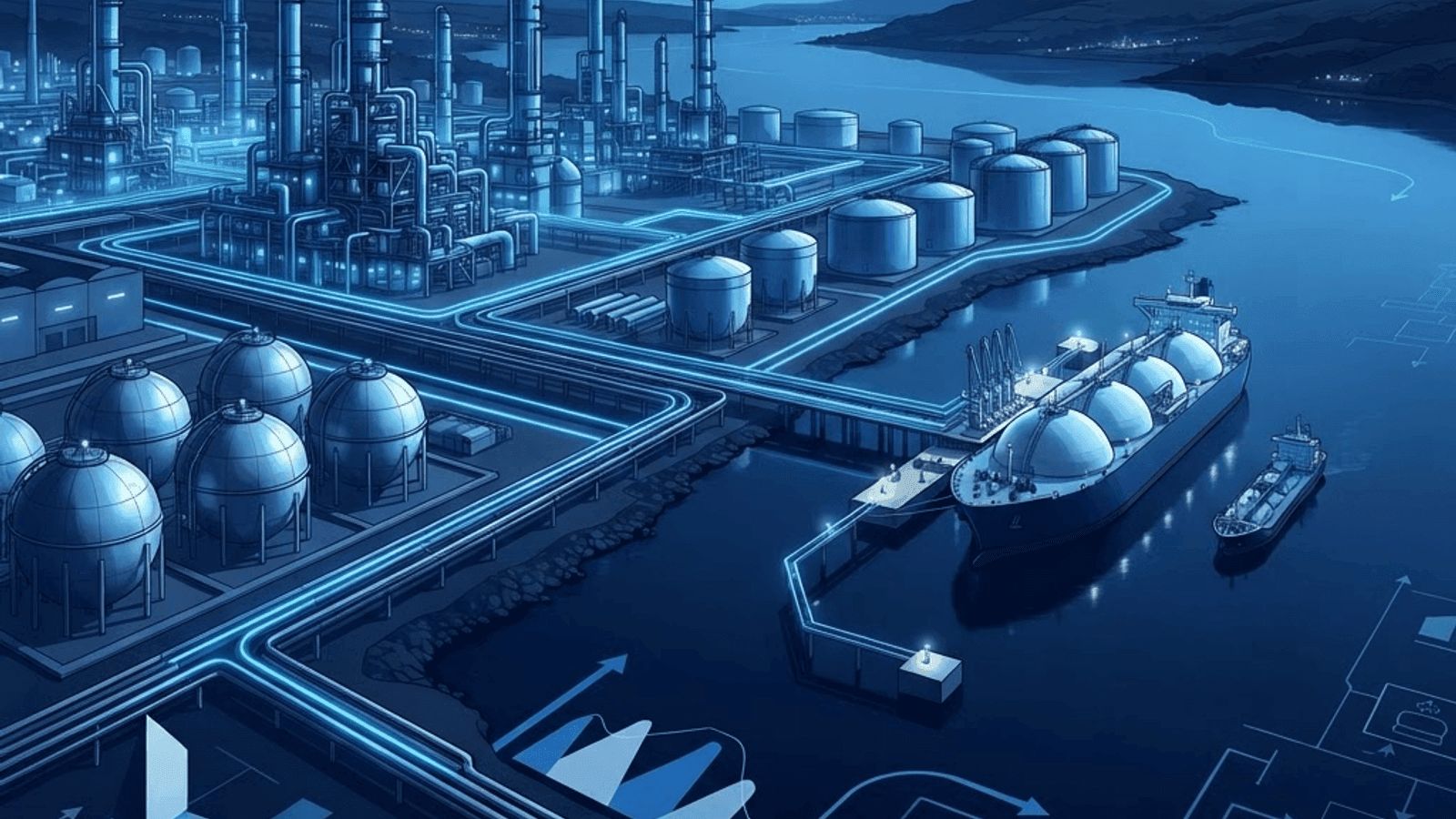
Milford Haven: Britain's Western Energy Gateway
Pembrokeshire's relationship with oil and gas is long standing and deeply embedded in the county's identity. The Milford Haven waterway is a natural deep water harbour capable of accommodating the largest tankers afloat, and from the mid twentieth century onward it attracted refining and oil terminal development on a scale unusual for a rural county. Over time the mix has shifted. Refining capacity has consolidated, while liquefied natural gas import terminals have become central, handling a significant share of the United Kingdom's gas supply and feeding directly into the national transmission system.
The practical consequence is that a rural Welsh county with a modest population plays an outsized role in national energy security. Decisions made about the waterway affect gas supply, fuel distribution and industrial energy availability far beyond Wales.
The Structure of the Local Sector
The industry here is best understood in layers. At the top are terminal and refinery operators managing large fixed assets. Around them sits a substantial contractor ecosystem covering mechanical and electrical engineering, inspection, scaffolding, insulation, valve and rotating equipment servicing, and turnaround support. Marine services form another layer, including pilotage, towage, mooring, bunkering and vessel agency. Beyond that are logistics and distribution businesses moving fuels inland by road, plus specialist consultancies in process safety, environmental compliance and emergency planning. Together these employ thousands of people directly and indirectly across the county.
Ten Oil and Gas Companies and Service Providers in Pembrokeshire
1. Haven Terminal Operations
An operator of bulk liquid storage and jetty facilities on the waterway, handling tanker reception, product storage, blending and onward distribution with a strong emphasis on process safety management.
2. Milford LNG Services
A specialist in liquefied natural gas handling, covering cryogenic systems maintenance, regasification plant support, jetty operations and the technical disciplines unique to very low temperature processes.
3. Cleddau Refining Support Group
A contractor providing planned maintenance and major turnaround services to refining and processing assets, including mechanical fitting, pipework fabrication, heat exchanger servicing and shutdown project management.
4. Pembroke Process Engineering
An engineering consultancy delivering process design, hazard and operability studies, control system upgrades and asset integrity assessments for hydrocarbon processing facilities.
5. Western Marine Fuel Logistics
A distribution business supplying heating oil, diesel, agricultural fuel and marine gas oil to rural properties, farms, fishing vessels and commercial fleets across west Wales.
6. Haven Waterway Marine Services
A provider of towage, mooring, launch and vessel support services for tanker movements, operating around the clock in a waterway where tidal windows and weather dictate scheduling.
7. Preseli Industrial Inspection
A non destructive testing and inspection specialist covering pipeline integrity, tank inspection, corrosion monitoring and statutory pressure system examination.
8. Pembrokeshire Energy Safety Consultants
An advisory firm focused on major accident hazard regulation, emergency response planning, environmental permitting and regulatory liaison for upper tier hazardous sites.
9. Coastway Valve and Rotating Equipment
A workshop and field service business overhauling pumps, compressors, valves and actuators, supporting both routine maintenance and urgent breakdown response.
10. Milford Decarbonisation Projects
A project development business working on carbon capture readiness, hydrogen blending studies, electrification of terminal operations and efficiency retrofits at existing hydrocarbon facilities.
Safety and Regulation
Few industries are as heavily regulated as this one, and rightly so. Major hazard sites operate under strict control regimes requiring safety reports, demonstrated risk reduction, emergency planning coordinated with local authorities and emergency services, and regular regulatory inspection. Environmental permits govern emissions to air and water, and marine operations carry additional pollution prevention obligations given the ecological sensitivity of the waterway and the surrounding coastline. Companies that perform well in this environment invest heavily in competence management, permit to work discipline and process safety culture rather than relying on paperwork alone.
Energy Security and Market Volatility
Recent years demonstrated how quickly energy markets can shift. Supply disruption in Europe, price volatility and changing trade flows all raised the strategic importance of import terminals and diversified supply routes. Pembrokeshire's liquefied natural gas capacity became directly relevant to national resilience, while fuel distributors faced sharp cost swings passed through to rural households heavily dependent on heating oil. The sector's local significance therefore extends well beyond employment; it shapes the cost and reliability of energy for the whole region.
Decarbonisation and the Transition Question
The central strategic question for the sector is what a mature hydrocarbon cluster becomes in a net zero economy. The emerging answer in Pembrokeshire is not abrupt closure but gradual repurposing. The waterway's assets, deep water access, storage capacity, industrial land, grid connections and skilled workforce, are the same ones needed for hydrogen production, floating offshore wind assembly and potential carbon capture infrastructure. Several operators are actively pursuing lower carbon projects alongside existing operations, including electrification of site power, efficiency improvements, sustainable fuel handling and hydrogen feasibility work.
Careers and Skills
Oil and gas remains a leading source of high value technical employment in the county. Roles include process operators, instrument and electrical technicians, mechanical fitters, inspection engineers, marine crew, safety professionals and project managers. Many of these skills transfer directly into renewable and hydrogen projects, which is precisely why Pembrokeshire is regarded as well positioned for a just transition. Apprenticeships and local further education partnerships continue to be the primary entry route for young people.
Final Thoughts
Pembrokeshire's oil and gas sector is a story of industrial continuity rather than decline. The waterway that made the county an energy centre remains its greatest asset, and the technical capability built around it is now being redirected toward lower carbon uses. For businesses, workers and communities in west Wales, the sector's evolution over the coming years will be one of the most consequential economic stories in the region.
Want your brand featured in front of decision-makers? Publish a guest post or get a link insertion in our guides through AAMAX's guest post and link insertion service.
Helpful Links
 SponsoredAAMAX — Full-Service Digital Agency
Write for Us
Share your expertise with our readers. We welcome guest contributions from industry specialists.
Pitch your idea

