

The Southern North Sea Legacy
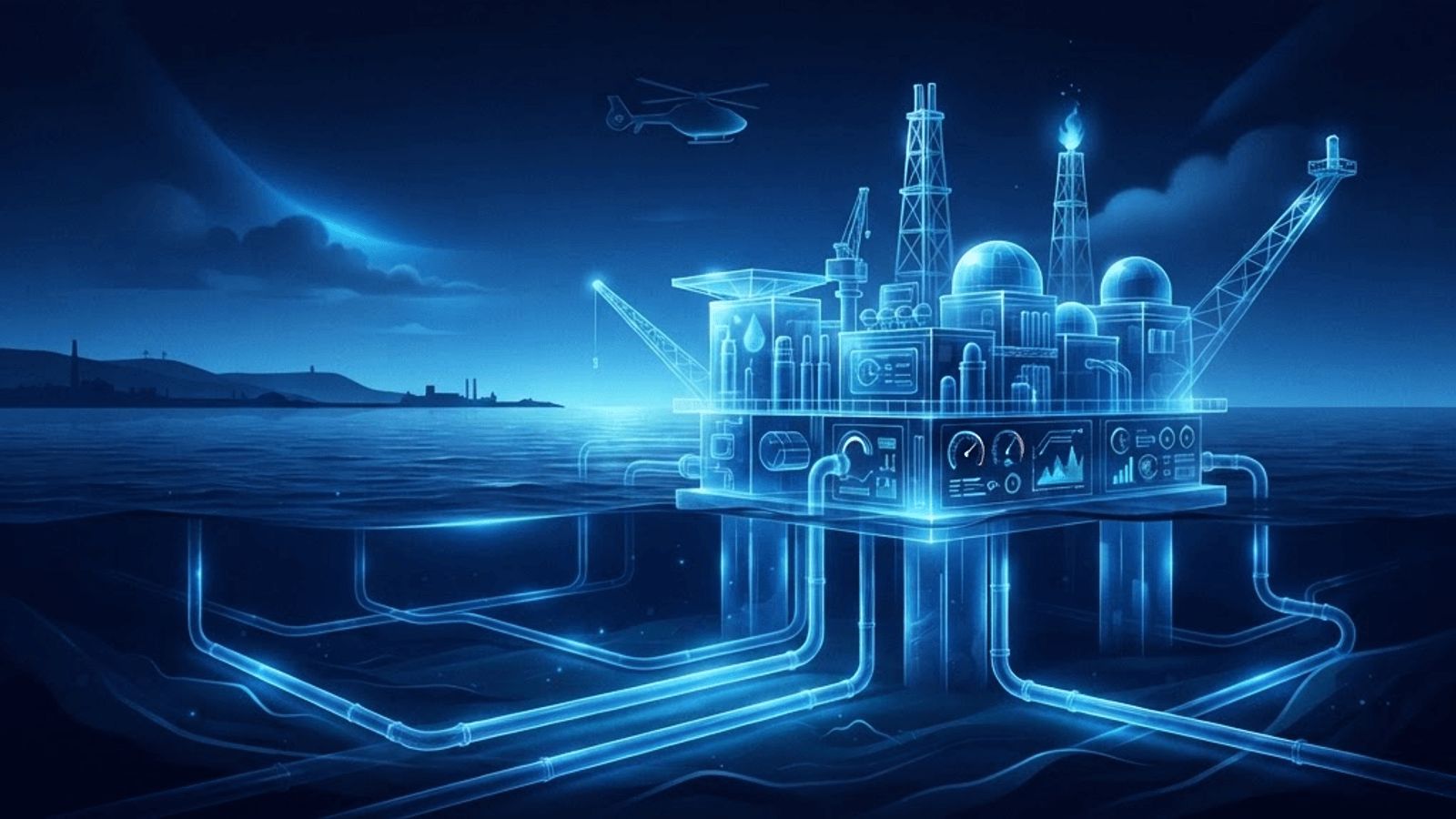
The oil and gas story of East Anglia began in the 1960s, when natural gas discoveries in the southern North Sea transformed Great Yarmouth and Lowestoft into offshore support ports and drew engineering and professional expertise into Norwich. Six decades later, that industry remains commercially significant, though its character has changed. Many southern North Sea gas fields are mature, which has shifted activity toward production optimisation, well intervention, integrity management and, increasingly, decommissioning. At the same time, the same infrastructure, skills and supply chain are being redirected toward offshore wind, hydrogen and carbon storage, making the region a genuine example of industrial transition rather than replacement.
Norwich's role is primarily commercial and technical rather than operational. The city hosts corporate offices, engineering consultancies, subsurface and geoscience specialists, recruitment firms serving offshore rotations, insurance and finance providers, and law firms with energy contract expertise. Coastal bases handle the physical logistics, while much of the planning, design and commercial management happens inland.
How the Sector Is Structured
The offshore energy value chain around Norwich includes several distinct layers. Operators hold licences and own production assets. Drilling contractors and well service companies provide rigs, wireline, coiled tubing and intervention capability. Engineering and fabrication businesses design and build platforms, modules and pipelines. Marine and logistics operators run supply vessels, guard vessels and helicopter services. Inspection, repair and maintenance contractors manage asset integrity, corrosion control and subsea inspection. Decommissioning specialists plug and abandon wells and remove structures. Finally, professional and technical advisers deliver subsurface evaluation, HSE consultancy, training and commercial support.
The Top 10 Oil and Gas Companies in the Norwich Area
1. Perenco UK is one of the most established southern North Sea gas operators, managing mature producing assets and associated onshore terminals in the region. Its expertise lies in extending field life economically, a discipline that requires disciplined engineering and cost control rather than frontier exploration.
2. Shell UK has a long southern North Sea history and continues to hold interests in the region, with significant experience across production, pipeline infrastructure and decommissioning. The company's standards and procurement requirements have shaped supply chain practice across East Anglia.
3. Equinor combines offshore hydrocarbon experience with an expanding low-carbon portfolio. In the southern North Sea context, its interest in hydrogen and carbon capture concepts positions it as a bridge between the traditional and emerging offshore industries.
4. Spirit Energy has been an important operator of southern North Sea gas assets and has publicly explored repurposing depleted reservoirs for carbon dioxide storage, which is one of the most credible reuse pathways for existing offshore infrastructure.
5. Petrofac and Similar Engineering Contractors deliver engineering, procurement and construction services along with operations and maintenance support for offshore facilities. Their East Anglian activity spans brownfield modification, asset integrity and late-life management.
6. Wood Group provides engineering consultancy, asset integrity and project delivery services across offshore energy. The firm's multidisciplinary capability means it works across both hydrocarbon and renewable assets, reflecting how the regional market has evolved.
7. Great Yarmouth and Lowestoft Offshore Support Companies within the Norwich economic region supply vessels, crew transfer, marine coordination, warehousing and quayside services. These operators are the practical interface between corporate offices and offshore assets.
8. Subsea Inspection and Integrity Specialists serving the southern North Sea deliver remote operated vehicle surveys, pipeline inspection, diving services and structural assessment. Because much of the region's infrastructure is ageing, integrity work is one of the most consistently busy segments.
9. Norwich Energy Recruitment and Training Providers support the offshore workforce with technical recruitment, offshore survival and safety training, competency assessment and apprenticeship pathways. Their role has grown as workers move between hydrocarbon and renewable projects requiring overlapping certification.
10. Norwich Professional and Advisory Firms including energy-focused legal teams, insurance brokers, tax specialists and commercial consultants complete the sector. Offshore projects involve joint operating agreements, decommissioning liabilities and complex risk allocation, all of which demand experienced advice.
Trends Reshaping the Industry
Decommissioning is now a major workstream, with wells to be plugged and structures removed across the southern North Sea over the coming decades. This creates sustained demand for specialist engineering, heavy lift and waste management capability, and the associated liabilities significantly influence asset transactions. Carbon capture and storage is the most discussed reuse option, since depleted gas reservoirs and existing pipelines offer a technically plausible pathway for storing carbon dioxide, subject to regulatory and commercial frameworks. Hydrogen production, potentially powered by offshore wind, represents another possible role for regional infrastructure and skills. Meanwhile, energy security concerns have kept domestic gas production politically relevant, even as long-term policy points toward decarbonisation. Across all of this, workforce transferability has become a defining regional advantage, with technicians and engineers moving between hydrocarbon and renewable projects.
Considerations for Businesses and Professionals
Companies seeking to enter the supply chain should expect rigorous prequalification on safety performance, quality management and financial stability, and should engage with regional energy networks and supply chain events rather than approaching operators cold. Diversification is prudent: suppliers serving both hydrocarbon and offshore wind clients have proved far more resilient than single-sector businesses. For individuals, offshore certification and transferable technical skills in electrical, mechanical and instrumentation disciplines offer strong employment security across the whole offshore energy spectrum. For landowners and communities near terminals and pipeline routes, specialist advice on land agreements and decommissioning obligations is worthwhile.
Final Thoughts
The oil and gas sector around Norwich is mature but far from finished, and it is being reshaped rather than dismantled. Production optimisation, integrity management, decommissioning and infrastructure reuse for carbon storage and hydrogen all point toward decades of continued activity. For the region, the enduring asset is not any single field but the accumulated offshore engineering capability that Norwich and the Norfolk coast have built over more than half a century.
Want your brand featured in front of decision-makers? Publish a guest post or get a link insertion in our guides through AAMAX's guest post and link insertion service.
Helpful Links
 SponsoredAAMAX — Full-Service Digital Agency
Write for Us
Share your expertise with our readers. We welcome guest contributions from industry specialists.
Pitch your idea

