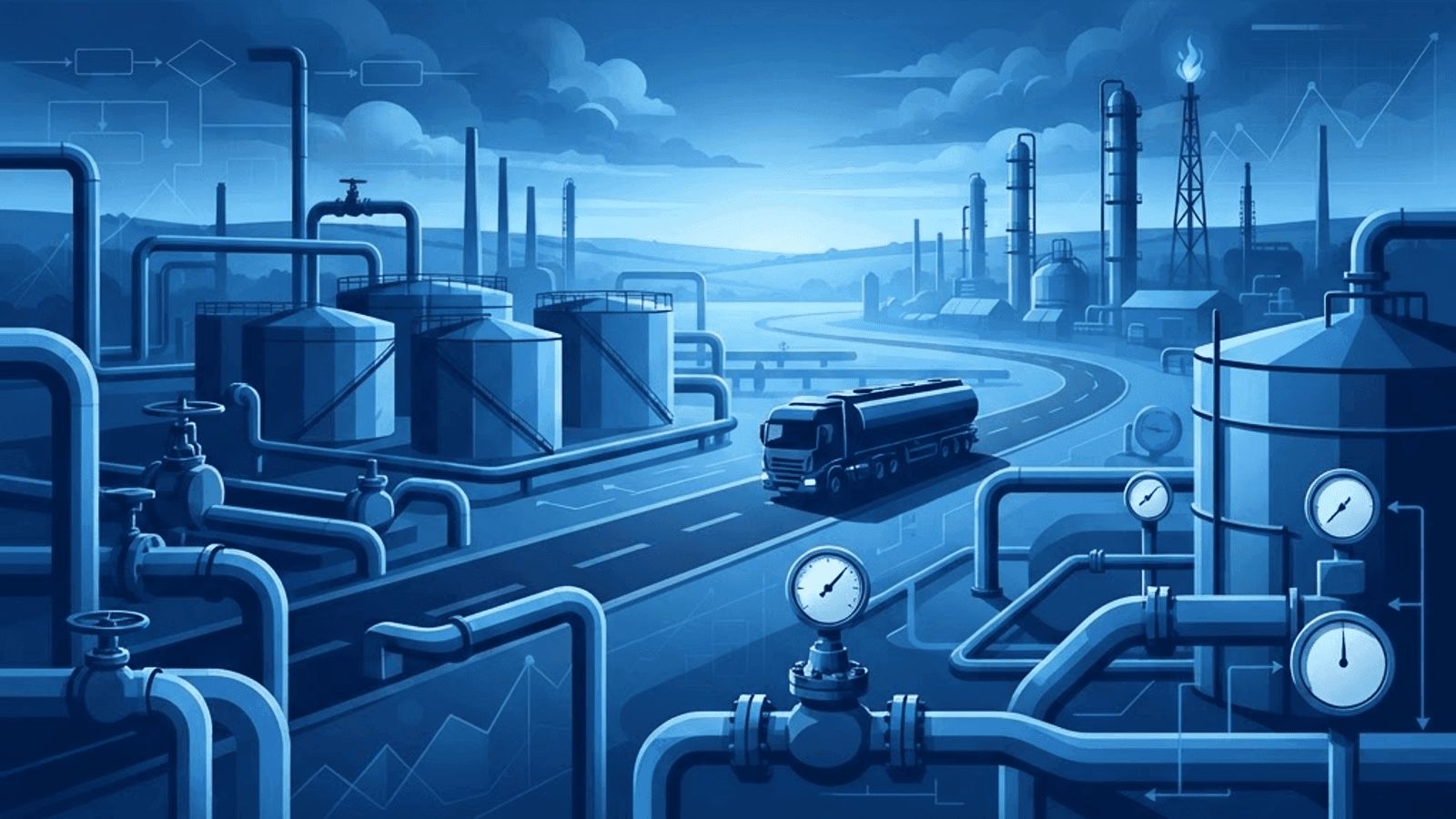
A Downstream Sector, Not an Upstream One
It is worth being precise about what the oil and gas sector means in North West Leicestershire. There is no significant hydrocarbon extraction here. What the district has instead is one of the most strategically located fuel distribution and industrial gas networks in the Midlands, built on the same geography that made it a logistics centre: the M1, M42 and A42 corridors, the A50 running west, and East Midlands Airport generating substantial aviation fuel demand in its own right.
The sector encompasses fuel distribution to commercial and domestic customers, bulk haulage of petroleum products, forecourt supply, liquefied petroleum gas for off-grid properties, industrial and specialty gases for manufacturing, lubricants and fuel additives, and the engineering and compliance services that support tanks, pipework and terminals.
Why This Sector Matters Locally
The district's economy runs on liquid fuel to a degree that is easy to overlook. Thousands of heavy goods vehicles operate daily from the distribution parks. Quarrying at Bardon Hill and other sites uses substantial volumes of diesel in extraction plant, crushers and haul trucks. Agricultural operations across the National Forest area depend on red diesel for qualifying uses. Many rural properties in villages without mains gas rely on LPG or heating oil. Manufacturing processes consume industrial gases including oxygen, nitrogen, argon and carbon dioxide for welding, cutting, atmosphere control and packaging.
The Top 10 Oil and Gas Companies in North West Leicestershire
1. Bardon Fuels and Lubricants supplies bulk diesel, gas oil and lubricants to quarrying, construction and haulage operators, with tank installation, fuel management systems and consumption reporting as part of the service.
2. Donington Aviation Fuel Services operates in the aviation supply chain around East Midlands Airport, covering fuel handling, quality assurance, into-plane logistics support and associated compliance documentation.
3. Ashby Petroleum Distribution serves commercial and domestic customers across the district with heating oil, kerosene and diesel, and is well regarded for reliable scheduling during winter demand peaks.
4. National Forest LPG Supplies focuses on off-grid properties and rural businesses, providing bulk tank and cylinder LPG for heating, cooking, agricultural drying and forklift operations.
5. Coalville Industrial Gases supplies compressed and cryogenic gases to manufacturing and engineering businesses, including welding mixtures, food-grade carbon dioxide and laboratory-grade specialty gases.
6. Measham Fuel Logistics operates a tanker fleet providing bulk haulage between terminals and customer sites, with an emphasis on driver training, dangerous goods compliance and delivery scheduling.
7. Kegworth Tank and Pipeline Engineering designs, installs, tests and decommissions fuel storage systems, including bunded tanks, interceptors, leak detection and regulatory compliance inspection.
8. Ivanhoe Energy Trading provides fuel procurement and risk management services, helping fleet operators and industrial users manage price exposure through forward purchasing and hedging arrangements.
9. Whitwick Forecourt Services supports retail fuel sites with equipment maintenance, pump calibration, wet stock reconciliation and site refurbishment works.
10. Ibstock Environmental and Compliance Group specialises in the regulatory side, delivering contaminated land assessment, spill response planning, environmental permitting support and site remediation for fuel-handling operations.
Regulation and Safety
Few sectors carry a heavier compliance burden. Fuel storage above defined thresholds triggers control of major accident hazard obligations. Oil storage regulations govern bunding, spill containment and separation distances. Transport of dangerous goods by road operates under a detailed international framework covering vehicle specification, driver qualification, documentation and placarding. Environmental permitting applies to installations with emissions to air, land or water.
Operators also face duties around ground contamination. Historic fuel handling sites frequently carry legacy soil and groundwater impacts, and any property transaction involving such a site requires thorough environmental due diligence. The district's industrial and colliery history compounds this, with former sites sometimes carrying layered contamination from multiple previous uses.
The Transition Pressure
The sector faces a structural challenge that everyone within it acknowledges. Road transport is electrifying, domestic heating is moving toward heat pumps, and industrial users face increasing pressure to decarbonise process heat. Established distributors are responding in several ways. Some are diversifying into hydrotreated vegetable oil, a drop-in renewable diesel substitute that works in existing engines and tanks and is gaining traction with fleet operators seeking immediate emissions reductions without vehicle replacement. Others are entering electric vehicle charging infrastructure, using their existing sites and commercial relationships. Industrial gas suppliers are positioning around hydrogen, both as an industrial feedstock and as a potential fuel.
Natural gas retains a role as a transition fuel for high-temperature industrial processes where electrification is technically difficult, and biomethane injection offers a partial decarbonisation route for existing gas infrastructure.
Choosing a Fuel Supplier
For commercial buyers, several factors distinguish good suppliers. Delivery reliability during cold snaps and supply disruptions matters more than headline pricing. Fuel quality assurance, including testing and contamination control, protects expensive plant. Telemetry and automated replenishment reduce administrative burden and prevent run-outs. Transparent pricing mechanisms, whether fixed, index-linked or spot, should be clearly documented. And a supplier's compliance record, including its safety performance and environmental history, is a reasonable proxy for operational discipline.
Final Thoughts
The oil and gas sector in North West Leicestershire is a distribution and services business serving the industrial and logistics economy that defines the district. It is highly regulated, operationally demanding and facing genuine long-term transition. Buyers should prioritise reliability, compliance and transparency, while suppliers positioning for the coming decades are those already building renewable fuel, charging and industrial gas capabilities alongside the traditional offer.
Want your brand featured in front of decision-makers? Publish a guest post or get a link insertion in our guides through AAMAX's guest post and link insertion service.
Helpful Links
 SponsoredAAMAX — Full-Service Digital Agency
Write for Us
Share your expertise with our readers. We welcome guest contributions from industry specialists.
Pitch your idea