Teesside's Enduring Role in Oil and Gas
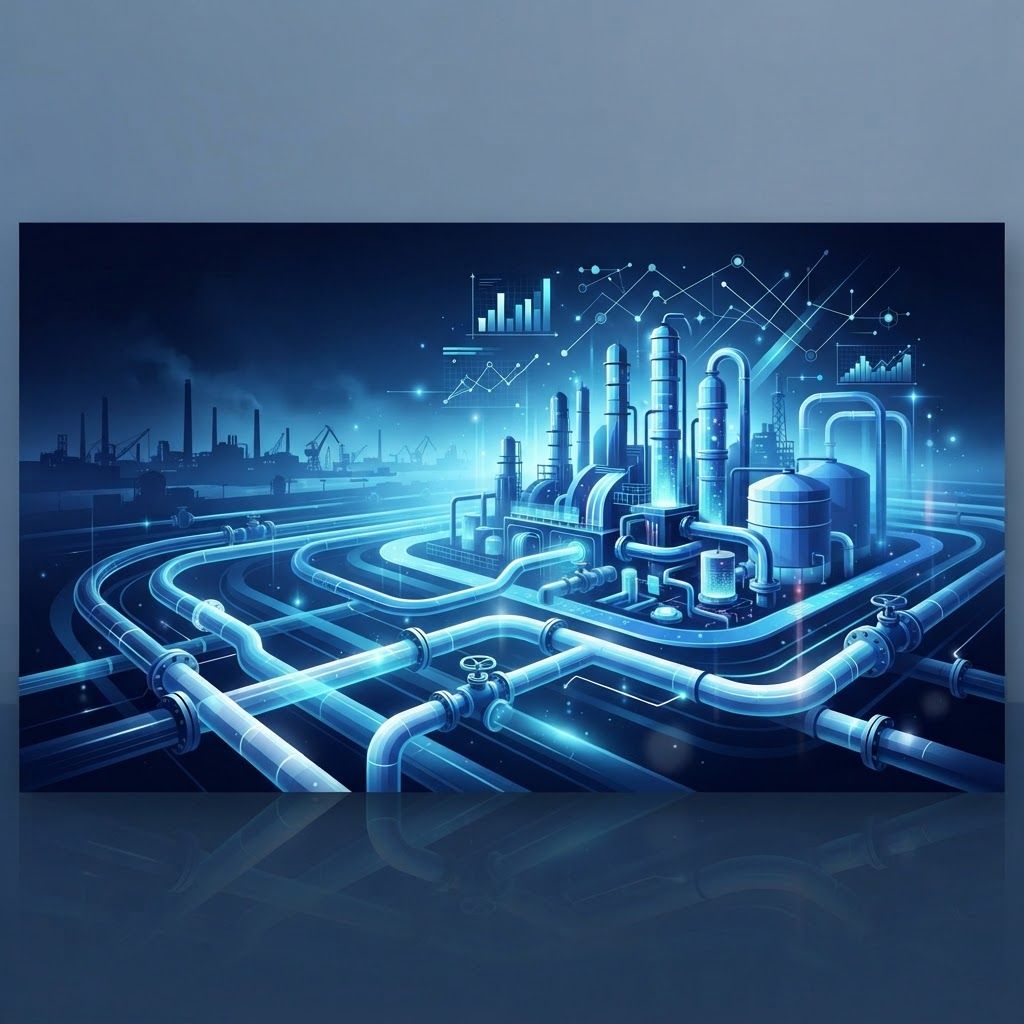
Middlesbrough sits at the heart of one of the United Kingdom's most significant hydrocarbon processing regions. The Tees estuary handles North Sea gas landings, hosts refining and petrochemical operations, operates import and export terminals, and supports a dense network of pipelines linking production offshore to processing and distribution onshore. This is not a legacy industry in the sense of decline, it remains a substantial employer and a critical part of national energy infrastructure.
What has changed is direction. The same companies that built their business on hydrocarbons are now central to carbon capture, hydrogen production and low carbon fuels. Existing pipelines, terminals and subsurface expertise are being repurposed rather than abandoned, which is why Teesside has become a focal point for industrial decarbonisation. For anyone assessing the sector locally, the honest picture is one of continuity and transformation running side by side.
What the Sector Encompasses Locally
Upstream connections centre on North Sea gas reception and processing, where raw gas is separated, treated and sent onward to the transmission network or to petrochemical users. Midstream activity includes pipeline operation, storage terminals, tank farms and marine loading facilities served by deep water berths. Downstream and adjacent operations cover chemicals manufacturing, fuel blending, lubricants and industrial gases.
Surrounding all of this is a large services economy: engineering and design consultancies, maintenance and turnaround contractors, inspection and integrity specialists, scaffolding and access providers, industrial cleaning, valve and rotating equipment servicing, instrumentation, and safety and training organisations. Many of these firms now split their work between traditional hydrocarbon assets and emerging low carbon projects.
Top 10 Best Oil and Gas Companies in Middlesbrough
1. bp North Sea Teesside Operations
bp maintains significant Teesside connections through gas terminal and pipeline infrastructure and is a driving force behind regional hydrogen and carbon capture developments. Its dual role in conventional operations and transition projects makes it central to the estuary's future.
2. Kellas Midstream
Kellas operates the Central Area Transmission System terminal and associated gas processing infrastructure on Teesside, handling North Sea gas and condensate. The company is also progressing low carbon hydrogen and carbon capture initiatives using its existing asset base.
3. px Group
An operations and asset management specialist headquartered in the region, px Group runs complex energy and process facilities on behalf of owners, including gas terminals and power assets. Its expertise in safe operation of high hazard sites is widely recognised across Teesside.
4. Sembcorp Energy UK
Sembcorp manages extensive utilities and energy infrastructure at Wilton, supplying steam, power and water to petrochemical and industrial customers. Its integrated site services are essential to the continued viability of process operations in the area.
5. Sabic UK Petrochemicals
Sabic operates major petrochemical assets on Teesside, converting hydrocarbon feedstock into olefins and derivatives that supply plastics and chemicals manufacturing. It remains one of the region's most substantial industrial employers.
6. Navigator Terminals
Navigator operates bulk liquid storage terminals on the Tees, providing tank capacity, blending and marine handling for fuels and chemicals. Terminal infrastructure of this kind underpins both import and export flows through the estuary.
7. Vertex Hydrogen and Industrial Gases Operations
Industrial gas and hydrogen production facilities in the Teesside cluster supply refineries, chemical plants and manufacturing users, and are increasingly positioned as a foundation for lower carbon hydrogen supply as capture infrastructure develops.
8. Hertel UK
A major industrial services contractor with a strong Teesside presence, Hertel provides insulation, scaffolding, access, coatings and maintenance to oil, gas and petrochemical clients. Turnaround and shutdown work of this kind is critical to plant reliability.
9. Bilfinger UK
Bilfinger delivers engineering, maintenance and asset integrity services to process industries across the region, including mechanical, electrical, instrumentation and project delivery capability for operating plants.
10. Wood Group Teesside
Wood provides engineering, project management and consulting services to energy clients, spanning conventional oil and gas assets alongside decarbonisation studies, hydrogen projects and carbon capture engineering.
Trends Reshaping the Industry
Carbon capture is the defining development, converting Teesside's concentration of emitters from a liability into a shared infrastructure opportunity. Hydrogen is advancing on two fronts, low carbon production paired with capture and electrolytic production using renewable power, aimed principally at industrial heat and heavy transport. Asset life extension is a persistent theme, with operators investing in integrity management to keep mature facilities safe and productive. Meanwhile workforce transition is accelerating, as process operators, pipefitters, instrument technicians and project engineers move fluidly between hydrocarbon and clean energy projects within the same cluster.
Considerations for Businesses and Jobseekers
Suppliers entering this market should expect rigorous prequalification covering safety performance, quality systems and competence records, since these are high hazard environments where standards are non-negotiable. Building a track record through subcontract maintenance or turnaround work is a common route. For individuals, the sector continues to offer some of the best paid technical employment in the Tees Valley, with strong demand for instrumentation, electrical, mechanical and process disciplines. Certification and safety training are usually the practical entry requirement rather than a specific degree.
Final Thoughts
Oil and gas on Teesside is not a story ending, it is a story changing shape. The companies above operate the terminals, pipelines, plants and services that keep national energy supply functioning while simultaneously building the infrastructure that will lower its carbon intensity. For Middlesbrough, that combination sustains skilled employment today and creates the industrial foundation for what comes next.
Want your brand featured in front of decision-makers? Publish a guest post or get a link insertion in our guides through AAMAX's guest post and link insertion service.
Helpful Links
 SponsoredAAMAX — Full-Service Digital Agency
Write for Us
Share your expertise with our readers. We welcome guest contributions from industry specialists.
Pitch your idea