

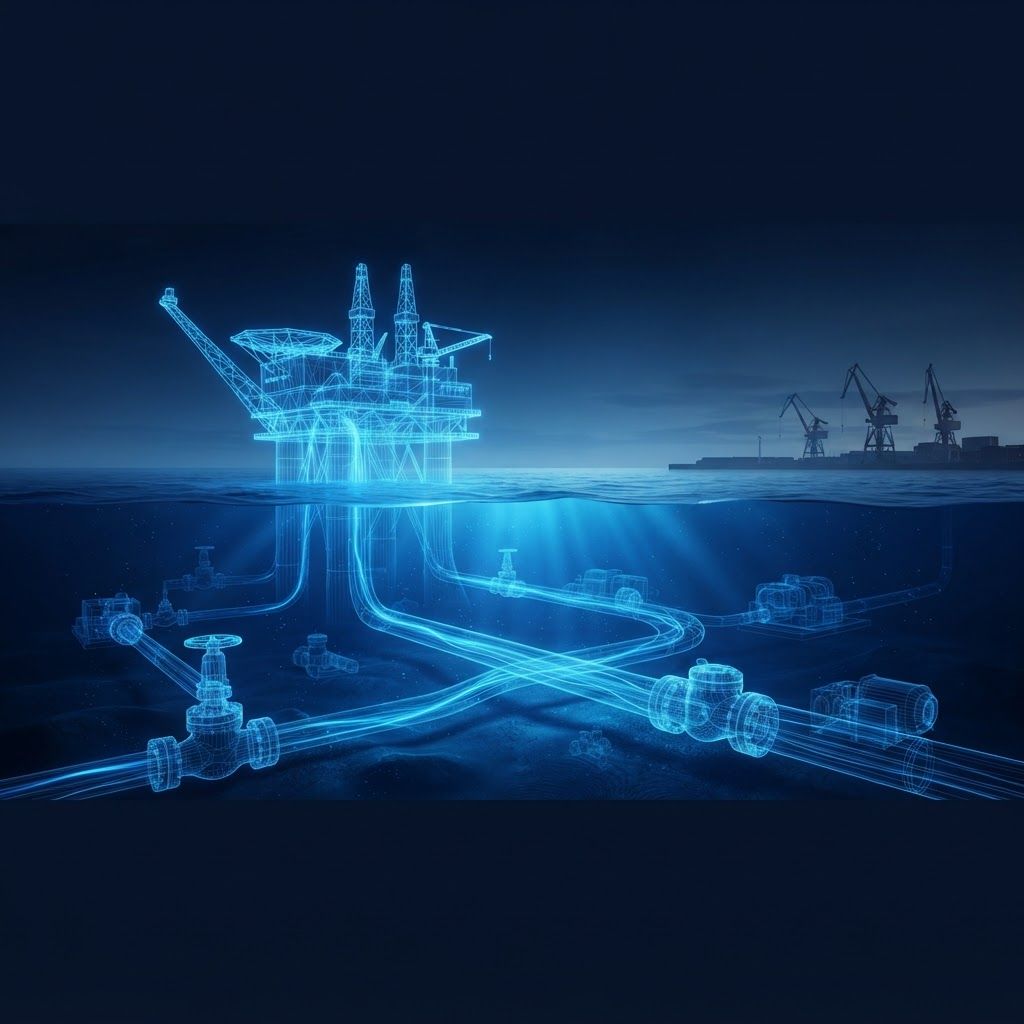
A Long Relationship With the North Sea
Gateshead's industrial identity was built on heavy engineering, and when North Sea oil and gas developed from the 1960s onwards, the region's fabricators, machinists and marine engineers were well placed to supply it. Decades later, that relationship persists. Companies based in and around the borough manufacture subsea equipment, provide inspection and integrity services, machine precision components and supply the hydraulics, valves and instrumentation that offshore installations depend on.
The sector today looks different from its peak. Production has matured, decommissioning has become a substantial market in its own right, and many businesses now serve both hydrocarbons and renewables from the same workshops. That dual capability has become a defining characteristic of North East energy engineering.
Ten Oil and Gas Companies With Gateshead Links
1. SMD designs and builds subsea vehicles and trenching systems used in offshore oil and gas field development as well as renewables, and remains one of Tyneside's most technically advanced manufacturers.
2. Baker Hughes maintains North East operations supplying subsea production systems and services, drawing on regional engineering and manufacturing capability.
3. TechnipFMC has a longstanding presence in the wider North East supply chain for subsea equipment and integrated project delivery.
4. Bel Valves, part of the region's engineering fabric, manufactures high-integrity valves and actuation systems for oil and gas applications worldwide.
5. Northern Gas Networks operates the gas distribution network serving Gateshead and the wider North of England, and is a major regional employer investing heavily in network safety and hydrogen research.
6. Wellstream/Baker Hughes flexible pipe operations on Tyneside have historically produced flexible flowlines and risers, sustaining specialist manufacturing skills in the region.
7. Modus Subsea Services provides inspection, repair and survey work using autonomous underwater vehicles for both oil and gas and renewable clients.
8. Tekmar Group supplies subsea protection technology developed originally for offshore energy and now widely used across sectors.
9. Precision engineering firms across the Team Valley supply machined components, pressure equipment and fabricated assemblies to oil and gas primes, forming an essential second-tier supply chain.
10. Industrial services and inspection providers based in Gateshead deliver non-destructive testing, coatings, scaffolding and maintenance services to onshore terminals and offshore operators.
What the Supply Chain Actually Does
Public discussion of oil and gas focuses on extraction, but the economic activity in Gateshead is overwhelmingly in equipment and services. Subsea production systems, control modules, valves, connectors, flexible pipe, umbilicals, lifting equipment and inspection technology all require precision manufacturing to demanding standards.
Certification and quality assurance are central. Components operating at depth under high pressure must meet stringent specifications, and the documentation trail is as important as the metalwork. This creates a barrier to entry that protects established regional suppliers and sustains skilled employment.
Decommissioning as a Growth Market
As North Sea fields reach end of life, decommissioning has become a significant workstream. Removing platforms, plugging wells, recovering subsea infrastructure and recycling materials require engineering, marine and specialist waste handling capabilities.
For North East businesses this is genuine opportunity. Quayside facilities on the Tyne can receive and dismantle recovered structures, and the engineering skills needed to remove equipment safely are the same ones used to install it. Decommissioning also has a long horizon, providing work over decades rather than a short cycle.
Transition and Diversification
The most successful Gateshead energy engineering firms have deliberately diversified. The same subsea vehicles that trench oil and gas pipelines lay wind farm cables. The same machining capability that produces valve bodies produces turbine components. The same inspection teams that survey platforms survey monopiles.
Hydrogen and carbon capture represent the next diversification. Northern Gas Networks and regional partners have invested in hydrogen research, exploring how existing gas infrastructure might carry hydrogen for heat and industry. Carbon capture and storage projects in the wider region also draw on subsurface and pipeline expertise that oil and gas businesses already possess.
Employment and Skills
Oil and gas remains a significant source of well-paid technical employment in the North East. Welding, machining, mechanical fitting, electrical and instrumentation work, project engineering and quality assurance all offer strong career paths. Apprenticeship programmes across Gateshead feed these roles, and the skills transfer readily between energy sectors.
Workforce transition is an active topic. Rather than treating oil and gas and renewables as competing sectors, the regional approach has been to build transferable competencies so workers can move between them as demand shifts.
Health, Safety and Assurance in the Supply Chain
Offshore work imposes an assurance burden that few other industries match, and Gateshead suppliers have built their operating systems around it. Verification of welding procedures, traceability of material certificates, third-party inspection witnessing and documented competence records for individual technicians are all routine expectations rather than optional extras. Many local firms hold accreditation through recognised achievement measurement processes used by operators to pre-qualify contractors, and maintain integrated management systems covering quality, environment and occupational health.
This discipline has a wider commercial benefit. Companies that can satisfy an offshore operator audit find it comparatively straightforward to enter adjacent regulated markets such as nuclear decommissioning, defence and pharmaceutical process equipment. Several Gateshead engineering businesses have expanded precisely along that route, using their oil and gas assurance credentials as the entry ticket to sectors with longer and more predictable order books.
Outlook
Hydrocarbon production will decline over time, but the engineering capability that grew around it is proving adaptable. Gateshead's role in the energy economy is likely to remain substantial, shifting steadily toward renewables, decommissioning, hydrogen and carbon management while continuing to serve existing offshore assets safely and reliably.
Want your brand featured in front of decision-makers? Publish a guest post or get a link insertion in our guides through AAMAX's guest post and link insertion service.
Helpful Links
 SponsoredAAMAX — Full-Service Digital Agency
Write for Us
Share your expertise with our readers. We welcome guest contributions from industry specialists.
Pitch your idea

