

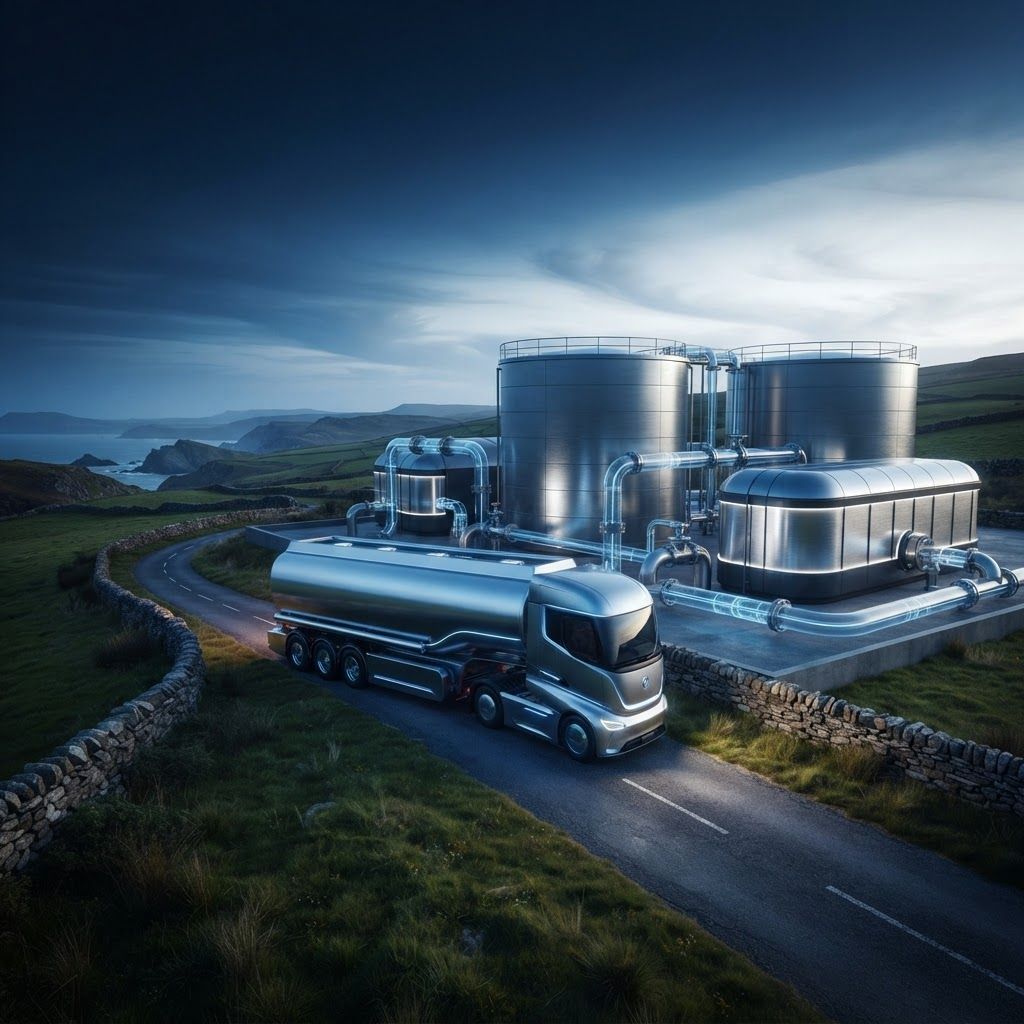
The Shape of the Sector Locally
Carmarthenshire's oil and gas industry is fundamentally a distribution and services sector rather than an extraction one. There is no significant upstream production within the county, but downstream activity is substantial and economically important. Roughly a third of homes in rural Wales remain off the mains gas network, relying instead on heating oil, liquefied petroleum gas or solid fuel, and this creates persistent demand for reliable fuel supply and technical services.
The sector encompasses heating oil distributors, LPG suppliers in bulk and cylinder form, agricultural and commercial diesel providers, lubricant suppliers, tank installation and maintenance specialists, boiler and burner engineers, fuel management consultancies and haulage operators moving product from coastal terminals into the county.
Domestic Heating Oil
Kerosene remains the dominant domestic heating fuel across rural Carmarthenshire. Distributors operate tanker fleets serving scattered properties, and service quality is measured largely by delivery reliability during cold weather, accuracy of metering, driver competence in accessing difficult rural properties and responsiveness during supply peaks.
Pricing is volatile, tracking international product markets, exchange rates and seasonal demand. Consumers can reduce cost through several practical approaches: ordering during summer when demand is lower, joining local buying groups that aggregate orders for volume discounts, maintaining tank levels above a quarter to avoid emergency premiums and monitoring consumption to identify boiler inefficiency or leakage early.
Renewable liquid fuels, particularly hydrotreated vegetable oil, are being trialled as a drop-in replacement for kerosene. This offers a potential decarbonisation route for properties where heat pump retrofit is difficult, and forward-looking distributors are positioning for that transition.
Liquefied Petroleum Gas
LPG serves properties and businesses requiring gas for heating, cooking, hot water or process use where mains connection is unavailable. Supply arrangements include bulk tanks, either above or below ground, and cylinder delivery for smaller requirements. LPG also supports agricultural applications such as crop drying and poultry house heating, and commercial uses including catering and mobile catering operations.
Bulk LPG contracts warrant careful reading. Tank ownership, minimum term commitments, exclusivity clauses, price review mechanisms and transfer arrangements when switching supplier all affect long-term cost. Regulations require that consumers be able to change supplier at contract end, and reputable suppliers make that process straightforward.
Commercial, Agricultural and Industrial Fuels
Agricultural diesel, road diesel, industrial heating oil, aviation fuels for local airfields and marine fuels for coastal operations all form part of the commercial market. Suppliers serving farms and contractors offer bunded storage solutions, fuel management systems with driver identification and usage recording, and scheduled top-up services based on telemetry.
Lubricants and specialist oils constitute a related business line, with technical support on specification for agricultural machinery, hydraulic systems, gearboxes and transmission applications. Suppliers with genuine technical knowledge help operators avoid warranty issues and premature component wear.
Tanks, Compliance and Safety
Storage compliance is a serious matter. Oil storage regulations in Wales require secondary containment for larger tanks and for those in sensitive locations near watercourses, boreholes or within flood risk areas. Given Carmarthenshire's numerous rivers and private water supplies, environmental protection requirements apply widely.
Competent providers offer tank inspection, replacement of degraded single-skin plastic tanks with bunded alternatives, correct siting relative to buildings and boundaries for fire safety, oil spill response and contaminated ground remediation. Installation and servicing should be undertaken by engineers registered with the relevant competent person schemes, with gas work requiring appropriate registration for LPG.
Fuel theft has become a notable rural problem. Suppliers commonly advise on tank alarms, lockable fill points, remote level monitoring and appropriate siting away from road frontage to reduce vulnerability.
Choosing a Supplier
Prioritise membership of recognised industry bodies, which indicates adherence to quality and safety standards and provides a complaints route. Ask about delivery guarantees during peak winter demand, minimum order quantities, whether small deliveries are accommodated for households on limited budgets, and payment options including budget plans that spread cost across the year.
Local depot presence matters. Suppliers with storage within or close to the county respond faster during cold snaps and reduce delivery-related emissions. Ask about driver training for rural access, since narrow lanes and long farm tracks demand experience, and confirm insurance cover for spillage on customer premises.
Transition and the Future
Decarbonisation policy presents both challenge and opportunity for the sector. Long-term direction favours electrification of heat, and heat pumps will progressively displace oil boilers in suitable properties. However, Carmarthenshire's substantial stock of older solid-wall stone properties makes retrofit costly and technically demanding, so liquid fuels will remain necessary for many households for years.
Progressive local suppliers are responding by diversifying: adding renewable liquid fuel capability, offering heat pump installation alongside traditional services, providing energy efficiency assessment and expanding into electric vehicle charging infrastructure. Those investing in these adjacent capabilities are best positioned for long-term relevance.
Final Thoughts
Carmarthenshire's oil and gas businesses provide essential energy security for off-grid homes, farms and industry. Choose suppliers with proper accreditation, transparent pricing, dependable winter delivery and genuine technical competence on storage and combustion. As the energy transition progresses, favour those actively developing lower-carbon options rather than resisting change.
Want your brand featured in front of decision-makers? Publish a guest post or get a link insertion in our guides through AAMAX's guest post and link insertion service.
Helpful Links
 SponsoredAAMAX — Full-Service Digital Agency
Write for Us
Share your expertise with our readers. We welcome guest contributions from industry specialists.
Pitch your idea

