Metalworking in West Kent
Metalworking is among the oldest industrial crafts and remains one of the most versatile. In the Tunbridge Wells area it takes many forms: precision machinists producing components measured in hundredths of a millimetre, architectural metalworkers crafting balustrades and gates for period properties, sheet fabricators building enclosures and ductwork, and structural steel specialists supporting the region's construction industry.
Historically, the Weald was one of England's most important ironworking regions, with charcoal fired furnaces exploiting local ore and abundant woodland for centuries. That industry has long gone, but the tradition of working metal persists in workshops across the district, now equipped with laser cutters, press brakes and computer controlled machining centres alongside the anvils and forges.
Understanding Metalworking Disciplines
Metalwork covers distinct specialisms that are often confused. Machining removes material from solid stock to produce precise components, using lathes, mills and grinders. Fabrication assembles products from sheet and section through cutting, forming and welding. Forging shapes hot metal by hammering or pressing. Casting pours molten metal into moulds.
Each discipline suits different applications, and most projects require only one. Knowing which you need, or working with a firm that can advise, avoids wasted time approaching the wrong suppliers.
The Top 10 Metalworks Companies
1. Weald Precision Engineering operates computer controlled turning and milling centres producing components to tight tolerances for aerospace, medical and instrumentation customers, backed by full inspection capability.
2. Kent Architectural Metalwork designs and makes gates, railings, balustrades, staircases and screens in steel, stainless steel and bronze, with a portfolio spanning contemporary minimalism and traditional period detailing.
3. Pantiles Sheet Metal Fabrication provides laser cutting, punching, folding and welding services, producing enclosures, brackets, panels and assemblies for manufacturers across the South East.
4. Southborough Structural Steel fabricates and erects beams, columns and frames for domestic extensions, commercial buildings and agricultural structures, handling design, fabrication and installation.
5. High Weald Blacksmiths keeps traditional forge work alive, hand crafting ironwork, restoring historic metalwork and producing bespoke pieces where the marks of the hammer are part of the appeal.
6. Calverley Stainless Fabrication specialises in food grade and hygienic stainless steel work for kitchens, breweries, laboratories and food producers, where finish quality and cleanability are critical.
7. Rusthall Welding Services offers mobile and workshop welding across a range of processes and materials, including aluminium and specialist alloys, serving both repair and fabrication needs.
8. Bidborough Metal Finishing provides powder coating, galvanising arrangement, polishing and passivation, the finishing operations that determine how metalwork looks and how long it lasts.
9. Tunbridge Tool and Die manufactures press tools, jigs and fixtures for other manufacturers, specialist work requiring exceptional precision and deep process understanding.
10. Weald Metal Recycling and Supply completes the circle, handling scrap processing and supplying stock bar, sheet, section and plate to fabricators and engineers throughout the region.
Modern Technology in Metalworking
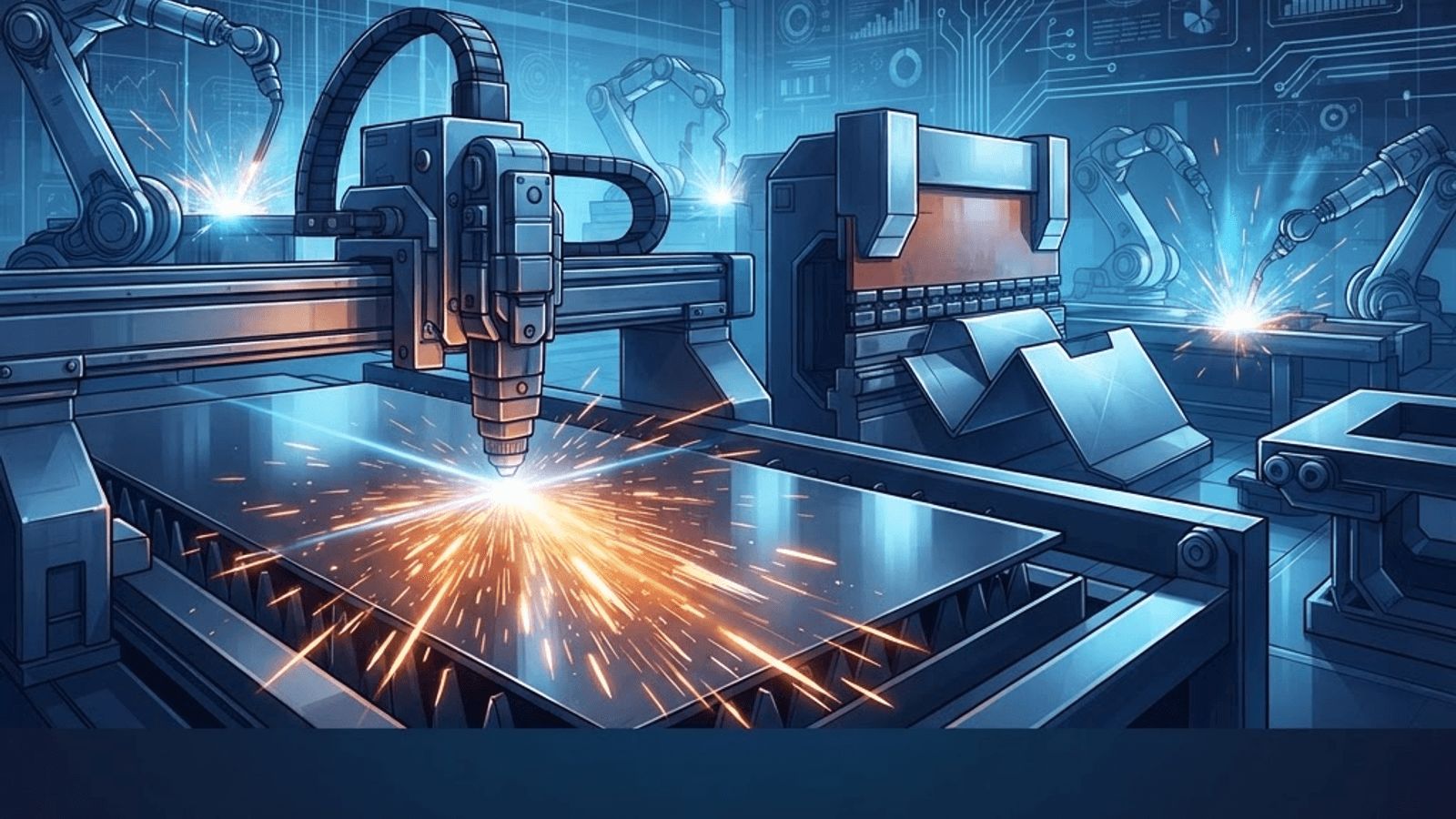
The capabilities of metalworking workshops have advanced dramatically. Fibre laser cutting produces intricate profiles in steel and stainless with edge quality requiring little or no finishing, and does so quickly enough to make complex designs economical.
Computer numerically controlled press brakes with automatic tool changing form complex bends with high repeatability. Robotic welding handles repetitive seams consistently, while skilled manual welders concentrate on one off and awkward work that automation cannot address.
Design software now flows directly into production. A three dimensional model can be unfolded into flat patterns, nested efficiently to minimise material waste and sent straight to the cutting machine, eliminating transcription errors and shortening lead times considerably.
Additive manufacturing in metal is beginning to appear in the region too, allowing geometries impossible by conventional means, though it remains specialised and relatively costly.
Architectural Metalwork in a Heritage Setting
Tunbridge Wells offers particularly rich opportunities for architectural metalwork. The town's Victorian and Georgian properties frequently feature original railings, balconies, verandas and gates, many requiring restoration or sympathetic replacement.
Conservation work demands specific skills: matching historic profiles, using appropriate joining techniques, understanding original paint systems and knowing when to repair rather than replace. Workshops experienced in this field can often save original fabric that a less knowledgeable contractor would discard.
Contemporary architectural metalwork also thrives, with frameless glass balustrades using minimal stainless steel, weathering steel garden features and elegant internal staircases all popular in the borough's more modern properties and extensions.
How to Specify a Metalwork Project
Clarity is everything. Provide drawings or detailed sketches with dimensions, specify materials and grades, state the required finish and explain the intended environment, since external coastal exposure demands different specification to a dry internal setting.
Discuss tolerances realistically. Demanding precision beyond what an application requires adds cost without benefit, while under specifying tolerances on a component that must fit an assembly causes failures.
For architectural work, agree on samples and a site survey before fabrication. Old buildings are rarely square or level, and metalwork made to nominal dimensions frequently will not fit. A template or laser survey prevents expensive rework.
Finally, confirm installation responsibility, access requirements and any structural approvals needed, particularly for balustrades and staircases which must meet safety regulations.
Conclusion
Metalworking around Tunbridge Wells spans an impressive range from microscopic precision to monumental structure, from hand forged traditional ironwork to laser cut contemporary design. The companies profiled here bring genuine craftsmanship and modern capability to a region with a deep historic connection to the trade, serving engineers, architects, builders and homeowners with equal skill.
Want your brand featured in front of decision-makers? Publish a guest post or get a link insertion in our guides through AAMAX's guest post and link insertion service.
Helpful Links
 SponsoredAAMAX — Full-Service Digital Agency
Write for Us
Share your expertise with our readers. We welcome guest contributions from industry specialists.
Pitch your idea