

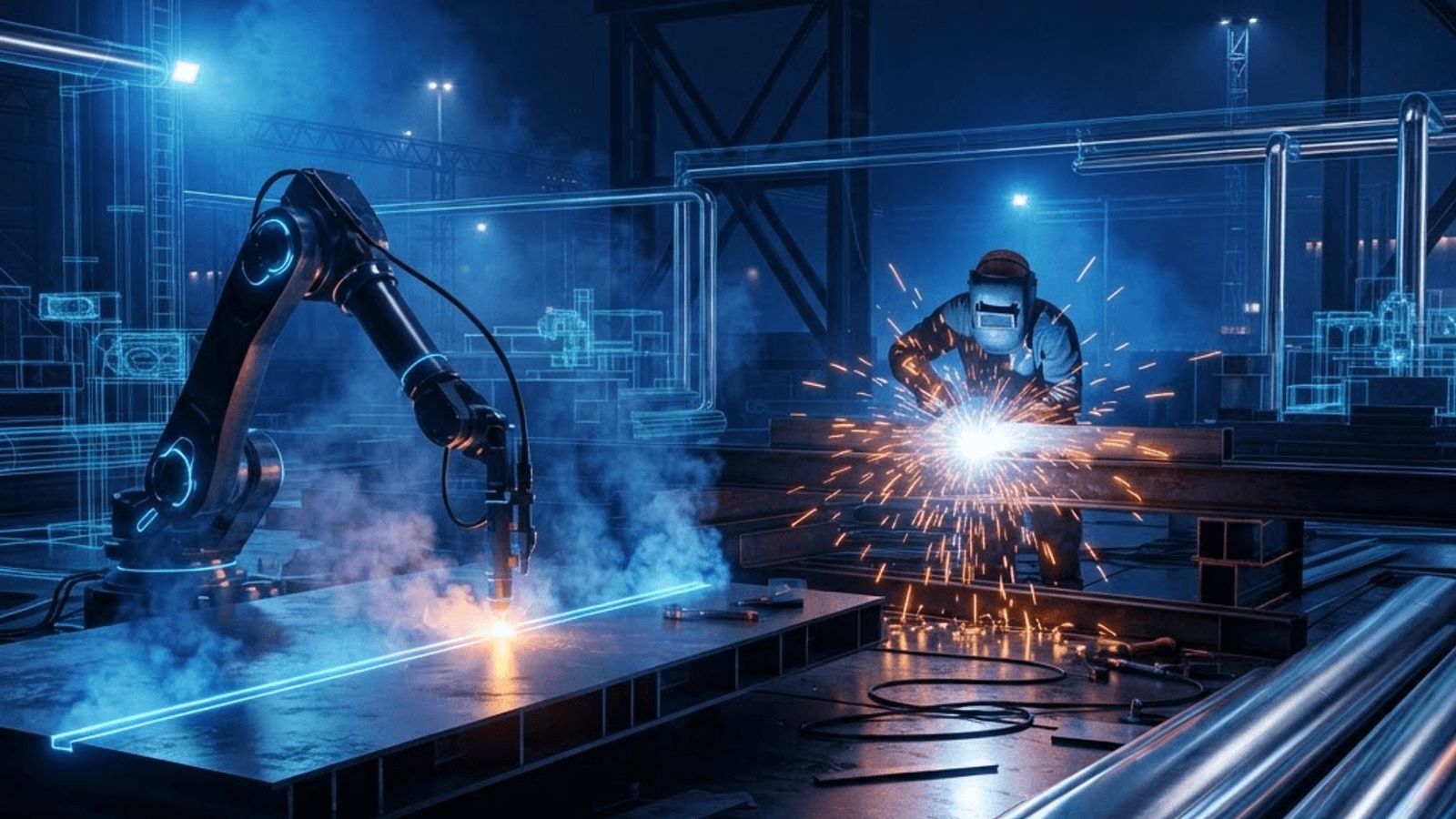
Metal and Machinery in the St. Helens Economy
St. Helens grew up around heat, and heat has always meant metal. Glassworks needed moulds, frames, conveyors and structural steel. Collieries needed headgear, cages and constant repair. Chemical plants needed pressure vessels, pipework and corrosion-resistant tanks. The result is a borough with an unusually dense concentration of fabrication, machining and welding skill relative to its population, spread across the Haydock, Lea Green, Sutton and Gerards Park industrial areas.
That skill base now serves a much wider client list. Local metalworks companies supply logistics operators, food producers, renewable energy installers, construction contractors, rail and highways projects, and architectural clients wanting balustrades, staircases and feature screens. The common thread is problem solving: most of these businesses earn their living making something that cannot simply be bought off a shelf.
Understanding Metalworks Capabilities
The term covers a wide spread of processes, and matching your job to the right capability is half the battle. Structural fabrication handles beams, columns, frames and platforms to recognised execution classes. Sheet metal work covers laser cutting, punching, folding and light assembly. Precision machining uses CNC turning and milling to hold tight tolerances on components. Welding and repair services keep existing plant running. Surface finishing — galvanising, powder coating, anodising, shot blasting — determines how long any of it lasts.
Many St. Helens firms combine two or three of these under one roof, which reduces handling, transport and the risk of blame-shifting between subcontractors when a dimension drifts.
Ten Metalworks Companies Serving St. Helens
1. Ravenhead Steel Fabrication — Structural steelwork for industrial and commercial buildings, mezzanines, walkways and support frames. CE-marked fabrication with in-house detailing, which shortens the gap between a designer's intent and a bolt-ready assembly on site.
2. Haydock Precision Engineering — CNC turning and milling for component work, holding tight tolerances on steel, stainless, aluminium and engineering plastics. Strong on small-batch and prototype work, and on reverse engineering obsolete parts from a worn sample.
3. Sutton Sheet Metal Works — Laser cutting, CNC folding and light assembly for enclosures, panels, brackets and guarding. Their nesting and material optimisation keeps waste low, which shows up directly in the unit price on volume runs.
4. Parr Welding and Site Services — Coded welders providing mobile repair, plant maintenance and on-site fabrication. Genuinely valuable for manufacturers who cannot afford extended downtime and need work done during a planned shutdown window.
5. Rainford Architectural Metalwork — Balustrades, staircases, canopies, gates, feature screens and bespoke ironwork. A design-led operation combining traditional blacksmithing with modern laser-cut detail, popular with architects and high-end residential clients.
6. Lea Green Surface Finishing — Shot blasting, powder coating and paint systems to specified film thicknesses. Their willingness to work to coating specifications rather than approximations matters on anything exposed to weather or chemical attack.
7. Newton Stainless and Hygienic Fabrication — Food-grade and pharmaceutical fabrication: tanks, hoppers, tables, guarding and pipework with hygienic welds and appropriate finishes. Well regarded among the region's food and drink manufacturers.
8. Cowley Hill Tube and Pipework — Tube bending, pipe spooling and pressure pipework fabrication with testing and traceability documentation. Serves chemical, water and energy sector clients where certification is non-negotiable.
9. Bold Metal Recycling and Processing — Ferrous and non-ferrous scrap collection, grading and processing, plus stockholding of usable offcuts. An important part of the circular flow that keeps local fabrication material costs competitive.
10. Merseyside Toolmaking and Jigs — Press tools, moulds, fixtures and inspection jigs. Quietly critical work: the accuracy of a production line often depends entirely on the quality of the fixture holding the part.
Trends in the Local Metalworks Sector
Automation is the most visible change. Fibre lasers, robotic welding cells and automated press brakes have reduced cycle times and improved repeatability, allowing small firms to compete on jobs that once demanded far larger workshops. It has also shifted skill demand towards programming, setting and inspection.
Material and energy volatility is the second theme. Steel and aluminium prices have swung sharply in recent years, so serious fabricators now quote with defined validity periods and manage stock strategically rather than opportunistically.
Third, sustainability is entering specifications. Clients ask about recycled content, coating chemistry and the carbon intensity of finishing processes. Because steel is genuinely recyclable and much local scrap is reprocessed regionally, well-run metalworks companies have a strong story here — provided they can document it.
How to Specify a Metalwork Project Properly
Ambiguity is the most expensive thing in fabrication. Provide drawings with tolerances, material grades, weld symbols, finish requirements and any relevant standards. Say clearly what the part must do, not only what it should look like, because a good fabricator will often suggest a simpler geometry that performs identically for less money.
Ask about welder coding, inspection methods, dimensional checks and whether the firm works to recognised execution classes. Ask how they handle non-conformance. Then discuss logistics early: a beautifully made frame that cannot be craned into position is a failure regardless of workshop quality.
The Case for Local Fabrication
Metalwork is heavy, awkward and frequently iterative. Being able to visit the workshop, check a fit-up in person and agree a modification on the spot compresses lead times dramatically. St. Helens sits within easy reach of Liverpool, Manchester, Warrington and Wigan, which means local fabricators can offer site attendance without punitive travel costs.
Final Thoughts
The metalworks sector in St. Helens combines inherited craft with modern process control. Whether you need structural steel, precision components, hygienic stainless fabrication or architectural ironwork, the borough offers workshops with real capability and a culture of getting things running again. Specify precisely, ask about verification, and build a relationship with a firm that understands your plant — the payback shows up every time something breaks.
Want your brand featured in front of decision-makers? Publish a guest post or get a link insertion in our guides through AAMAX's guest post and link insertion service.
Helpful Links
 SponsoredAAMAX — Full-Service Digital Agency
Write for Us
Share your expertise with our readers. We welcome guest contributions from industry specialists.
Pitch your idea

