

Metalworking in the Hertfordshire Engineering Belt
Metalwork is the foundation beneath almost every other manufacturing sector, and around St Albans it takes an unusually varied set of forms. In the same square mile of industrial estate you might find a CNC machine shop holding tolerances measured in microns for a medical device customer, a sheet metal fabricator laser cutting enclosures for electronics, a blacksmith forging balustrades for a listed building, and a structural steel fabricator producing beams for a commercial development. All of them work metal, but their equipment, skills and customers barely overlap.
This diversity reflects the region's demand profile. The Hertfordshire technology corridor generates precision machining and fabrication work from its electronics, aerospace, motorsport and medical device sectors. The district's substantial period housing stock and conservation areas generate architectural and heritage metalwork demand. Ongoing commercial and residential development generates structural steel and balustrade work. A metalworking business here can specialise deeply because the local market is large enough to sustain specialists.
The Main Metalworking Disciplines
Precision CNC machining removes material from solid billet or bar using computer-controlled milling and turning centres. Multi-axis machines can produce complex geometries in a single setup, improving accuracy by eliminating repositioning errors. The competitive factors are tolerance capability, surface finish, inspection equipment and the programming skill to machine efficiently.
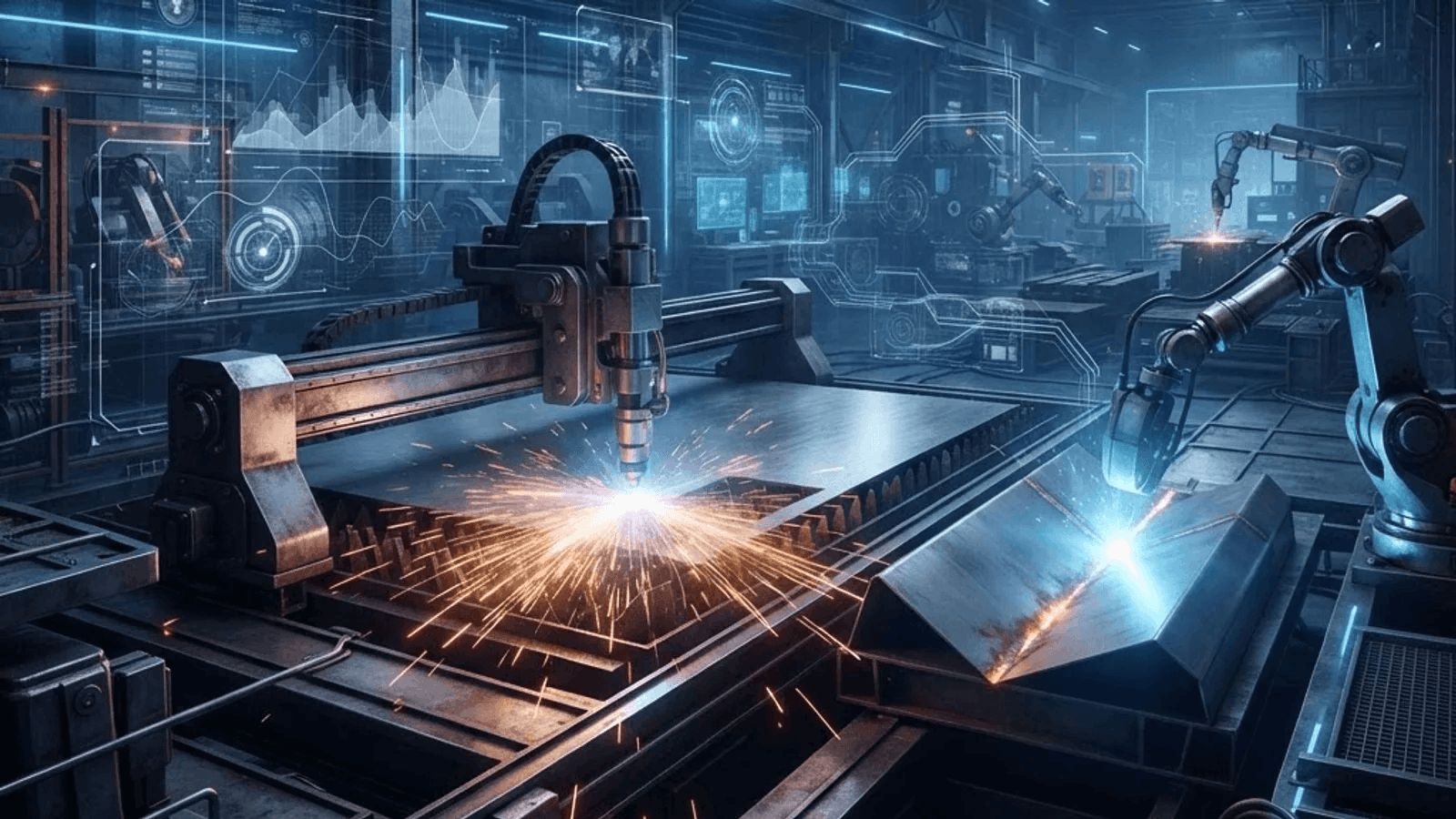
Sheet metal fabrication cuts, folds, punches and welds flat material into three-dimensional products. Fibre laser cutting has largely replaced older technologies for speed and edge quality, while CNC press brakes with angle measurement produce consistent bends. Typical output includes enclosures, brackets, panels, guards and chassis.
Welding and structural fabrication joins heavier sections into frames, platforms, staircases, mezzanines and structural steelwork. Coded welding to recognised procedures is essential where structural integrity or pressure containment is involved, and independent inspection is often required.
Architectural and heritage metalwork combines traditional forge work with modern fabrication to produce railings, gates, staircases, balustrades, canopies and restoration pieces matching historic originals.
Ten Notable Metalworks Companies and Fabricators
1. Renishaw manufactures precision metrology and machine tool probing equipment, and its measurement systems are what allow machine shops across the country to verify the tolerances they claim.
2. Sandvik Coromant supplies cutting tools, tool holding and machining expertise that directly determine what tolerances, materials and cycle times a local machine shop can achieve.
3. TT Electronics produces engineered metal and electromechanical assemblies for aerospace, defence and medical markets, operating under stringent traceability and quality regimes.
4. Barnshaws Section Benders specialises in metal bending and rolling of structural sections, plate and tube, providing curved steelwork for architectural and industrial applications that standard fabricators cannot form.
5. Severfield is a major structural steelwork contractor, designing, fabricating and erecting steel frames for commercial buildings, distribution centres and infrastructure projects across the region.
6. William Hare Group similarly delivers large-scale structural steel fabrication and erection with substantial engineering and detailing capability for complex building frames.
7. Precision subcontract machine shops across the St Albans and Hemel Hempstead estates provide CNC turning, milling, grinding and wire erosion services to aerospace, motorsport and instrumentation customers on short lead times.
8. Sheet metal fabrication specialists in the corridor combine fibre laser cutting, CNC folding, welding and powder coating to deliver finished enclosures and panels as complete assemblies rather than loose parts.
9. Architectural metalwork and blacksmithing workshops serving St Albans produce bespoke gates, railings, staircases and restoration ironwork appropriate to conservation area and listed building requirements.
10. Metal finishing and treatment providers including powder coaters, anodisers, galvanisers and platers complete the supply chain, since almost every fabricated component requires a protective or decorative finish before use.
Technology Trends in Metalworking
Fibre laser cutting has transformed sheet metal economics over the past decade, cutting faster, consuming less power and handling reflective materials such as copper and brass that older systems struggled with. Combined with automated sheet loading, it has made small-batch production genuinely economical.
Automation is spreading into machining through robotic part loading, pallet systems and lights-out running, where machines continue producing overnight unattended. For a high-wage economy this is decisive, as it separates machine utilisation from labour hours.
Additive manufacturing in metal has matured from prototyping into production for specific applications, particularly complex internal geometries, lightweight lattice structures and consolidated assemblies that would otherwise require many machined parts and joints.
Digital workflow integration is quietly the biggest efficiency gain. Direct import of three-dimensional models into CAM software, automated nesting to minimise material waste, in-process probing and digital inspection reporting reduce both errors and administrative time considerably.
Sustainability pressure is also reshaping practice, with steel and aluminium recycling rates already high but growing customer interest in recycled content documentation, energy-efficient processes and reduced material waste through better nesting.
How to Choose a Metalworking Partner
Match capability to requirement precisely. A structural steel fabricator and a precision machine shop are not interchangeable, and asking either to do the other's work produces poor results. Be clear about tolerance, material, finish and volume when enquiring.
Verify inspection capability, not just machining capability. Any shop can produce a part; the question is whether they can prove it conforms. Ask about coordinate measuring machines, calibration records and whether inspection reports accompany deliveries.
For welded structural or pressure work, confirm welder coding and procedure qualification, and clarify what non-destructive testing will be performed. This is a safety matter, not a paperwork exercise.
Discuss design for manufacture openly. Small changes to a drawing, such as relaxing a non-critical tolerance, adjusting a bend radius to suit standard tooling, or specifying a standard material thickness, can reduce cost substantially without affecting function. A good fabricator will offer these suggestions unprompted.
Finally, consider finishing and assembly. Sourcing a complete finished assembly from one supplier who manages coating and hardware insertion usually costs less overall than coordinating separate suppliers and absorbing the transport and coordination burden yourself.
Final Thoughts
Metalworking companies around St Albans span an impressive range, from micron-level precision machining to hand-forged heritage ironwork. This breadth means that almost any metal requirement, whether a prototype component, a production run of enclosures, a mezzanine floor or a restored Victorian railing, can be sourced within the local area from specialists who genuinely understand the discipline involved.
Want your brand featured in front of decision-makers? Publish a guest post or get a link insertion in our guides through AAMAX's guest post and link insertion service.
Helpful Links
 SponsoredAAMAX — Full-Service Digital Agency
Write for Us
Share your expertise with our readers. We welcome guest contributions from industry specialists.
Pitch your idea

