

Metalworking in the Thames Valley
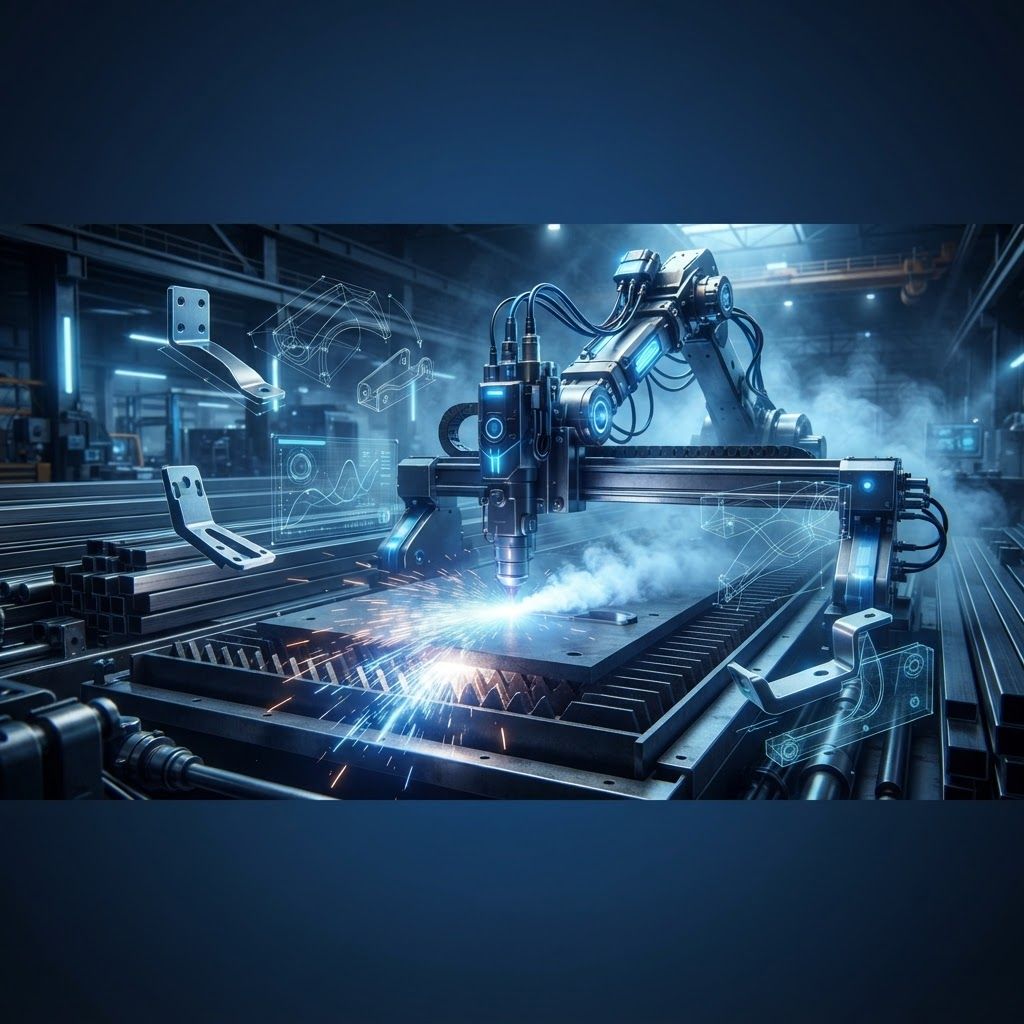
Metalworking is one of the oldest industrial disciplines still thriving around Reading, though it looks nothing like it did a generation ago. Today's workshops across Berkshire combine skilled hand craft with CNC machining centres, fibre laser cutters, CNC press brakes, robotic welding and CAD-driven design. They serve construction contractors needing structural steelwork and balustrades, technology companies requiring precision enclosures and brackets, laboratories needing stainless benching, and homeowners commissioning bespoke gates, railings and staircases.
The regional mix of construction activity, data centre development, research facilities and light manufacturing keeps demand varied and steady. For buyers, that variety means it is essential to match the supplier's genuine specialism to the job rather than assuming all metalworkers are interchangeable.
Understanding the Main Disciplines
Sheet metal fabrication involves cutting, punching, bending and joining thin gauge material to produce enclosures, panels, brackets, ducting, cabinets and guarding. Laser cutting and CNC folding deliver high accuracy and repeatability, and this discipline underpins most electronics, machinery and equipment work.
Structural steel fabrication produces beams, columns, frames, mezzanines, staircases and platforms for buildings and industrial installations. This work carries specific certification requirements and demands proper design coordination with structural engineers.
Precision machining uses CNC turning and milling to produce components to tight tolerances from bar or billet, serving engineering, instrumentation, medical and aerospace supply chains. Capability here is measured in achievable tolerance, surface finish, materials handled and inspection equipment.
Welding and general fabrication covers repair, modification, tank and vessel work, pipework and one-off assemblies. Architectural metalwork focuses on visible finished items such as gates, railings, balustrades, canopies, feature staircases and decorative screens, where finish quality matters as much as structural integrity.
Certification and Compliance
Structural steelwork for buildings requires factory production control certification under the relevant harmonised standard, with the fabricator assessed to an appropriate execution class based on the consequences of failure. This is not optional for load-bearing work, and any fabricator quoting structural steel should hold current certification and be able to show it.
Welder qualification to recognised standards demonstrates that individual welders have been tested on the processes, materials and positions they will actually use. Welding procedure specifications document how each joint should be made. For critical work, ask to see both.
ISO 9001 quality management is a reasonable baseline expectation. Firms working in regulated sectors may hold additional approvals. For architectural and public-facing work, confirm the fabricator understands relevant safety requirements for balustrade loading, gap dimensions and glazing where applicable.
Materials and Finishing
Material choice affects cost, performance and appearance substantially. Mild steel is economical and easily worked but requires protective finishing. Stainless steel offers corrosion resistance in various grades, with marine and chemical environments requiring higher specifications than interior applications. Aluminium provides lightness and natural corrosion resistance, favoured for enclosures and architectural work. Copper, brass and bronze appear mainly in decorative applications.
Finishing determines longevity and appearance. Hot dip galvanising provides excellent long-term corrosion protection for exterior steel. Powder coating offers durable coloured finishes in a huge range and is standard for enclosures and architectural items. Wet paint systems suit large structures and touch-up work. Anodising protects and colours aluminium. Mechanical finishes such as brushing, polishing and bead blasting change appearance without adding coating thickness.
Discuss finishing early, because it affects design details such as drainage holes for galvanising, masking requirements and tolerance allowances for coating thickness.
Technology and Trends
Fibre laser cutting has transformed sheet metal work, delivering faster processing, cleaner edges and the ability to cut reflective materials that older systems struggled with. Automated loading and unloading has improved throughput and consistency. Robotic welding is now viable for smaller batch sizes, improving repeatability on repetitive assemblies.
Digital workflows have shortened lead times dramatically. Customers supply 3D models, fabricators nest parts automatically to minimise material waste, and machine programs generate directly from the model. This reduces errors from manual interpretation and allows accurate quoting from digital files.
Sustainability considerations increasingly matter. Steel and aluminium are highly recyclable, and fabricators track scrap recovery closely. Energy-efficient machinery, optimised nesting to reduce offcuts and local sourcing all reduce environmental impact. Buyers specifying recycled content in metal products should discuss availability and certification with suppliers.
How to Select a Metalworking Partner
Match capability to requirement first. A precision machining shop and an architectural blacksmith both work metal but have almost no overlapping capability. Ask what proportion of their work resembles your project.
Visit the workshop. Machine condition, organisation, material storage, welding bay setup and inspection facilities reveal capability quickly. Look at work in progress and finished items awaiting collection.
Review the quotation carefully. It should specify material grade and thickness, finish, tolerances, quantity breaks, tooling costs if applicable, delivery method and lead time. Ambiguous quotes lead to disputes about what was included.
Ask about design support. Fabricators who review your drawings and suggest improvements to bend radii, joint design, material utilisation or assembly method deliver real savings. Confirm inspection capability including measuring equipment and whether inspection reports are provided.
Check installation capability for site-fitted work, including insurance, site safety documentation, method statements and qualified installers. Confirm lifting and access arrangements for heavy items.
Cost Drivers Worth Understanding
Material cost fluctuates with commodity markets and forms a large proportion of the price on heavy items. Labour dominates on intricate or hand-finished work. Setup time makes small quantities disproportionately expensive, so batching orders where possible improves unit cost significantly.
Design decisions strongly influence cost. Standard material thicknesses, consistent bend radii, avoiding unnecessary tight tolerances and designing parts to nest efficiently on a sheet all reduce price without compromising function. Involving the fabricator before the design is finalised routinely saves more than the engineering time it costs.
Getting the Best Results
Metalwork rewards clear communication. Provide dimensioned drawings or 3D models rather than sketches, specify finishes precisely including colour references, and confirm critical dimensions and mating interfaces explicitly. Agree inspection and acceptance criteria before production starts.
Reading and the surrounding area support a strong metalworking community spanning precision machining, sheet fabrication, structural steel and architectural craft. Buyers who choose specialists appropriately, engage them during design and communicate specifications thoroughly consistently receive well-made, well-finished metalwork delivered to programme.
Want your brand featured in front of decision-makers? Publish a guest post or get a link insertion in our guides through AAMAX's guest post and link insertion service.
Helpful Links
 SponsoredAAMAX — Full-Service Digital Agency
Write for Us
Share your expertise with our readers. We welcome guest contributions from industry specialists.
Pitch your idea

