

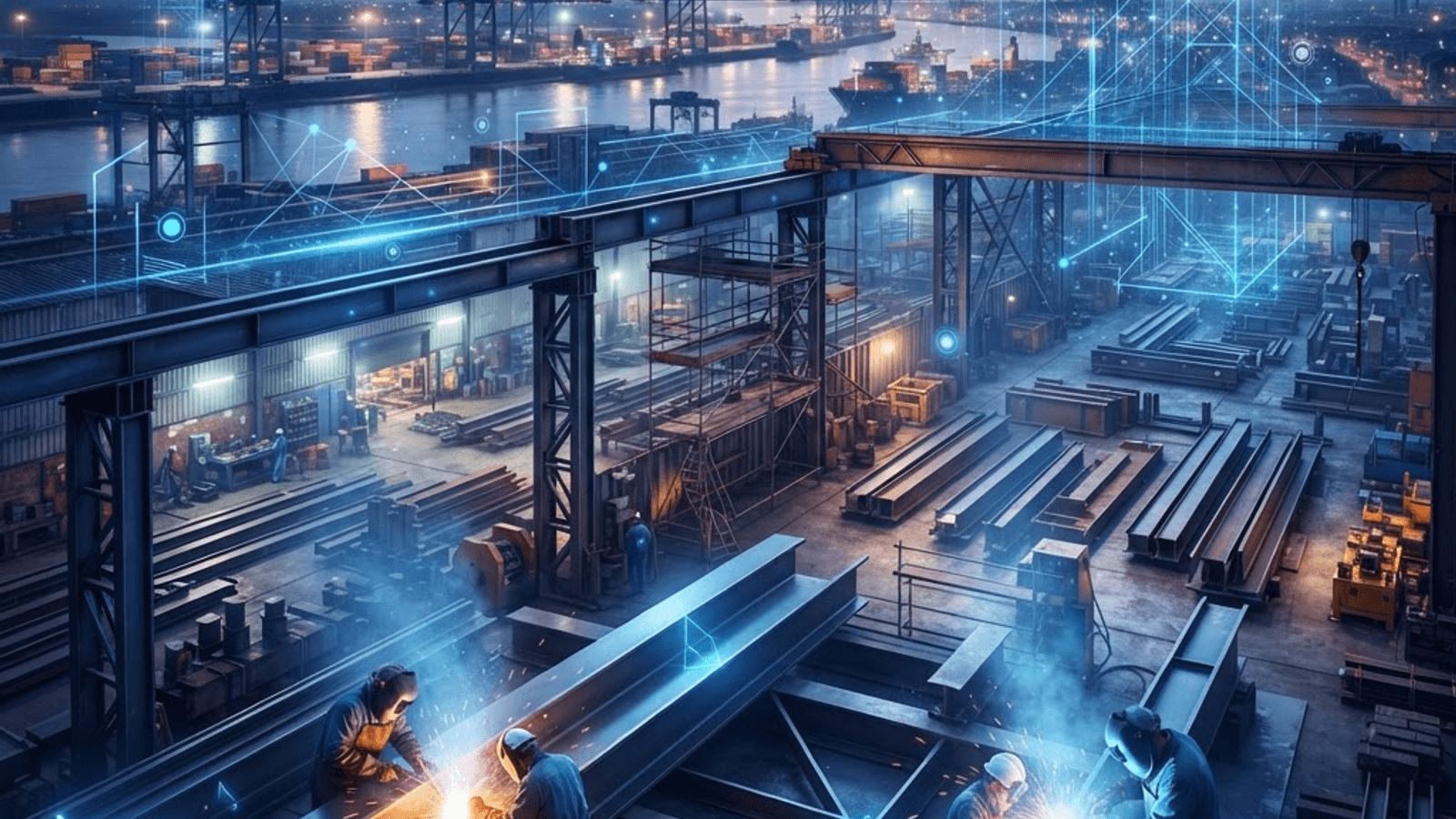
Why North East Lincolnshire Is a Serious Metalworking Region
Metalworking in North East Lincolnshire is not an accident of geography, it is a direct consequence of it. Grimsby and Immingham together handle an enormous volume of cargo, the Humber estuary hosts one of the densest concentrations of offshore wind operations and maintenance activity in Europe, and the district's food processing sector runs on stainless steel. Every one of those industries needs metal cut, formed, welded, coated and installed to tight tolerances and tighter deadlines. That constant demand has produced a fabrication community that is unusually broad for a district of this size, ranging from one-bay jobbing shops in Grimsby's industrial estates to structural steel contractors capable of supplying entire building frames.
What makes the local market distinctive is the mix of disciplines under one roof. A fabricator here might spend Monday producing hygienic stainless steel tables for a fish processing plant, Tuesday repairing a quayside conveyor, and Wednesday machining a replacement shaft for a wind turbine service vessel. That versatility is why buyers from outside the district increasingly look to the Humber bank for work that would once have gone to larger conurbations.
What to Look For When Choosing a Metalworks Company
Before comparing suppliers, it helps to know which credentials actually matter. Structural steelwork for buildings should be produced by a company operating under factory production control certified to the harmonised standard for structural steel, with a declared execution class appropriate to the project. Welding capability should be backed by qualified welding procedures and coded welders, not simply years of experience. For food, pharmaceutical and hygienic work, look for evidence of orbital welding, pickling and passivation, and a genuine understanding of surface finish specifications, because a beautifully welded joint with the wrong finish will still fail an audit.
Beyond paperwork, three practical factors separate strong fabricators from weak ones: measured site survey capability, in-house finishing, and honest scheduling. Companies that survey properly produce parts that fit first time. Companies with in-house shot blasting, painting or galvanising coordination control their own delivery dates. And companies that give realistic lead times rather than optimistic ones cause fewer expensive delays on site.
The Top 10 Metalworks Companies in North East Lincolnshire
1. Humber Bank Fabrications
A structural and general fabrication specialist working across the Grimsby and Immingham industrial corridor, Humber Bank Fabrications has built its reputation on heavy mild steel work for port infrastructure, materials handling and process plant. Its strengths are large fabrication bays with substantial overhead craning, an experienced coded welding team, and site installation crews who understand working within live operational facilities. Clients regularly cite the company's willingness to take on awkward one-off repairs alongside scheduled projects, which is exactly what port and processing operators need.
2. Grimsby Stainless Engineering
Stainless steel fabrication for the food, drink and pharmaceutical sectors is a discipline of its own, and Grimsby Stainless Engineering is built entirely around it. The company produces hygienic tanks, hoppers, conveyor frames, walkways, guarding and bespoke process equipment with controlled surface finishes, full weld traceability and finishing processes designed to satisfy retailer audits. Its close relationship with the district's seafood and ready meal producers means it understands wash-down environments, drainage detailing and cleaning regimes rather than simply following a drawing.
3. Immingham Structural Steel
Focused on structural frames for industrial and commercial buildings, Immingham Structural Steel handles design coordination, connection detailing, fabrication and erection. The company works comfortably with portal frames, mezzanines, platforms and equipment support structures, and its in-house detailing capability shortens the gap between architect's intent and steel arriving on site. Contractors value its predictable delivery sequencing, which allows cladding and services to follow on without gaps in the programme.
4. Cleethorpes Precision Machining
Where fabricators shape metal, machinists refine it. Cleethorpes Precision Machining operates CNC turning and milling capacity alongside conventional machines, producing shafts, bushes, flanges, housings and replacement components in steel, stainless, bronze and engineering plastics. Its reverse engineering service is particularly useful to older factories in the district where original equipment drawings have long since disappeared, and rapid breakdown turnaround is a core part of the offer.
5. Estuary Marine Metalwork
Serving fishing vessels, service boats and workboats operating out of Grimsby, Estuary Marine Metalwork specialises in marine-grade aluminium and stainless work. Typical projects include deck fittings, handrails, ladders, tanks, hatches and structural repairs, all executed with an understanding of corrosion behaviour in salt water. Its ability to work quayside and around tidal windows makes it a practical choice for operators who cannot afford long periods off station.
6. Lincolnshire Architectural Metalwork
This company works at the visible end of the trade, producing balustrades, staircases, canopies, gates, railings, feature screens and bespoke ironmongery for commercial and residential projects. The emphasis is on finish quality and design collaboration, with powder coating and galvanising coordinated as part of the package. Its portfolio across Cleethorpes seafront properties, hospitality venues and private homes demonstrates a comfort with both traditional and contemporary detailing.
7. Freshney Sheet Metal Works
Sheet metal work rewards accuracy, and Freshney Sheet Metal Works invests in it. Laser or plasma profiling, press brake forming, punching and light assembly allow the company to produce enclosures, panels, brackets, ducting and control cabinets at volumes ranging from single prototypes to repeat production batches. Its nesting and programming discipline keeps material waste low, which matters when clients are managing cost pressure on high-volume parts.
8. Waltham Welding and Repair
Not every metalworking need is a project. Waltham Welding and Repair exists for the breakdowns, the cracked brackets, the worn buckets and the trailer chassis that has to be back on the road tomorrow. With mobile welding units and a general workshop covering mild steel, stainless, aluminium and cast iron repair, the company serves agriculture, haulage, plant hire and local trades across the district with genuinely fast response.
9. Port Metals Processing and Supply
Sitting between stockholder and fabricator, Port Metals Processing and Supply provides plate, section, tube, sheet and bar together with cutting, drilling and profiling services. For smaller fabrication shops and maintenance teams, being able to buy material already cut to size removes a whole processing step. Its stock breadth across mild steel, stainless and aluminium grades reduces the need to source from outside the region.
10. Ironstone Heritage Metalcraft
Restoration and craft work sit at the opposite end of the spectrum to volume fabrication, and Ironstone Heritage Metalcraft occupies that space with confidence. Hand-forged gates, period railings, church and heritage building repairs, and sympathetic replacement components are produced using traditional blacksmithing techniques supported by modern welding where appropriate. For listed and conservation projects across North East Lincolnshire, that combination is difficult to source elsewhere.
Industry Trends Shaping Local Metalworking
Three shifts are reshaping the sector locally. The first is offshore wind maintenance, which has created steady demand for stainless and coated steel components, access structures and vessel modifications rather than one-off construction projects. The second is automation in food processing, which pushes fabricators towards tighter tolerances, more machined components and closer collaboration with equipment integrators. The third is the growing importance of embodied carbon reporting, which is encouraging clients to ask about steel origin, recycled content and coating systems in a way they simply did not five years ago.
Getting the Best Result From Your Fabricator
The single most valuable thing a buyer can do is provide clear, complete information at enquiry stage: material grade, finish requirement, tolerances that genuinely matter, installation constraints and the real deadline. Fabricators price risk, and vague enquiries carry more of it. Involving the workshop early also unlocks value engineering, because a fabricator who understands the function of a part can often suggest a simpler form that costs less and lasts longer.
Conclusion
North East Lincolnshire's metalworking sector combines heavy industrial capability with genuine craft skill, and it is far deeper than the district's size suggests. Whether the requirement is a hygienic stainless process line, a structural frame, a machined replacement part or a hand-forged gate, the capability exists locally. Matching the specialism to the job, checking relevant certification, and communicating clearly will almost always produce a better outcome than simply chasing the lowest quoted price.
Want your brand featured in front of decision-makers? Publish a guest post or get a link insertion in our guides through AAMAX's guest post and link insertion service.
Helpful Links
 SponsoredAAMAX — Full-Service Digital Agency
Write for Us
Share your expertise with our readers. We welcome guest contributions from industry specialists.
Pitch your idea

