Metal at the Core of Kent Engineering
Metalworking is the connective tissue of manufacturing. Almost every industry described in this series relies on it: machinery builders need frames and precision parts, construction needs structural steel and balustrades, food producers need stainless steel tanks and hygienic surfaces, packaging plants need guarding and access platforms. Around Maidstone, a dense community of fabricators, machinists, welders and finishers supports all of these demands, drawing on an engineering tradition that predates the modern industrial estates by generations.
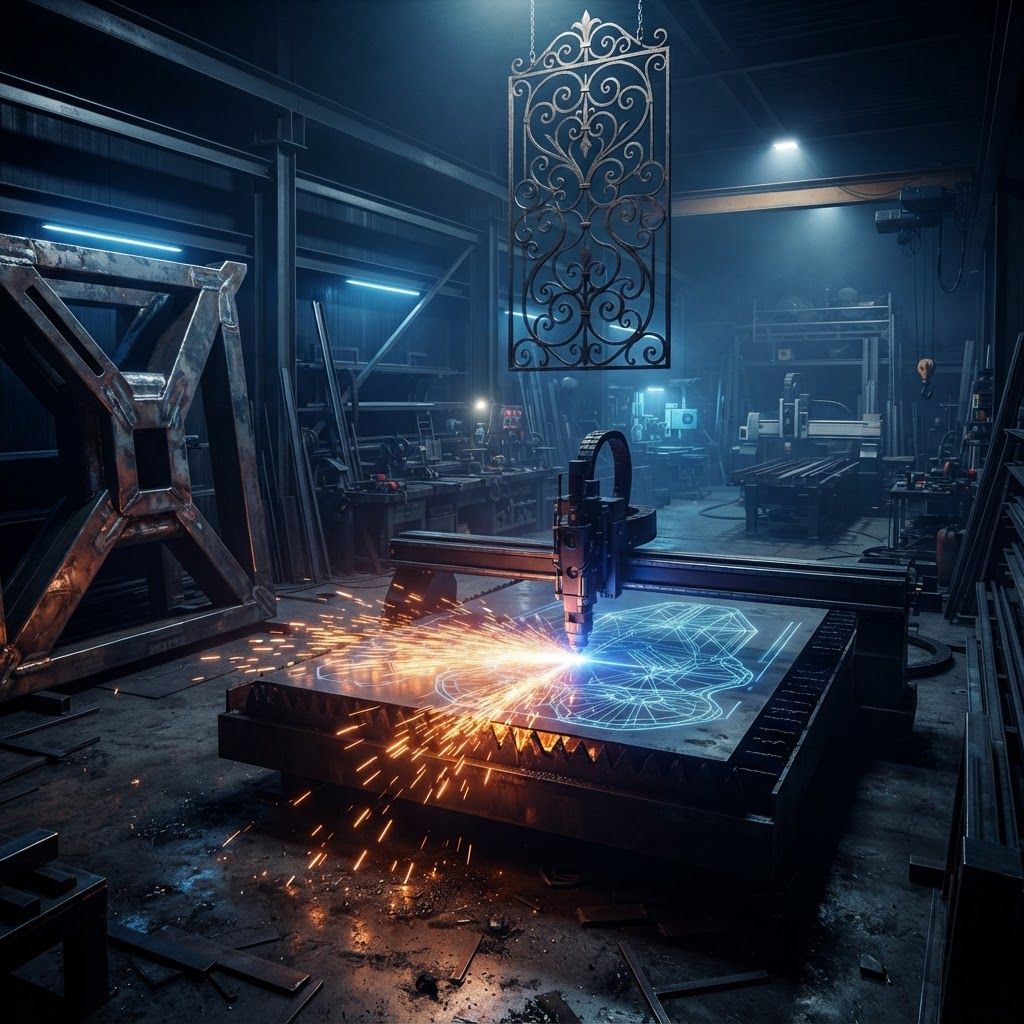
The sector's character has changed substantially over the past two decades. Manual marking out and guillotining have largely given way to computer-controlled laser and plasma cutting, press braking with automatic tool changes, robotic welding and three-dimensional modelling that flows directly from design software to machine. What has not changed is the value of skilled hands. Welding to a high standard, fitting complex assemblies and finishing architectural metalwork properly remain craft skills, and the best Maidstone companies pair digital precision with genuine trade expertise.
The Ten Leading Metalworks Companies
1. Maidstone Steel Fabrication is the area's principal structural steelwork specialist, producing beams, columns, portal frames, staircases and mezzanine floors for construction and industrial clients. Design capability, certified welding procedures and on-site erection under one roof give clients a single point of responsibility.
2. Medway Laser Cutting Services operates fibre laser and press brake capacity for sheet metal work in mild steel, stainless steel and aluminium. Fast quoting from customer files and short lead times make it the default subcontract choice for other manufacturers needing cut and folded parts.
3. Kent Precision Machining provides computer numerically controlled turning and milling to close tolerances, supported by inspection equipment and full material certification. Aerospace, medical and instrumentation customers require this level of documented accuracy, and it also benefits general engineering clients needing genuinely interchangeable parts.
4. Invicta Architectural Metalwork produces balustrades, staircases, gates, canopies, railings and feature screens for architects, developers and private clients. Aesthetic judgement matters as much as structural competence here, since welds, joints and finishes remain permanently visible.
5. Weald Stainless Steel Fabrication concentrates on hygienic fabrication for food, beverage and pharmaceutical customers, producing tanks, hoppers, tables, sinks and pipework. Correct surface finishing, crevice-free welding and appropriate grade selection are what make these products cleanable and durable in wash-down environments.
6. Maidstone Welding and Site Services delivers mobile welding, plant repair and emergency fabrication across Kent. When a production line frame cracks or a gate is damaged, the ability to weld competently on site rather than dismantle and transport equipment saves substantial downtime.
7. Bearsted Sheet Metal Products manufactures enclosures, cabinets, ducting, trays and housings, often finished with powder coating. Serving electrical, ventilation and equipment manufacturers, it excels at repeatable batch production of moderately complex folded parts.
8. Kentish Wrought Iron and Blacksmithing maintains traditional forge work, producing hand-forged gates, railings, ironmongery and restoration pieces for period properties and heritage sites. Kent's abundance of listed buildings sustains genuine demand for authentic blacksmithing rather than fabricated imitation.
9. Loose Valley Metal Finishing supports the cluster with powder coating, shot blasting, galvanising coordination, polishing and passivation. Finishing determines corrosion resistance and appearance, and having capable finishers locally avoids adding days of transport to every project.
10. Boughton Aluminium and Non-Ferrous Fabrication specialises in aluminium, brass and copper work, from lightweight frameworks to decorative panels. Aluminium welding demands different technique and equipment from steel, and dedicated non-ferrous capability produces noticeably better results.
Processes and Capabilities Explained
Buyers new to fabrication benefit from understanding the main processes. Laser cutting produces accurate flat profiles from sheet with excellent edge quality and no tooling cost, making it ideal for both prototypes and production. Plasma and waterjet cutting handle thicker or heat-sensitive materials. Press braking folds flat blanks into three-dimensional forms, and bend allowances must be considered at the design stage.
Welding covers several techniques. Metal inert gas welding is fast and economical for general steel fabrication. Tungsten inert gas welding is slower but produces cleaner, more controlled welds suited to stainless steel and aluminium and to visible architectural work. Robotic welding delivers consistency on repeat production runs.
Machining removes material to achieve precise dimensions and features that fabrication cannot produce, and is often combined with fabrication on the same assembly. Finishing processes then protect and present the result, whether through galvanising for outdoor structural steel, powder coating for durable coloured surfaces or mechanical polishing for visible stainless work.
Briefing a Fabrication Project
Provide the best information you can. Dimensioned drawings or three-dimensional model files allow accurate quoting and cutting, while sketches invite assumptions. Specify material grade, thickness, tolerances that genuinely matter, weld requirements, finish and any relevant standards. Marking every dimension as critical inflates cost unnecessarily, so distinguish clearly between functional and nominal dimensions.
Discuss manufacturability before finalising design. Experienced fabricators routinely suggest changes that cut cost significantly, such as adjusting a bend radius to suit standard tooling, nesting parts more efficiently or replacing a machined feature with a folded one.
Consider transport and installation early. Large fabrications must fit through doors, around corners and onto vehicles, so bolted or modular assemblies are frequently a better choice than one welded structure. Confirm site access, lifting requirements and any permits needed for installation.
Verify credentials appropriate to the work. Structural steelwork for construction requires execution class compliance and certified welding procedures, while hygienic and pressure applications carry their own requirements. Ask for welder qualifications and material certificates where the application justifies them.
Finally, plan corrosion protection realistically for the environment. Outdoor steelwork in the British climate needs galvanising or a properly specified coating system, and untreated or lightly painted steel will disappoint within a few years.
Enduring Value in Local Fabrication
Maidstone's metalworks companies offer something that distant or overseas suppliers cannot easily match: the ability to visit, discuss and adjust. A fabricator half an hour away can survey a site, take real measurements, propose practical alternatives and return to make adjustments. Combined with modern cutting and machining precision and a genuine depth of trade skill, that proximity makes the town's metalworking sector a substantial asset to manufacturers, builders, architects and property owners throughout Kent.
Want your brand featured in front of decision-makers? Publish a guest post or get a link insertion in our guides through AAMAX's guest post and link insertion service.
Helpful Links
 SponsoredAAMAX — Full-Service Digital Agency
Write for Us
Share your expertise with our readers. We welcome guest contributions from industry specialists.
Pitch your idea