

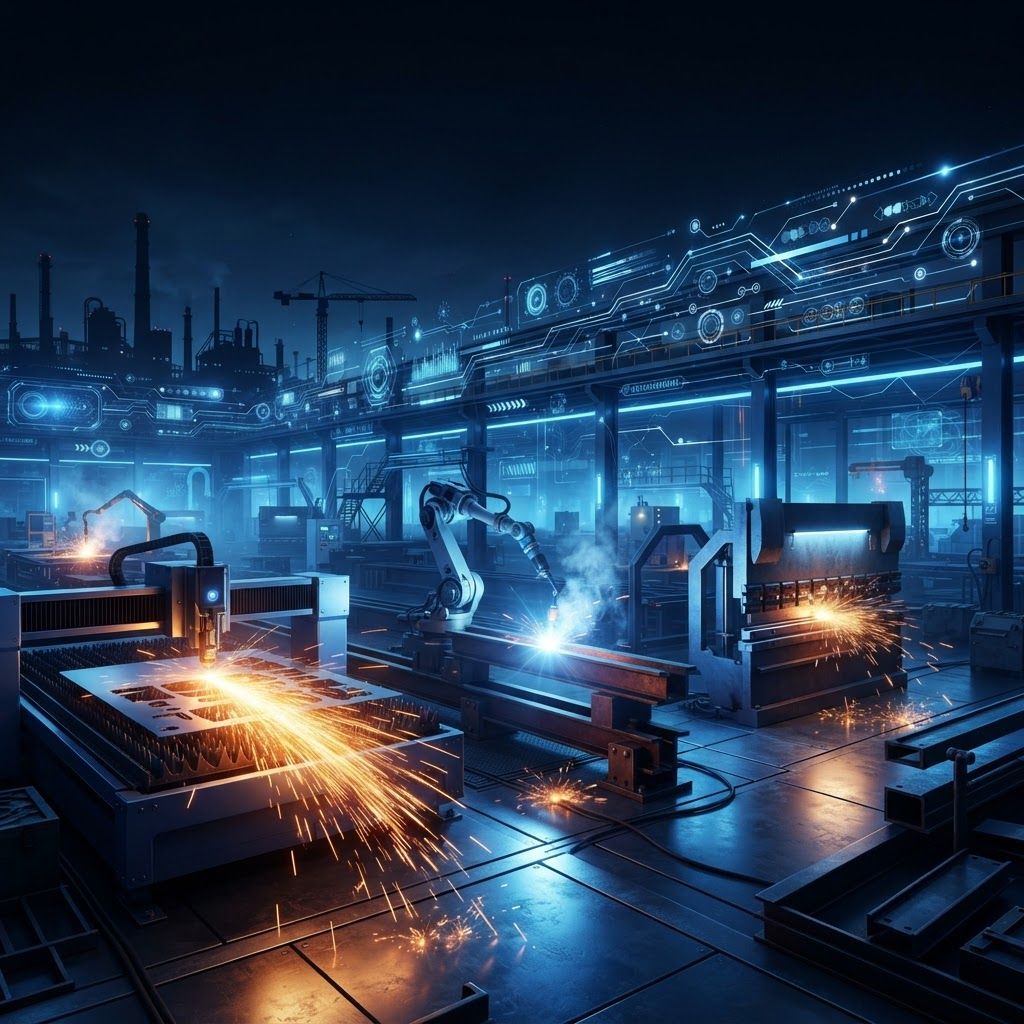
Metalworking in the West Norfolk Economy
Metalwork underpins almost every other industry in King's Lynn and West Norfolk. Farm buildings, grain stores, food factories, marine installations, shop fronts and housing developments all depend on fabricated steel, sheet metal and welded assemblies. As a result the district supports a broad ecosystem of metalworking businesses, from single-bay blacksmiths to structural steel fabricators operating cranes and coded welding procedures.
The variety reflects local demand. Agriculture requires robust, repairable equipment and building frames. Food processing needs hygienic stainless steel. The coastline demands corrosion-resistant specification. Construction growth around King's Lynn, Downham Market and the surrounding villages sustains steady structural work, while heritage properties create ongoing demand for traditional wrought ironwork and restoration.
Capability Markers to Look For
Welding qualification is the clearest indicator of quality. Coded welders working to recognised procedures, supported by documented weld procedure specifications and inspection records, produce joints that can be relied upon structurally. For structural steelwork, factory production control certification and the appropriate execution class are legal requirements on many projects, not optional extras.
Cutting and forming capability determines flexibility. Fibre laser cutting, plasma profiling, CNC press braking and rolling allow a fabricator to produce complex parts accurately and repeatably. Companies that also offer finishing, whether powder coating, galvanising arrangement or passivation of stainless steel, reduce project management burden for the customer.
Design capability adds further value. Fabricators with in-house CAD and structural detailing can develop a concept sketch into fabrication drawings, saving time and preventing the misunderstandings that arise when design and manufacture are separated.
Ten Leading Metalworks Companies
1. Lynn Structural Steel. A structural fabricator producing beams, columns, portal frames and staircases, with lifting capacity and site erection teams for agricultural and commercial buildings.
2. West Norfolk Laser Profiling. A subcontract cutting specialist offering fast turnaround on sheet and plate profiling, popular with other fabricators and machine builders in the region.
3. Hardwick Stainless Fabrication. Focused on hygienic stainless steel work for food and beverage processors, including tanks, tables, guarding and pipework with polished finishes.
4. Fenland Agricultural Engineering. Manufacturing and repairing trailers, hoppers, gates and handling equipment, valued by farmers for practical design and rapid breakdown repairs.
5. Great Ouse Architectural Metalwork. Producing balustrades, gates, railings and feature staircases in steel, stainless and bronze, working with architects and private clients.
6. Wash Marine Metalworks. Specialists in corrosion-resistant fabrication for jetties, boats and coastal installations, with experience in marine-grade materials and protective systems.
7. Downham Sheet Metal Company. A precision sheet metal shop producing enclosures, cabinets, brackets and ducting with CNC punching and folding.
8. Swaffham Forge and Blacksmiths. A traditional forge undertaking hand-forged ironwork, restoration and bespoke commissions for period properties and churches.
9. Bergen Way Welding Services. A mobile and workshop welding contractor covering steel, aluminium and stainless repair work, frequently called for urgent plant breakdowns.
10. Marshland Powder Coating and Finishing. Providing shot blasting, powder coating and wet spray finishing, completing the supply chain for fabricators across the district.
Technology Trends in Local Fabrication
Automation has reached the mid-sized fabricator. Fibre lasers have replaced slower cutting methods, offering higher speed, lower running costs and the ability to cut reflective materials. Automated bending cells and robotic welding are appearing where volumes justify them, improving consistency and easing pressure on a limited pool of skilled welders.
Digital workflow is equally transformative. Three-dimensional modelling, clash detection and direct transfer of geometry to cutting machines reduce errors and shorten lead times. Building information modelling on construction projects increasingly requires fabricators to work within a shared digital model rather than from paper drawings.
Material efficiency and sustainability are rising priorities. Nesting software minimises offcuts, steel scrap is recycled as standard, and clients increasingly request information on embodied carbon. Steel's recyclability is a genuine advantage that the sector is learning to communicate more effectively.
Choosing the Right Metalworks Partner
Match the fabricator to the work. Structural projects need certified structural fabricators. Food industry work belongs with stainless specialists who understand hygienic design. Decorative commissions suit architectural metalworkers with an eye for finish quality. Approaching a general workshop for highly specialised work rarely produces the best outcome.
Ask direct questions about capacity and programme. Understanding current workload, workshop bay size, lifting capability and delivery arrangements avoids late surprises. Request examples of comparable completed work and, where possible, visit the workshop to assess organisation and quality culture.
Clarify the scope precisely. Confirm whether the quotation includes design, materials, surface treatment, delivery, installation and any temporary works. Surface finish specification in particular is a common source of dispute and should be documented clearly, including preparation standard and coating thickness.
Why the Region's Metalworks Sector Matters
Metalworking companies in West Norfolk provide something increasingly rare: the ability to solve a physical problem quickly and locally. A broken bracket on a packing line, a bespoke frame for an awkward opening or a modification to farm machinery can be resolved in days rather than weeks.
The sector faces a skills challenge, with experienced welders and fabricators approaching retirement, but several local businesses have responded with structured apprenticeships and partnerships with regional colleges. Combined with continuing investment in cutting and forming technology, this positions West Norfolk metalworks companies well for the demands of modern construction, food manufacturing and agriculture.
Want your brand featured in front of decision-makers? Publish a guest post or get a link insertion in our guides through AAMAX's guest post and link insertion service.
Helpful Links
 SponsoredAAMAX — Full-Service Digital Agency
Write for Us
Share your expertise with our readers. We welcome guest contributions from industry specialists.
Pitch your idea

