

Metalworking in East Lothian
Metalwork underpins far more local activity than most people realise. Agricultural buildings across the county are steel framed. Farm machinery requires repair, modification and bespoke attachment fabrication. Construction projects need structural steelwork, staircases, balustrades and lintels. Energy infrastructure requires heavy fabrication, pipework and access platforms. Homeowners commission gates, railings, balustrades and garden structures. Food production facilities need stainless steel equipment, tables and guarding built to hygienic standards.
The county's engineering workshops, concentrated around Macmerry, Tranent, Musselburgh and Dunbar, alongside larger Scottish fabricators within easy reach, provide this capability. Many combine traditional skills with modern computer-controlled cutting and forming equipment.
Processes and Capabilities
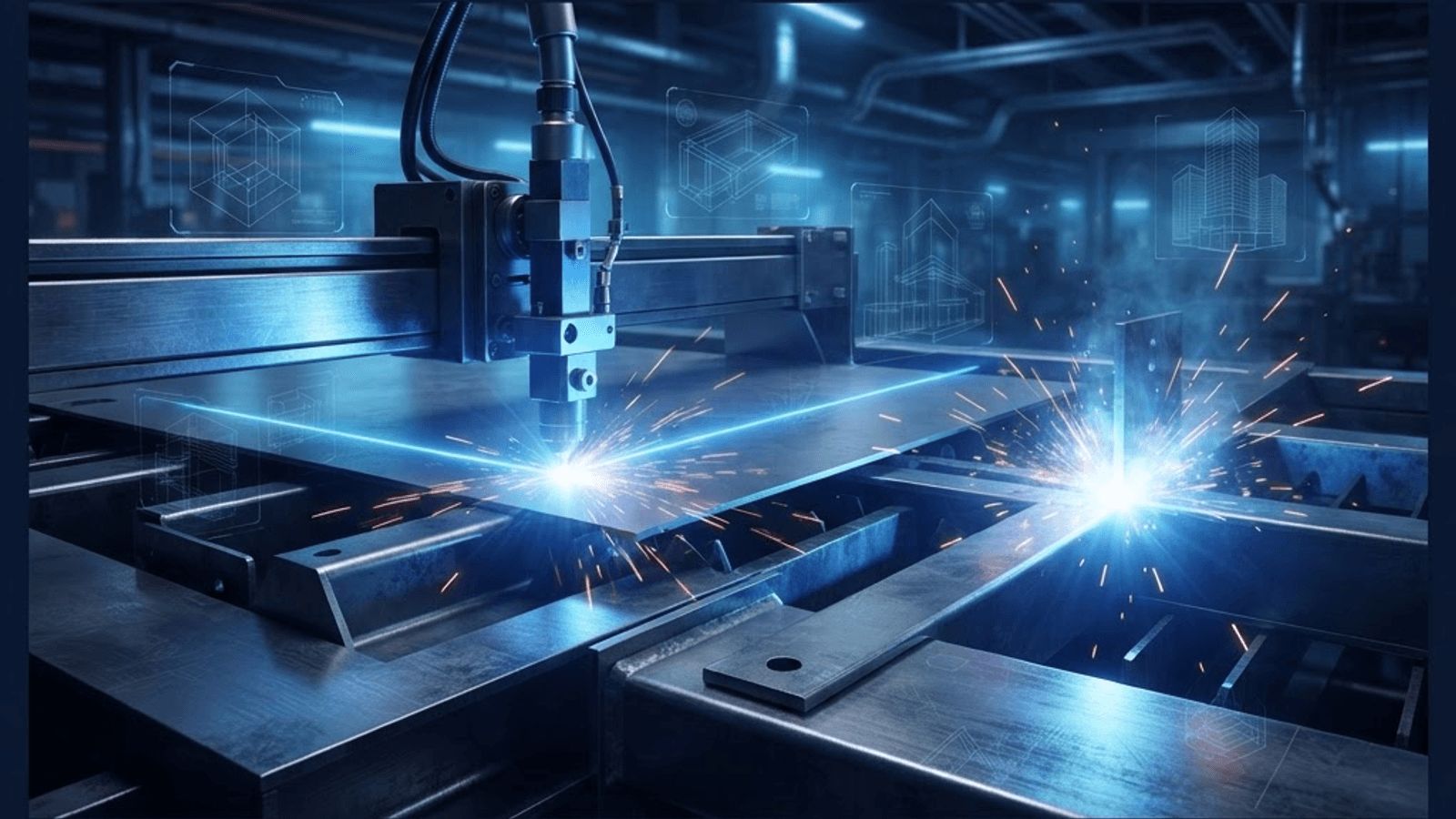
Structural steel fabrication involves cutting, drilling, welding and assembling beams, columns and bracing, followed by surface treatment and site erection. Sheet metal work uses laser or plasma cutting, press braking and welding to produce enclosures, ducting, guards and panels. Precision machining on computer numerical control lathes and milling machines produces components to tight tolerances. Welding fabrication covers everything from agricultural repair to code-certified pressure work. Architectural metalwork produces gates, railings, staircases, balustrades and decorative features. Blacksmithing and forge work continues as a craft tradition for heritage restoration and bespoke commissions. Surface finishing, including galvanising, powder coating and painting, protects metalwork against the corrosive coastal environment.
Leading Metalworks Companies Serving East Lothian
Had-Fab is an East Lothian based steel fabrication business known for manufacturing transmission towers and structural steelwork, and is a significant local engineering employer.
BHC Limited is one of Scotland's largest structural steelwork contractors, delivering fabrication and erection for major construction and infrastructure projects.
Brown and Tawse and Scottish steel stockholders supply sections, plate, tube and bar to fabricators and engineering workshops throughout the region.
Castle Precision Engineering provides high-tolerance computer numerical control machining for aerospace, medical and industrial customers requiring exacting standards.
Malcolm Group engineering and fabrication services support transport, logistics and construction clients with structural and vehicle-related metalwork.
Wm Sharp and Son and local agricultural engineering workshops deliver farm machinery repair, modification and bespoke fabrication tailored to the county's arable and livestock operations.
Elite Stainless and stainless fabrication specialists manufacture hygienic stainless steel equipment, benches and guarding for food production and hospitality environments.
Highland Galvanizers and Wedge Group Galvanizing provide hot dip galvanising services essential for protecting steelwork in exposed coastal locations.
Ratho Byres Forge represents Scotland's architectural blacksmithing tradition, producing handcrafted ironwork for heritage, public art and private commissions.
Steelite and architectural metalwork fabricators supply balustrades, staircases and structural features for residential and commercial developments across the Lothians.
Corrosion Protection in a Coastal County
East Lothian's coastal position makes corrosion protection a genuine technical priority rather than an afterthought. Salt-laden air accelerates steel corrosion substantially, and metalwork installed near the shore at North Berwick, Dunbar, Gullane or Port Seton faces a far more aggressive environment than equivalent work inland.
Hot dip galvanising provides excellent long-term protection by applying a metallurgically bonded zinc coating, and is the standard specification for exposed structural steel and architectural work. Duplex systems, combining galvanising with powder coating or paint, extend life further while allowing colour choice. Stainless steel grades must be selected with care, since lower grades can suffer surface staining in marine environments where higher molybdenum-bearing grades perform better. Design details matter too: avoiding water traps, ensuring drainage and providing access for maintenance all extend service life considerably.
Standards and Certification
Structural steelwork placed on the market must be CE or UKCA marked under the harmonised standard for structural steel components, requiring factory production control and appropriate execution class. Welding personnel and procedures should be qualified to recognised standards, and fabricators working on structural projects typically hold certification demonstrating this. Lifting equipment and accessories carry separate statutory requirements. For food environments, fabrication must meet hygienic design principles with appropriate finishes and no unsealed crevices.
Buyers should confirm that a fabricator holds the certification matching the work being commissioned, since structural and decorative work carry different obligations.
Commissioning Fabrication Work
Clear information produces good results. Provide drawings where available, or detailed dimensions and descriptions where not, and be explicit about loading, environment and intended use. Discuss material grade rather than leaving it to assumption. Agree finish specification precisely, including colour references for coated work. Confirm whether site survey, delivery and installation are included, and whether the fabricator holds the insurance and access equipment required for installation work.
For agricultural and machinery repair, speed often matters more than paperwork, and local workshops that can respond within a day during harvest or lambing provide value that a distant lower-priced supplier cannot match.
Skills and the Future of the Trade
Welding, fabrication and machining skills remain in high demand and short supply across Scotland. Apprenticeships offer a strong career route, and modern workshops combine hands-on craft with computer-aided design, programming and automated cutting technology. The growth of offshore wind, grid infrastructure and construction in the region suggests sustained demand for these skills.
Final Thoughts
Metalworks companies serving East Lothian span heavy structural fabrication, precision machining, hygienic stainless work and traditional forged ironwork. Specifying the correct material and protective finish for the coastal environment, choosing a fabricator with appropriate certification, and providing clear information at the outset are what separate metalwork that lasts a generation from work that requires attention within a few years.
Want your brand featured in front of decision-makers? Publish a guest post or get a link insertion in our guides through AAMAX's guest post and link insertion service.
Helpful Links
 SponsoredAAMAX — Full-Service Digital Agency
Write for Us
Share your expertise with our readers. We welcome guest contributions from industry specialists.
Pitch your idea

