

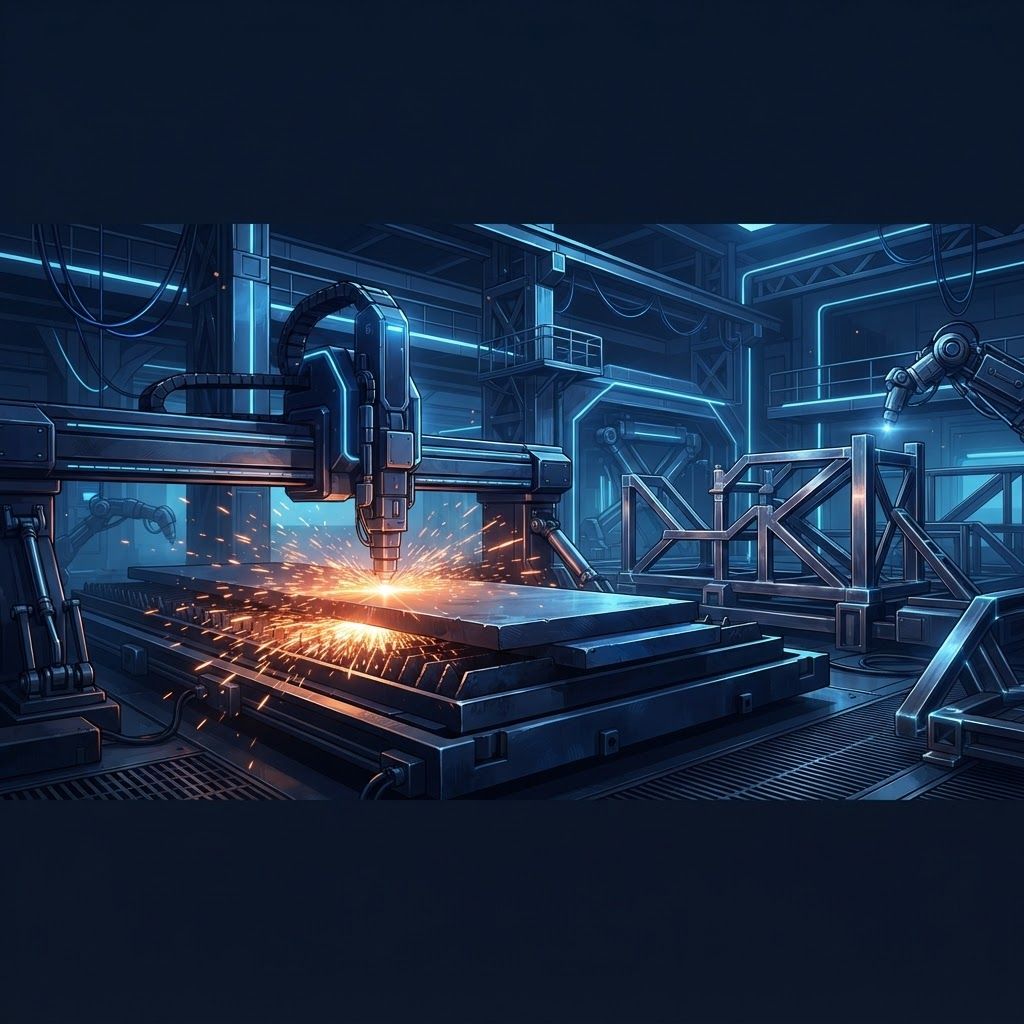
Metalworking: The Backbone of East Lindsey Industry
Metalworking is one of those trades that becomes invisible when it works well. Every farm building, food factory, harbour structure, machine frame and gate in East Lindsey passed through a fabrication shop at some point. The district supports a dense network of these businesses, ranging from one-man mobile welding outfits to fully equipped fabrication halls with CNC profiling and certified structural capability.
What unites them is a customer base with very practical expectations. Agricultural and marine customers do not want elegant solutions that fail under load. They want steel of adequate section, welds that hold, coatings that survive weather, and turnaround that fits around a harvest or a tide. The fabricators who thrive here have absorbed those expectations completely.
Ten Metalworks Companies in East Lindsey
1. Lindsey Structural Steel. Fabricating and erecting portal frames, mezzanines and structural steelwork for agricultural, industrial and commercial buildings, with the execution class certification that building control requires.
2. Louth Laser Profiling. Offering CNC laser cutting, press braking and punching in mild steel, stainless and aluminium, this company acts as a subcontract partner to manufacturers across Lincolnshire, turning drawings into accurate flat and formed components.
3. Wolds Agricultural Welding and Repair. A mobile and workshop-based repair service for farm machinery, trailers and handling equipment. Hardfacing, wear plate replacement and emergency field repairs during harvest are core to its reputation.
4. Coastal Stainless Fabrication. Producing hygienic stainless steel tables, tanks, guards, handrails and pipework for food processors and commercial kitchens, with finishes and welds designed to be cleaned rather than to hide dirt.
5. Horncastle Architectural Metalwork. Creating balustrades, staircases, gates, railings and decorative screens in steel, stainless and bronze, this workshop bridges engineering and design for domestic and commercial projects.
6. Marsh Marine Engineering. Working on harbour structures, pontoons, lifting equipment and vessel repair, this business combines heavy fabrication with the corrosion protection expertise that marine environments demand.
7. Spilsby Sheet Metal Works. Specialising in light-gauge fabrication such as enclosures, ducting, cabinets and brackets, often supplying electrical, ventilation and equipment manufacturers.
8. Skegness Ornamental Ironworks. A traditional blacksmithing operation producing forged ironwork, restoration pieces and bespoke commissions, keeping hot-forging skills alive in the district.
9. Alford Powder Coating and Finishing. Providing shot blasting, galvanising coordination, powder coating and wet spray finishing, this company completes the supply chain for fabricators who need durable protection on finished assemblies.
10. Bolingbroke Machining and Turning. Offering CNC turning, milling and precision machining, this business produces shafts, bushes, housings and replacement parts, often reverse-engineering components no longer available from original manufacturers.
Capabilities That Define a Good Fabricator
Welding qualification is the foundation. For structural work, coded welders and documented welding procedures are not bureaucratic extras, they are the evidence that a connection will carry its design load. Any fabricator producing structural steelwork should hold the appropriate factory production control certification and be able to explain it clearly.
Material knowledge matters just as much. Different steel grades, stainless families and aluminium alloys behave very differently in welding, forming and corrosion. Using the wrong stainless grade in a chloride-rich coastal environment leads to pitting and premature failure, a mistake that experienced local fabricators know to avoid.
Surface protection is the third pillar. In East Lindsey, coating specification frequently determines how long a structure lasts. Hot-dip galvanising, duplex systems combining galvanising with paint, and high-build epoxy coatings all have their place. Good fabricators discuss the environment before quoting a finish.
Technology in the Modern Fabrication Shop
The equipment gap between large and small fabricators has narrowed. Fibre laser cutters, CNC press brakes, tube lasers and offline programming software have become accessible to mid-sized businesses, allowing them to produce complex parts with repeatable accuracy. Three-dimensional modelling means components arrive on site fitting correctly, which reduces expensive rework.
Automation is arriving through welding cobots and automated cutting cells, adopted mainly for repetitive production work. This helps address the persistent shortage of skilled welders while freeing experienced staff for the complex, high-value tasks that machines cannot handle.
Scanning and reverse engineering are increasingly common too, especially for agricultural and marine repair where original drawings no longer exist. Digitising a worn part and machining a replacement has become routine.
How to Choose a Metalworks Company
Define your requirement precisely, including material grade, tolerances, finish and any certification needed. Vague enquiries produce vague quotes and disappointing results.
Ask to see comparable work and, where relevant, welding qualifications and inspection records. For structural elements, confirm the fabricator can issue a declaration of performance.
Consider workshop capacity against your timescale. Fabrication shops in agricultural districts experience intense seasonal demand, and a firm buried in harvest repairs may not be the right choice for a scheduled project in August.
Discuss installation. Some fabricators supply only; others deliver and erect. Confirming responsibility for lifting, fixing and site safety avoids gaps that emerge at exactly the wrong moment.
The Future of Metalworking in the District
Demand looks strong. Agricultural buildings continue to be replaced and expanded, food processing investment drives stainless work, and renewable energy activity along the Lincolnshire coast is generating structural and marine fabrication opportunities that did not exist a decade ago.
The constraint remains skills. Welders, fabricators and machinists are in short supply nationally, and the district's firms are competing for the same limited pool. Those investing in apprenticeships, offering progression and modernising their workshops are attracting the next generation. Their success will determine how much of this growing demand stays within East Lindsey.
Want your brand featured in front of decision-makers? Publish a guest post or get a link insertion in our guides through AAMAX's guest post and link insertion service.
Helpful Links
 SponsoredAAMAX — Full-Service Digital Agency
Write for Us
Share your expertise with our readers. We welcome guest contributions from industry specialists.
Pitch your idea

