

Metalworking's Enduring Role in Central Delaware
Metalworking is one of the least visible and most essential industries in any regional economy. Almost every building, vehicle, food processing line, agricultural implement and piece of industrial equipment in Kent County depends on fabricated metal produced by a shop most residents have never heard of. Dover's metalworks sector spans everything from one-person mobile welding operations to shops running multi-axis CNC machining centers and automated press brakes.
The city's position between the aerospace and defense activity associated with Dover Air Force Base, a substantial agricultural equipment base, food processing facilities across the Delmarva Peninsula and ongoing commercial construction creates unusually diverse demand. A shop here might cut structural steel in the morning and machine stainless food-contact components in the afternoon.
Capabilities That Define a Modern Metalworks Company
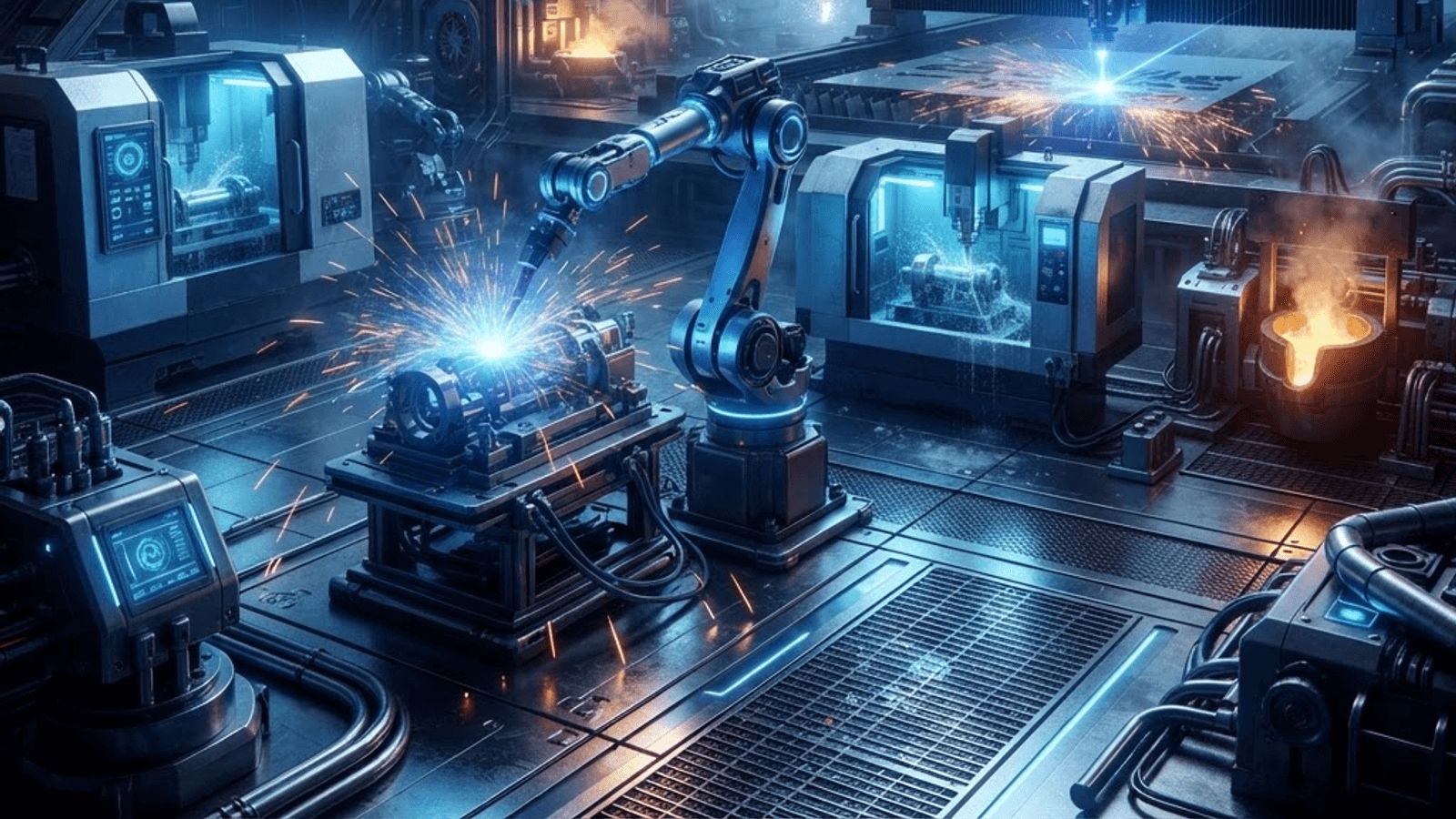
Understanding the vocabulary helps enormously when sourcing fabrication. Laser and plasma cutting handle flat profile work with speed and accuracy. Press brake forming turns flat blanks into three-dimensional parts. CNC machining removes material from solid stock to achieve tight tolerances. Welding joins components, and the process used, whether MIG, TIG, stick or robotic, affects appearance, strength and cost. Finishing operations such as powder coating, galvanizing, passivation and anodizing determine how long the part survives in service.
Very few shops do all of these well. A structural steel fabricator optimized for beams and columns is not the right choice for a thin-gauge stainless enclosure requiring cosmetic welds. Matching the shop to the work is the single most important sourcing decision.
Ten Metalworks Companies Serving Dover
1. Capital Precision Machining. A CNC machining shop producing tight-tolerance components in aluminum, stainless steel and engineered plastics. Their multi-axis capability and in-house inspection equipment suit aerospace, medical and instrumentation work where documentation matters as much as the part.
2. Kent Structural Steel. Focused on structural fabrication for commercial and agricultural construction. Beams, columns, stairs, railings, mezzanines and equipment platforms are their core work, supported by detailing services that coordinate with architectural drawings.
3. Delmarva Sheet Metal Works. Specialists in laser cutting, forming and light-gauge fabrication for enclosures, panels, ductwork and machine guarding. Fast turnaround on prototypes makes them popular with equipment builders iterating on designs.
4. First State Welding Services. A mobile and shop welding operation handling repairs, structural modification and on-site fabrication. Certified welders and the ability to work in the field rather than requiring parts be shipped in makes them valuable for farms, plants and construction sites.
5. Blue Hen Stainless Fabrication. Dedicated to food-grade and sanitary stainless work including tanks, conveyors, tables, hoods and process piping. Sanitary welding, polishing and passivation expertise is a genuine specialty that general shops cannot replicate.
6. Peninsula Ornamental Iron. Custom railings, gates, fencing, staircases and decorative architectural metal. They bridge craftsmanship and fabrication, serving both residential clients and commercial designers looking for distinctive metalwork.
7. Dover Machine and Tool. A job shop combining manual and CNC machining with a strong reputation for repair work, reverse engineering and producing obsolete replacement parts that manufacturers no longer supply.
8. Central Delaware Powder Coating. A finishing specialist offering powder coating, sandblasting and light assembly. Many fabricators subcontract finishing here, and the quality of surface preparation is what makes their coatings last.
9. Statehouse Metal Products. A production-oriented fabricator handling repeat volume work with tooling investment, fixtures and automated processes. For customers who need thousands of identical parts, their per-unit economics are hard to match.
10. Heritage Forge and Fabrication. A smaller shop combining traditional blacksmithing with modern fabrication for restoration, artistic commissions and one-off architectural features. Their work appears in historic properties across the region.
How to Choose a Fabrication Partner
Begin with drawings and tolerances. Shops quote far more accurately from dimensioned drawings or 3D models than from verbal descriptions and photographs. If you do not have drawings, shops with engineering support can produce them, but expect that service to appear in the quote.
Be realistic about tolerances. Specifying tighter tolerances than a part actually requires is one of the most common and expensive mistakes in custom fabrication. Every additional decimal place adds machining time, inspection time and scrap risk. A good shop will tell you when a tolerance is unnecessary, which is a strong indicator of a partner rather than a vendor.
Discuss material selection openly. Substituting a different alloy or gauge sometimes reduces cost dramatically with no functional penalty. Shops know current material availability and pricing far better than most buyers.
Verify certifications when they matter. Welding procedure qualifications, welder certifications, quality management certification and material traceability documentation are essential for structural, pressure-containing and safety-critical applications. For a decorative bracket, they are irrelevant. Paying for certification you do not need inflates cost.
Ask about capacity honestly. A shop quoting a two-week lead time while running three shifts on another contract may struggle. Visiting the floor tells you more in fifteen minutes than a week of email exchange.
Trends Reshaping the Trade
Automation is arriving steadily. Fiber laser cutters, robotic welding cells and automated press brakes have raised throughput and consistency while reducing dependence on an increasingly scarce skilled labor pool. Shops that invested are quoting faster and more competitively.
Digital workflow is another shift. Shops accepting 3D CAD files directly into programming software eliminate transcription errors and shorten quoting cycles considerably. Customers who can supply clean models benefit from both speed and accuracy.
Workforce development remains the industry's central challenge. Experienced machinists and certified welders are retiring faster than they are being replaced. Shops partnering with vocational programs and running apprenticeships are the ones most likely to still be capable partners in a decade.
Final Thoughts
Dover's metalworks companies collectively offer precision machining, structural fabrication, sanitary stainless work, ornamental craftsmanship and production volume capability. Success in sourcing comes from clear drawings, realistic tolerances, honest conversations about schedule and choosing a shop whose core capability genuinely matches the work. Buyers who invest in those relationships find that a good fabricator becomes an engineering resource, not just a supplier.
Want your brand featured in front of decision-makers? Publish a guest post or get a link insertion in our guides through AAMAX's guest post and link insertion service.
Helpful Links
 SponsoredAAMAX — Full-Service Digital Agency
Write for Us
Share your expertise with our readers. We welcome guest contributions from industry specialists.
Pitch your idea

