A Genuine Engineering Cluster
Crawley is not an obvious industrial town at first glance, but its metalworking sector is unusually capable for its size. The reason is Gatwick. The airport and its supply chain have sustained a precision engineering base in the town for decades, covering aerospace component machining, ground support equipment, tooling and maintenance fabrication. Around that core sits a broader ecosystem of architectural metalworkers, structural steel fabricators, sheet metal specialists and welding contractors serving construction and manufacturing across West Sussex and Surrey.
Manor Royal remains the heart of this activity. The estate's industrial units, good vehicle access and proximity to the M23 make it practical to run heavy fabrication alongside precision machining. The result is a local supply base where a customer can source anything from a single CNC-turned component to a full structural steel package without leaving the area.
The Main Disciplines Within Metalworks
Metalworking is a broad term, and Crawley's companies tend to specialise. Sheet metal fabrication covers laser cutting, punching, CNC folding and welding of enclosures, panels, brackets and housings, usually in mild steel, stainless steel or aluminium. Structural steel fabrication involves beams, columns, portal frames, staircases and platforms, typically requiring formal execution class certification and full weld procedure documentation.
Precision machining covers CNC milling and turning to tight tolerances, serving aerospace, medical and instrumentation customers. Architectural metalwork produces balustrades, gates, railings, canopies, feature staircases and cladding systems where finish quality is as important as structural performance. Welding and on-site fabrication services handle repairs, modifications and installations that cannot be done in a workshop. Finally, finishing specialists provide powder coating, galvanising, anodising, polishing and passivation.
The Ten Leading Metalworks Companies Serving Crawley
1. Manor Royal Precision Engineering. A CNC machining specialist working to aerospace tolerances across milling and turning. Their quality systems, first-article inspection processes and material traceability make them a natural fit for regulated sectors. They handle aluminium, stainless, titanium and engineering plastics, and are known for consistency on repeat production batches.
2. Gatwick Sheet Metal Fabrications. A fibre laser and press brake operation producing enclosures, chassis, brackets and panels. Their investment in automated laser cutting has shortened lead times considerably, and they offer full assembly including riveting, stud welding and fitted hardware. Electronics and equipment manufacturers form a large part of their customer base.
3. Sussex Structural Steelworks. A certified structural fabricator producing beams, columns, portal frames and mezzanine structures. They provide connection design, fabrication drawings and site erection, which makes them a single point of responsibility on commercial projects. Contractors value their programme reliability.
4. Three Bridges Architectural Metalwork. Specialists in balustrades, feature staircases, gates, canopies and bespoke architectural features. Their work combines stainless steel, glass, mild steel and powder-coated finishes, and they are frequently engaged directly by architects on residential and commercial projects where visual quality is paramount.
5. Ifield Welding and Fabrication Services. A mobile and workshop welding contractor with coded welders across MIG, TIG and MMA processes. Plant repair, structural modification, handrail installation and emergency breakdown work are their core activities. Their responsiveness is what local facilities managers rate most highly.
6. Broadfield Tool and Die. A toolmaking business producing press tools, jigs, fixtures and production tooling. They support manufacturers who need bespoke fixturing to improve throughput, and their reverse engineering capability is useful where original drawings for legacy equipment no longer exist.
7. Southgate Stainless Solutions. A stainless steel specialist serving food processing, pharmaceutical and hospitality clients. Hygienic welding, bench fabrication, tanks, hoppers and pipework are their stock in trade, and their understanding of surface finish requirements for cleanability is a genuine specialism.
8. Langley Green Laser Cutting. A profile cutting bureau offering laser, plasma and waterjet cutting across a wide thickness range. They serve other fabricators as much as end customers, providing fast turnaround on cut blanks from customer-supplied drawing files. Their pricing transparency and quick online quoting are commonly cited strengths.
9. Pound Hill Metal Finishing. A finishing house providing powder coating, wet spray, shot blasting and pre-treatment. Colour matching, architectural-grade coatings and warranted finishes for external applications are their focus. Many local fabricators subcontract finishing to them rather than investing in their own plant.
10. Crawley Engineering Supplies and Fabrication. A hybrid stockholder and fabricator supplying steel sections, plate, tube and bar alongside a cutting and fabrication service. Their value is convenience: smaller contractors can buy material, have it cut and collect the same day.
Technology Trends in Local Metalworking
Automation has reshaped economics across the sector. Fibre laser cutting has largely replaced older systems, cutting faster with lower running costs and handling reflective materials such as copper and brass that were previously difficult. Automated load and unload systems allow lights-out running overnight, which materially improves capacity without adding headcount.
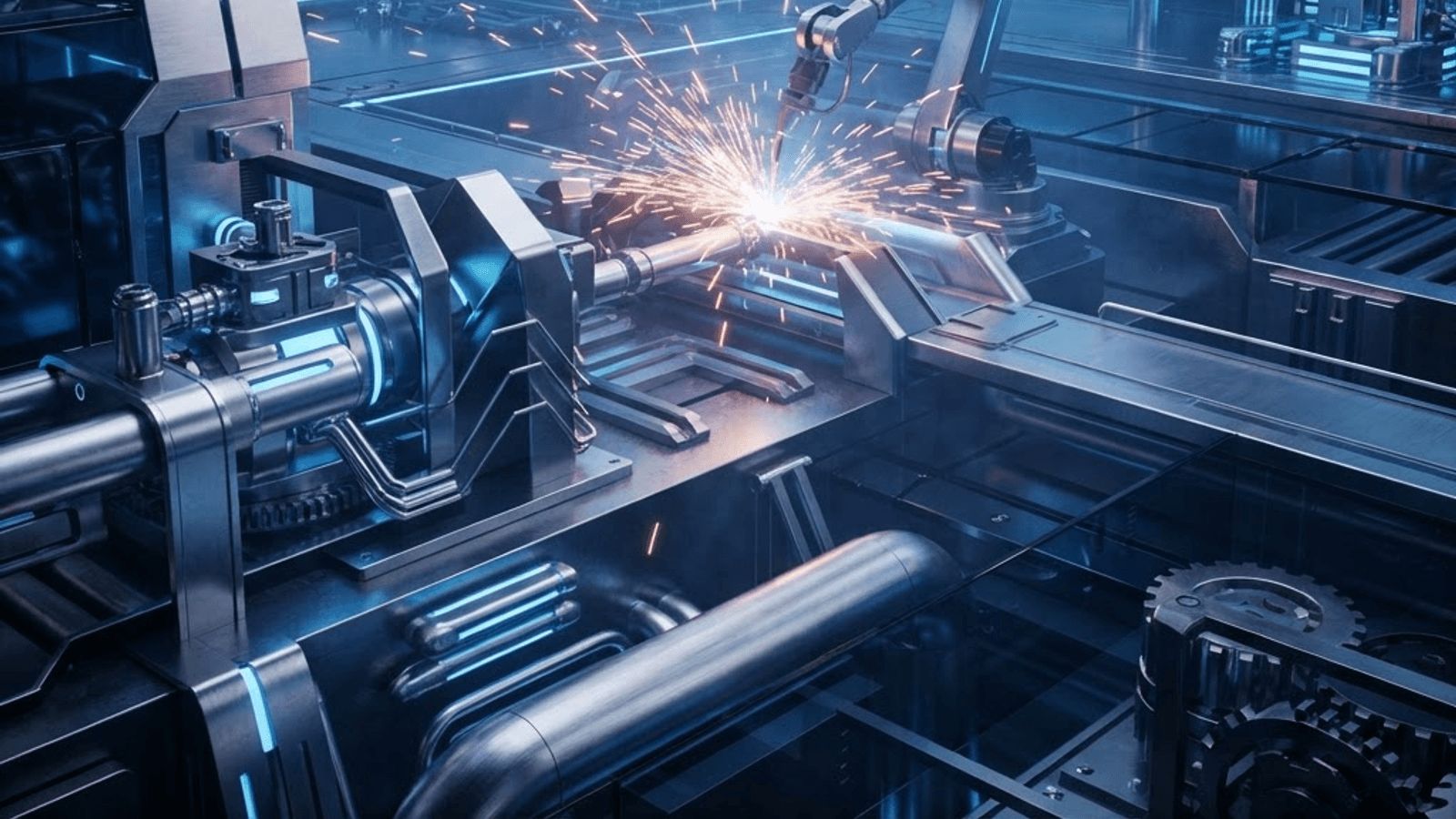
Robotic welding has become viable at lower batch sizes than before, thanks to offline programming and easier setup. For repeat fabrication work this improves both consistency and throughput. Meanwhile, integrated design and manufacturing software has shortened the path from customer drawing to machine code, reducing both lead time and the risk of transcription errors.
Additive manufacturing has found a niche rather than replacing conventional methods. Several Crawley engineering businesses use metal and polymer 3D printing for prototyping, jigs, fixtures and low-volume complex parts, while relying on machining and fabrication for production work.
Certification and Compliance Matter
For structural work, execution class certification is a legal requirement, not an optional credential. Confirm the execution class your project requires and verify the fabricator holds it. For aerospace work, the aerospace quality management standard is the relevant benchmark and is a meaningful indicator of process maturity. ISO 9001 is a reasonable baseline for general engineering, and ISO 14001 increasingly appears in tender requirements.
Weld procedure specifications, welder qualifications and material certificates should all be available on request. Any reputable fabricator will supply them without resistance, and their absence is a significant warning sign.
How to Select the Right Fabricator
Match capability to requirement rather than shopping purely on price. A precision machinist quoting on a heavy fabrication job will price defensively and deliver awkwardly, and the reverse is equally true. Ask directly what proportion of their work resembles yours.
Provide proper technical information. Dimensioned drawings with tolerances, material specifications, finish requirements and quantities produce accurate quotations. Vague enquiries produce padded prices. If you have 3D models, share them; most Crawley fabricators can work directly from neutral model formats.
Discuss finishing at the design stage. Powder coating, galvanising and anodising all impose design constraints around drainage holes, masking and dimensional allowance. Resolving these before fabrication avoids expensive rework.
Finally, consider total delivered cost. A slightly higher workshop price from a fabricator two miles away often beats a cheaper quote from fifty miles distant once transport, site visits and rework risk are included. Crawley's density of capable metalworkers makes local sourcing genuinely competitive.
Looking Ahead
The outlook for Crawley's metalworks sector is positive. Aerospace demand around Gatwick remains steady, construction activity across the Gatwick Diamond continues, and reshoring of component supply has brought some work back from overseas. The businesses that are growing fastest are those investing in automation, digital quoting and certification, while retaining the practical problem-solving culture that has always defined the town's engineering base.
Want your brand featured in front of decision-makers? Publish a guest post or get a link insertion in our guides through AAMAX's guest post and link insertion service.
Helpful Links
 SponsoredAAMAX — Full-Service Digital Agency
Write for Us
Share your expertise with our readers. We welcome guest contributions from industry specialists.
Pitch your idea