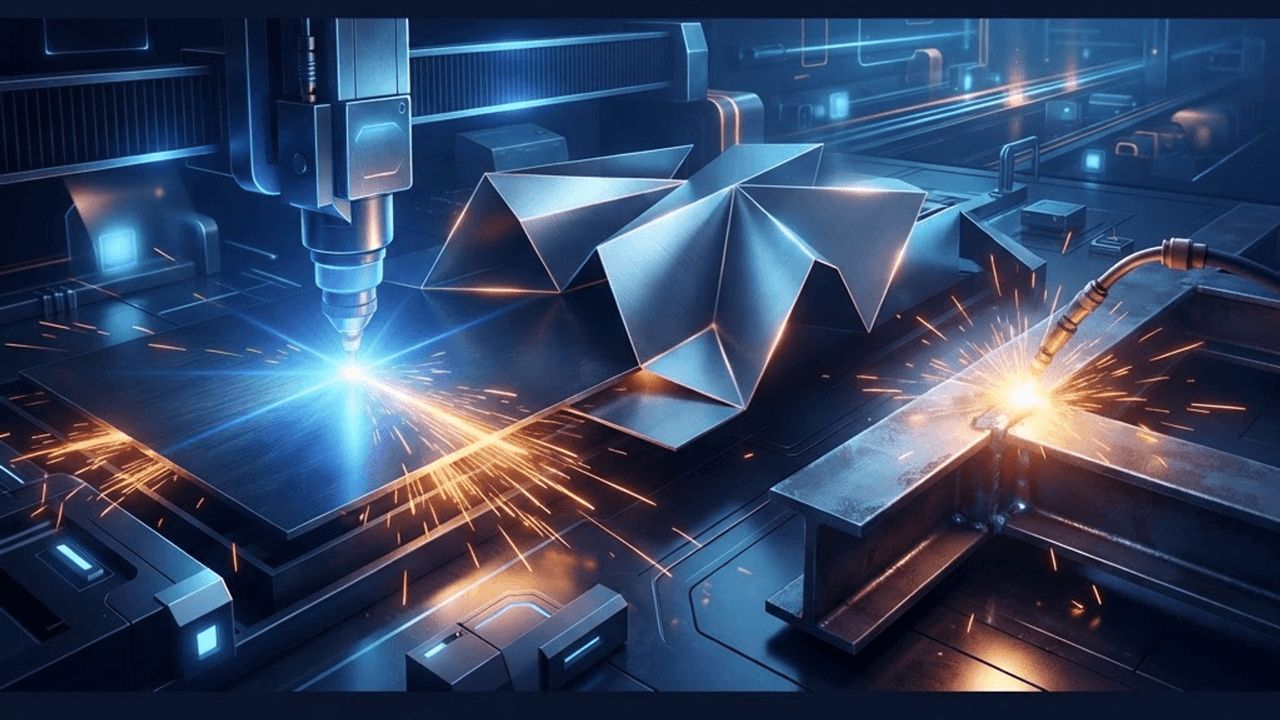
Metalworking in the Gloucestershire Engineering Tradition
Metalworking underpins the industrial identity of Gloucestershire. The county built aircraft, produced precision instruments and supplied engineered components long before the term advanced manufacturing existed. Around Cheltenham, that heritage survives in a dense network of machine shops, fabricators, foundries, surface treatment specialists and architectural metalworkers.
The sector serves two quite different markets simultaneously. On one side sits high precision work for aerospace, defence, medical and scientific customers where tolerances are measured in microns and documentation requirements are extensive. On the other sits architectural and decorative metalwork for the town's period properties, where balustrades, railings, gates and canopies must match Regency and Victorian originals.
The Capabilities Available Locally
Computer numerically controlled machining forms the technical core, with milling and turning centres producing components from aluminium, steel, stainless steel, titanium and exotic alloys. Multi-axis machines allow complex geometries to be produced in single setups, improving accuracy and reducing cost.
Sheet metal fabrication covers laser cutting, punching, folding and welding to produce enclosures, brackets, panels and structural assemblies. Modern fibre laser systems cut with exceptional speed and edge quality, and press brakes with automated tooling handle complex bend sequences accurately.
Structural steel fabrication produces frames, beams, staircases and platforms for construction projects. Welding services span manual metal arc, metal inert gas, tungsten inert gas and robotic processes, with coded welders available for applications requiring certified procedures.
Surface treatment including anodising, powder coating, galvanising, plating and passivation completes components and protects them in service. Foundries and casting suppliers, heat treatment specialists and metrology services support the wider cluster.
Leading Metalworks Companies Serving Cheltenham
Safran Landing Systems in Gloucester operates extensive precision machining, forging and surface treatment capability for aerospace landing gear, anchoring a substantial regional metalworking supply chain.
Renishaw, based nearby, manufactures precision components and metal additive manufacturing systems, and its metrology products are used throughout the metalworking industry to verify dimensional accuracy.
Gloucestershire precision machining companies produce components to aerospace and medical tolerances, offering multi-axis machining, in-process inspection and full material traceability.
Sheet metal fabrication workshops around Cheltenham deliver laser cutting, forming, welding and finishing for enclosures, guarding and industrial assemblies, often with rapid turnaround for prototype work.
Structural steel fabricators in the county design, fabricate and erect frames, mezzanines and staircases for commercial and residential construction throughout the region.
Architectural and ornamental ironwork specialists in the area produce and restore railings, balconies, gates and balustrades matching the Regency ironwork that characterises central Cheltenham.
Welding and fabrication contractors serving Gloucestershire undertake on-site repair, plant maintenance and bespoke fabrication for industrial and agricultural customers.
Surface treatment and finishing companies in the region provide powder coating, anodising, galvanising and specialist protective coatings for components and structures.
Toolmakers and jig manufacturers in the county produce press tools, fixtures and gauges essential to volume manufacturing across multiple sectors.
Metal stockholders and service centres serving the town complete the sector, supplying bar, plate, sheet, tube and sections with cutting and processing services that reduce lead times for fabricators.
Precision, Quality and Certification
Credibility in precision metalwork rests on documented quality systems. General quality management certification is the baseline, with aerospace customers typically requiring the aviation-specific standard and medical customers the corresponding medical device quality system. Welding to structural or pressure applications requires certified procedures and qualified welders working to recognised standards.
Measurement capability is equally important. Coordinate measuring machines, optical comparators and surface finish testers verify that components meet drawing requirements, and calibration of that equipment must itself be traceable to national standards. Buyers should ask to see inspection reports and understand how first article inspection is handled.
Material traceability matters enormously in regulated sectors. Manufacturers must be able to link finished components back to specific material batches with accompanying certification, which requires disciplined stores management and documentation throughout production.
Architectural Metalwork in a Regency Town
Cheltenham's streetscape depends heavily on ironwork. Balconies, verandas, railings and window guards in wrought and cast iron are defining features of the Regency terraces, and their maintenance is a specialist discipline. Corrosion, previous poor repairs and missing sections are common problems.
Restoration demands understanding of historic techniques. Wrought iron behaves differently from modern mild steel, and cast iron requires entirely different repair approaches including cold stitching or careful welding with preheating. Patterns for missing castings often must be created from surviving examples.
Listed building consent is generally required for alterations to ironwork on protected buildings, and conservation officers expect like-for-like repair where possible. Local metalworkers experienced in this work understand both the technical and the regulatory dimensions, which makes them valuable partners on heritage projects.
Technology and Automation
Metalworking has been transformed by digital manufacturing. Computer aided manufacturing software generates toolpaths directly from three-dimensional models, reducing programming time and error. Automated pallet changers and robotic loading enable machines to run unattended overnight, improving capacity without proportional labour increase.
Additive manufacturing in metal has moved from novelty to practical application, particularly for complex geometries, lightweight lattice structures and consolidated assemblies that would require many machined parts. Gloucestershire has particular strength here given the presence of leading equipment manufacturers.
Digital inspection and reverse engineering using three-dimensional scanning support both new product development and the reproduction of components for which no drawings survive, which is frequently useful in restoration work.
Selecting a Metalworking Partner
Match capability to requirement precisely. A shop equipped for aerospace tolerances will price accordingly, which is wasteful for general fabrication, while a general fabricator cannot deliver micron accuracy.
Ask about machine capacity including maximum part size and available axes, inspection equipment, certifications held, and typical lead times for your quantity. Request examples of comparable work and, where possible, visit the workshop to assess organisation, equipment condition and quality culture.
Discuss design for manufacture early. Small changes to tolerances, radii or material choice can substantially reduce cost without compromising function, and experienced Gloucestershire engineers will advise constructively. That collaborative engineering input is one of the strongest reasons to source metalwork locally rather than remotely.
Want your brand featured in front of decision-makers? Publish a guest post or get a link insertion in our guides through AAMAX's guest post and link insertion service.
Helpful Links
 SponsoredAAMAX — Full-Service Digital Agency
Write for Us
Share your expertise with our readers. We welcome guest contributions from industry specialists.
Pitch your idea