

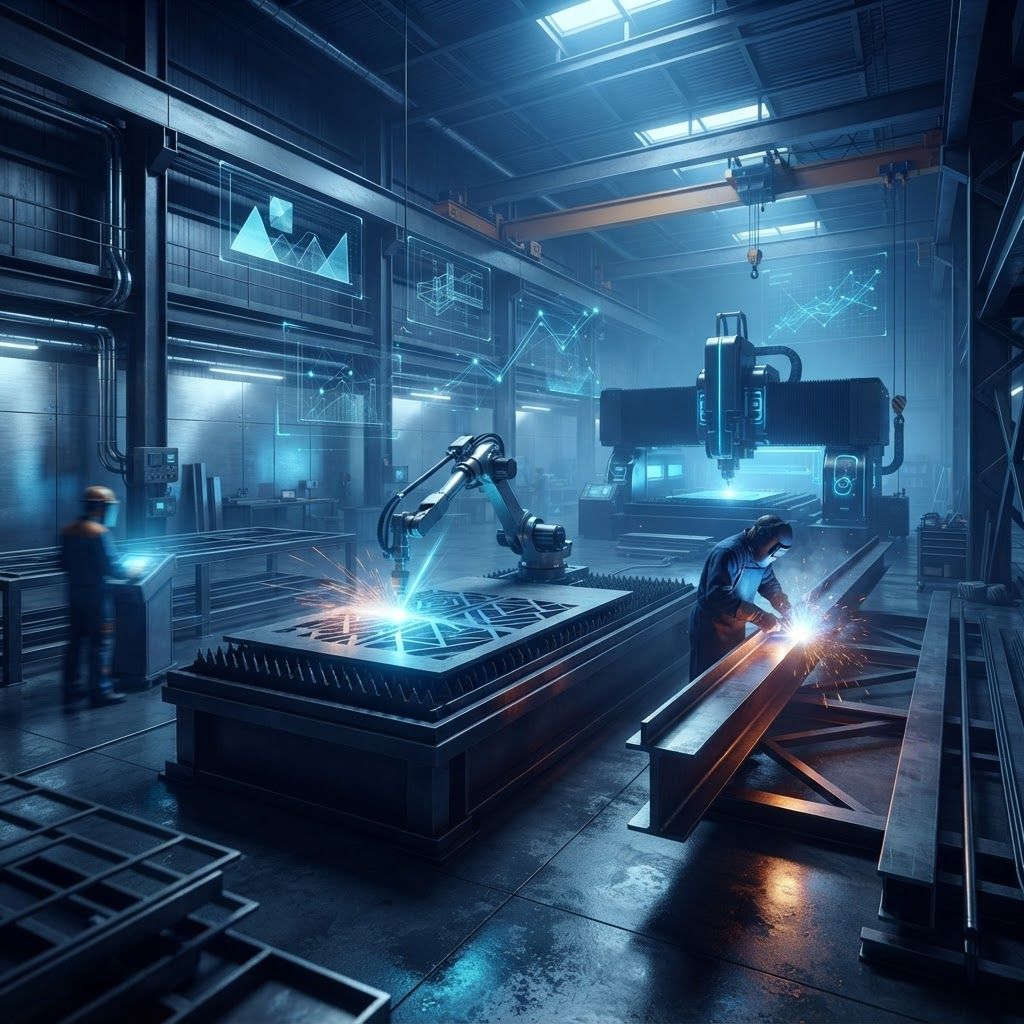
From Tinplate Heritage to Modern Fabrication
Few Welsh counties have a metalworking story as significant as Carmarthenshire's. Llanelli was once known as Tinopolis, at one point producing a remarkable share of the world's tinplate, and the surrounding area supported coal, copper and steel operations for well over a century. Those industries have largely gone, but their legacy persists in something more durable than any factory: a workforce and business culture that understands metal.
Today the sector looks entirely different. Instead of vast integrated works, the county hosts a network of small and medium enterprises running fibre laser cutters, press brakes, CNC machining centres and robotic welding cells. They serve agriculture, food processing, construction, renewables, marine and general engineering. Many act as subcontract partners to larger manufacturers across South Wales and beyond.
Understanding Metalworking Processes
Specifying fabrication becomes far easier once the main processes are clear.
Laser and plasma cutting profile flat sheet and plate with high accuracy. Fibre lasers handle thin to medium gauge steel, stainless and aluminium quickly and cleanly; plasma suits thicker plate more economically.
Press braking and folding form cut blanks into three-dimensional parts. Tooling selection and bend radius knowledge determine whether a part comes out crisp or cracked.
Welding and fabrication join components using MIG, TIG or spot processes. TIG gives the cleanest appearance on stainless and aluminium; MIG is faster on structural steel.
CNC machining turns and mills components to tight tolerance from bar, billet or castings, used where dimensional precision or fine surface finish is essential.
Rolling, bending and section work produce curved plate, tube and profiles for tanks, handrails and architectural features.
Finishing covers shot blasting, galvanising, powder coating, wet spraying, anodising, passivation and electropolishing. Finishing choice governs service life far more than most buyers appreciate.
Ten Leading Metalworks Companies in Carmarthenshire
1. Llanelli Precision Engineering — CNC turning and milling to fine tolerances for hydraulic, automotive and industrial customers. Strengths include in-house inspection with coordinate measuring equipment, full material certification and the ability to work from either drawings or supplied samples.
2. Tywi Steel Fabrications — Structural steelwork for agricultural buildings, industrial units, mezzanines and extensions, covering design, detailing, fabrication and site erection. Works to recognised execution class requirements with factory production control in place.
3. Cross Hands Laser Profiling — A subcontract sheet metal specialist running fibre laser cutting, punching, folding and welding. Popular with equipment manufacturers needing rapid prototype-to-production progression and consistent repeat batches.
4. Ammanford Welding and Machining — A general engineering workshop combining fabrication, repair welding and machining. Particularly valued by agricultural and quarrying customers for breakdown work, wear part rebuilding and hard facing.
5. Gwendraeth Stainless Fabrications — Hygienic stainless steel fabrication for food, dairy and beverage processors: tanks, tables, hoppers, guarding, pipework and washdown-resistant assemblies with polished and crevice-free welds.
6. Carmarthen Architectural Metalwork — Balustrades, staircases, gates, railings, canopies and feature screens in steel, stainless and bronze finishes. Works closely with architects and includes site surveying and installation.
7. Burry Port Marine and Coastal Engineering — Fabrication and repair for boats, pontoons, moorings and coastal infrastructure, with expertise in marine-grade aluminium and duplex stainless where salt corrosion resistance is critical.
8. Dinefwr Blacksmiths and Forgework — Traditional hot forging producing hand-made gates, hinges, ironmongery, fire baskets and restoration components for heritage properties, combining forge work with modern fabrication support.
9. Teifi Sheet Metal Products — Enclosures, cabinets, ducting, trays and ventilation components, with in-house powder coating allowing single-source supply of finished assemblies.
10. Cothi Renewable Structures — Fabricated mounting frames, brackets and support structures for solar arrays, battery enclosures and biomass installations — a growing niche as renewable deployment accelerates across rural Wales.
Certification, Standards and Quality Evidence
Structural steelwork carries the most stringent requirements. Fabricators placing structural components on the market need factory production control certified against the relevant execution standard, along with a declared execution class appropriate to the structure's consequence of failure. Welding personnel should hold current qualifications, and welding procedures should be documented and approved.
Material traceability is fundamental. Mill certificates confirming chemical composition and mechanical properties should accompany structural and pressure-related work. For food and pharmaceutical applications, stainless grade confirmation matters because substituting a lower grade can cause pitting corrosion within months.
Quality management to ISO 9001 is common, and non-destructive testing — dye penetrant, ultrasonic or radiographic — may be specified for critical welds. Ask what inspection is included in the quotation, since third-party testing is often priced separately.
Trends in the Local Metalworking Sector
Automation has reached even modest workshops. Robotic welding cells, automated tool changers and offline programming allow small teams to deliver volumes that once required far more labour, offsetting the shortage of experienced welders and machinists.
Renewable energy has created genuine new demand. Solar mounting systems, wind turbine components, battery storage enclosures and heat pump support frames all require fabricated steel, and rural Wales is seeing substantial deployment.
Agricultural engineering continues to modernise. Robotic milking installations, slurry handling equipment, feed systems and livestock housing all require bespoke stainless and mild steel work, and local fabricators who understand farming practicalities hold a real advantage over distant suppliers.
Reshoring is a quieter but meaningful trend. Extended international lead times and freight volatility have encouraged manufacturers to place fabrication work closer to home, benefiting responsive local subcontractors who can turn drawings into parts within days.
How to Specify Fabrication Work
Supply proper information. Dimensioned drawings with tolerances, material grade, weld requirements, finish specification and quantity remove ambiguity. Where a drawing does not exist, a sample plus a clear description of function is far better than a verbal explanation.
State tolerances only where they matter. Applying tight tolerances across every dimension inflates cost dramatically. Identify the critical features — mating faces, bore diameters, hole centres — and allow general tolerances elsewhere.
Think about finish from the outset. Galvanising provides excellent long-term protection outdoors but distorts thin sections and requires vent holes on hollow assemblies. Powder coating gives colour and reasonable durability but performs poorly on cut edges unless properly prepared. Coastal installations need substantially higher corrosion protection than inland ones.
Design for manufacture. Consistent bend radii, avoidance of unnecessary weld preparation, standard material thicknesses and generous internal corner radii all reduce cost without affecting function. Most fabricators will happily suggest such changes if consulted before design is frozen.
Finally, agree inspection and delivery terms. Confirm whether first-off approval is required, who transports the goods, and what happens if dimensions fall outside specification.
Final Thoughts
Carmarthenshire's metalworks sector has evolved from industrial heavyweight to agile, technically capable engineering cluster. Precision machining, structural steel, hygienic stainless, architectural metalwork, marine fabrication and traditional forging are all represented within a compact geography. For buyers, the combination of accessible expertise, short lead times and direct contact with the people cutting and welding the metal is genuinely valuable — provided the brief is clear and the certification requirements are agreed before work begins.
Want your brand featured in front of decision-makers? Publish a guest post or get a link insertion in our guides through AAMAX's guest post and link insertion service.
Helpful Links
 SponsoredAAMAX — Full-Service Digital Agency
Write for Us
Share your expertise with our readers. We welcome guest contributions from industry specialists.
Pitch your idea

