

A Region Built on Metal
South Wales and metal are inseparable in industrial history. The ironworks and steel plants that powered the region's growth left behind more than infrastructure; they left a deep reservoir of skill, and Bridgend has retained a meaningful share of it. Today the county borough hosts precision machinists, sheet metal fabricators, structural steelwork contractors, welders, architectural metalworkers and surface finishers, serving customers in automotive, aerospace, renewables, construction, food processing and general engineering.
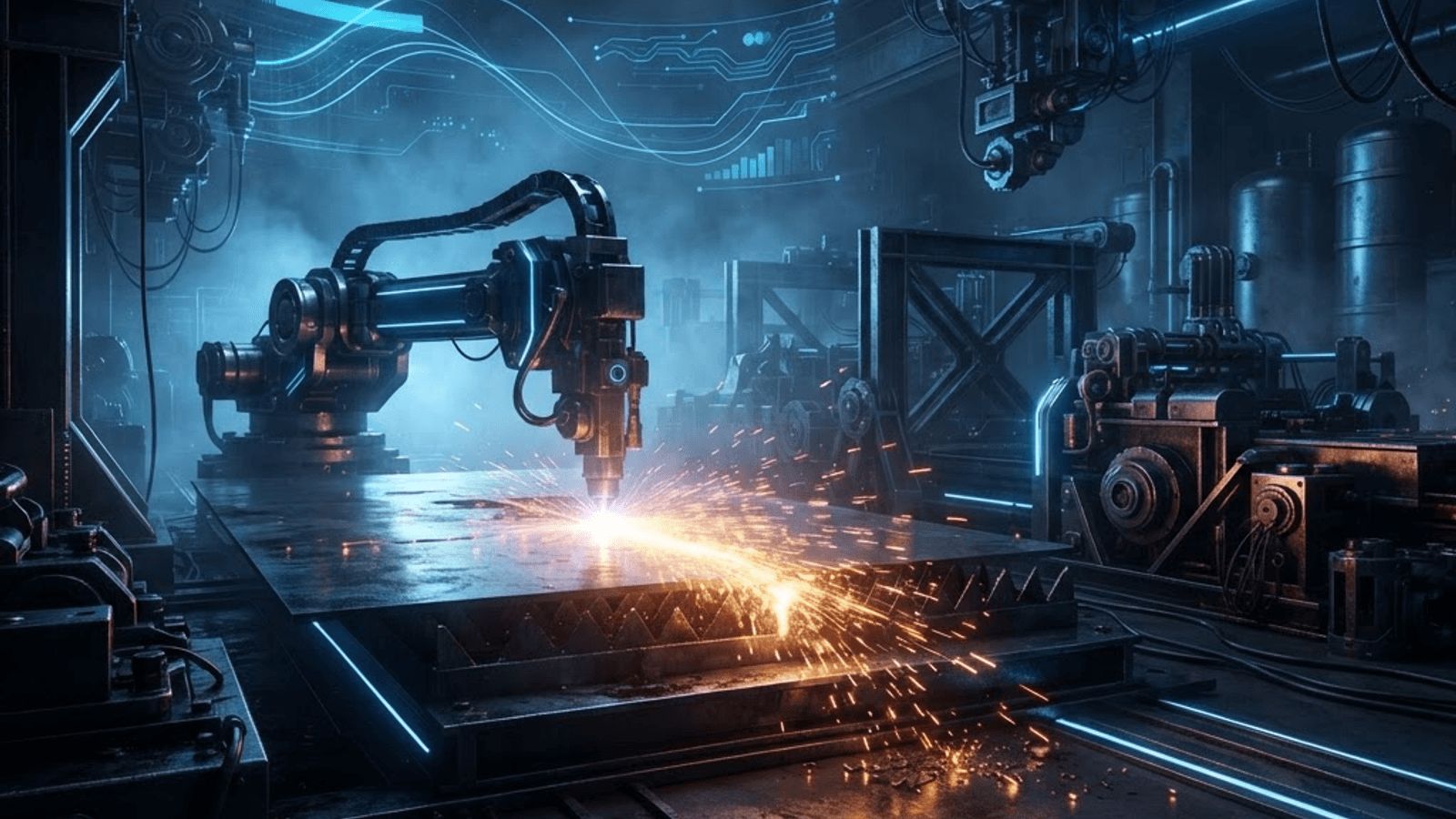
The modern sector looks very different from its predecessors. Where once the work was manual and heavy, today it is increasingly digital. Laser cutters driven directly from CAD files, CNC press brakes with automatic tool changing, five-axis machining centres and robotic welding cells have transformed both precision and throughput. The craft skills remain essential, but they now sit alongside programming and metrology.
Precision Machining and CNC
Precision machining shops in Bridgend produce components to tolerances measured in hundredths of a millimetre. Typical equipment includes CNC turning centres with live tooling and bar feeders for high-volume turned parts, three and four-axis vertical machining centres for prismatic components, and increasingly five-axis machines capable of producing complex geometry in a single setup.
Materials worked include aluminium alloys, mild and stainless steels, tool steels, brass, bronze, titanium and engineering plastics. Applications range from automotive prototype and low-volume production parts through hydraulic and pneumatic components to specialist equipment for the food and pharmaceutical industries.
Buyers evaluating machining suppliers should look beyond machine lists. Inspection capability tells you more. A shop with a coordinate measuring machine, calibrated gauges, a documented calibration schedule and proper first article inspection procedures will deliver consistently. One relying on hand measurement and experience alone may produce excellent parts but cannot prove it, which becomes a problem in regulated supply chains.
Sheet Metal Fabrication
Sheet metal work is the most widely used capability locally. The process chain typically runs from laser or punch cutting through deburring, forming on press brakes, welding, assembly and finishing.
Fibre laser cutting has largely displaced CO2 systems for thinner materials, offering faster cutting speeds, lower running costs and excellent performance on reflective metals such as aluminium, copper and brass. Local capacity generally covers material up to twenty millimetres and beyond in mild steel, with larger sections handled by plasma or waterjet.
Press brake forming is where much of the skill still resides. Bend allowance calculation, spring-back compensation, tool selection and bend sequencing all affect whether a part assembles correctly. Modern machines with offline programming and angle measurement have reduced trial and error considerably, but an experienced setter remains invaluable for complex parts.
Typical fabricated output includes electrical and control enclosures, machine guarding, ductwork, brackets and mounting plates, catering equipment, storage systems and vehicle bodywork components.
Structural Steelwork
Structural fabricators serve the construction industry, producing beams, columns, portal frames, mezzanine floors, staircases, walkways and platforms. This work is governed by the Construction Products Regulation and requires CE or UKCA marking supported by factory production control certified to BS EN 1090, with execution class determined by the structural consequence of failure.
Detailing is a critical stage often invisible to the client. Fabrication drawings translate the structural engineer's design into precise cutting lists, hole positions and connection details. Errors at this stage propagate expensively into the workshop and onto site. Fabricators with in-house detailing using modelling software that links directly to CNC beam lines achieve far better accuracy than those working from manually produced drawings.
Architectural and Ornamental Metalwork
At the more visible end of the sector, architectural metalworkers produce balustrades, handrails, gates, railings, canopies, feature staircases, shopfronts and decorative screens. Materials favour stainless steel, aluminium, mild steel with painted or galvanised finishes, and increasingly weathering steel for its distinctive patina.
This work sits at the intersection of engineering and design. A balustrade must satisfy loading requirements in the building regulations, resist a specified horizontal force, prevent a hundred-millimetre sphere passing through where children may be present, and simultaneously look considered. Fabricators who work comfortably with architects and can produce sample sections and detailed shop drawings are worth seeking out.
Welding, Coding and Quality
Welding underpins almost all fabrication, and quality varies enormously. Processes commonly available locally include MIG for productivity on steel, TIG for precision and appearance particularly on stainless and aluminium, MMA for site work, and increasingly robotic welding for repetitive production.
Coded welders hold qualifications to BS EN ISO 9606 for specific processes, materials, positions and thicknesses. For pressure equipment, structural steel and safety-critical applications, coded welding is a requirement rather than a preference. Weld procedure specifications document the parameters that produce a compliant weld, and inspection may extend to dye penetrant, magnetic particle, ultrasonic or radiographic testing depending on criticality.
Surface Finishing and Treatment
Finishing determines service life and appearance. Options available in and around Bridgend include hot dip galvanising for long-term corrosion protection on steel exposed to weather, powder coating in an enormous range of colours and textures, wet spray painting for large or heat-sensitive assemblies, anodising for aluminium, electroplating, and mechanical finishes such as brushing, polishing and shot blasting.
Specification errors here are common and costly. A powder coated steel gate installed in a coastal environment near Porthcawl without prior galvanising will corrode from the cut edges within a few years. Duplex systems combining galvanising with powder coating cost more initially and last dramatically longer.
Sourcing Metalwork Successfully
Provide complete information when requesting quotations. Drawings with tolerances, material grade and specification, finish requirement, quantity, and any certification or testing needed. Vague enquiries produce padded prices because fabricators price risk when they cannot see the full picture.
Engage early on design for manufacture. Standardising bend radii, avoiding unnecessarily tight tolerances, nesting parts efficiently and selecting stock material sizes can reduce cost substantially without affecting function. Most fabricators will offer this input freely because it makes their job easier too.
Verify certification appropriate to your application, whether that is ISO 9001, BS EN 1090, ISO 3834 for welding quality, or sector-specific approvals. Visit the workshop where possible; organisation, cleanliness and how work in progress is protected reveal a great deal.
The Sector's Direction
Bridgend's metalworking businesses are contending with energy intensity, steel price volatility and an ageing skilled workforce. The response has been automation, investment in efficient modern plant, and a push into higher-value work including renewables infrastructure, where fabrication for wind, solar mounting and marine energy offers growth. Apprenticeship activity has increased, though the skills gap remains real. For buyers, the practical conclusion is that South Wales retains genuine metalworking depth, and sourcing locally often delivers better communication, faster iteration and lower transport cost than looking further afield.
Want your brand featured in front of decision-makers? Publish a guest post or get a link insertion in our guides through AAMAX's guest post and link insertion service.
Helpful Links
 SponsoredAAMAX — Full-Service Digital Agency
Write for Us
Share your expertise with our readers. We welcome guest contributions from industry specialists.
Pitch your idea

