

Metalworking in Bracknell Forest
Metalworking is one of the most enduring industrial disciplines, and it remains central to manufacturing across the Thames Valley. In Bracknell Forest, metalworks companies support engineering firms, construction contractors, equipment manufacturers and architectural clients with everything from single prototype components to ongoing production batches and large fabricated structures.
The sector locally divides broadly into precision machining, sheet metal fabrication, structural and architectural metalwork, and finishing services. Many businesses combine several of these, allowing customers to source complete assemblies rather than coordinating multiple specialists. That integration is often the deciding factor when selecting a supplier for complex work.
Core Metalworking Processes
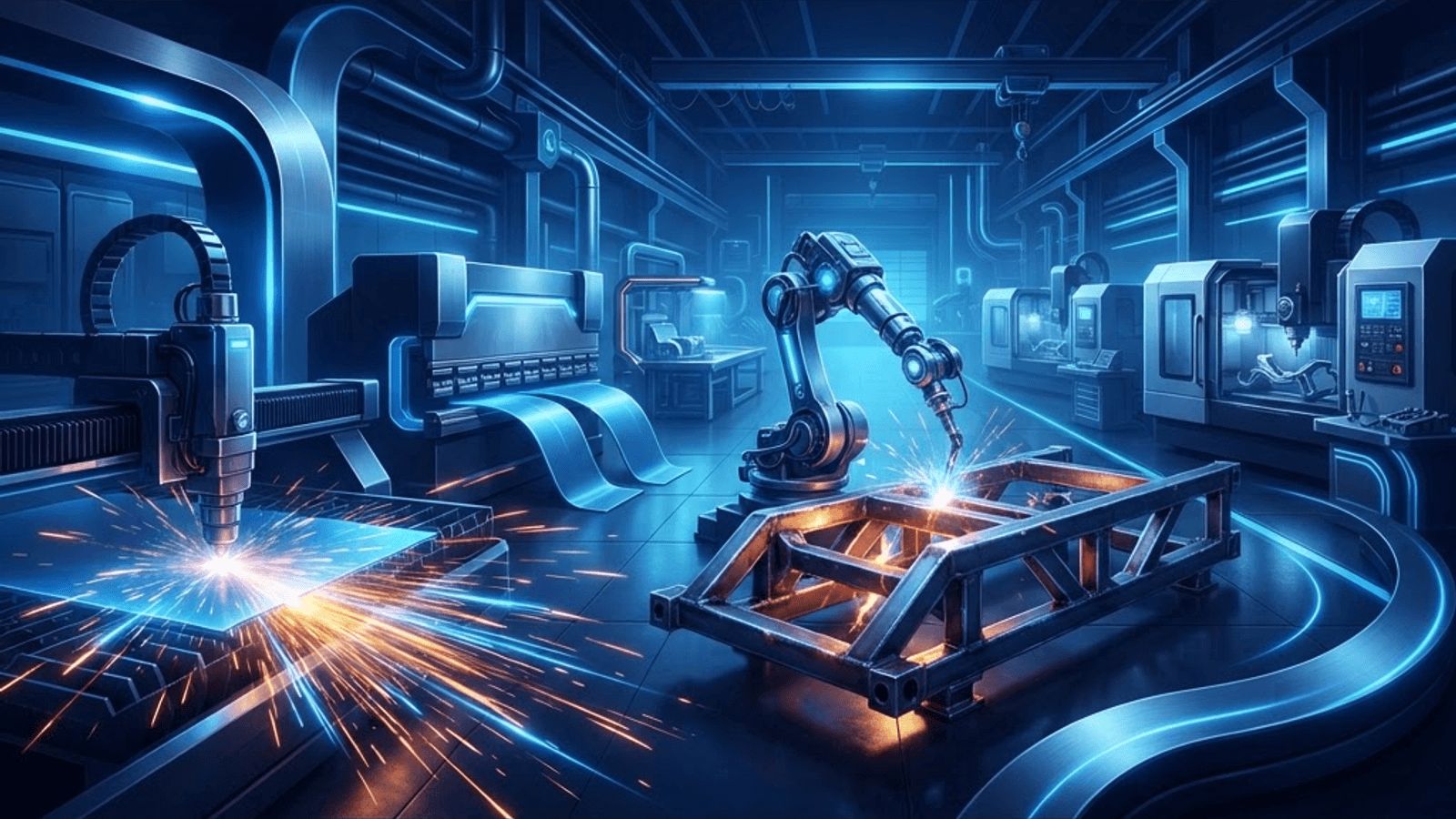
Precision machining removes material using turning, milling, drilling and grinding operations to produce components within tight dimensional tolerances. Modern computer-controlled machines work from digital models, producing complex geometries repeatedly with minimal variation.
Sheet metal fabrication cuts flat material using laser, plasma or punching processes, then folds it on press brakes into three-dimensional forms. Welding joins components using techniques selected for the material and application, from tungsten inert gas welding for fine work on stainless steel to robotic processes for repetitive production.
Finishing completes the process. Powder coating, anodising, plating, galvanising and polishing each provide different combinations of protection, appearance and durability.
Top 10 Best Metalworks Companies in Bracknell Forest
1. Forest Precision Machining produces turned and milled components to demanding tolerances for engineering customers. In-house inspection using coordinate measuring equipment provides documented evidence of conformance.
2. Bracknell Sheet Metal Works specialises in laser cutting, folding and assembly of sheet metal products including enclosures, brackets and panels. Rapid quotation and short lead times support customers working to compressed schedules.
3. Crowthorne Welding and Fabrication undertakes structural and general fabrication in steel, stainless steel and aluminium. Coded welders and documented procedures give customers confidence in critical applications.
4. Sandhurst Architectural Metalwork creates balustrades, staircases, gates, canopies and decorative features. Combining design sensitivity with structural competence, its work appears in both residential and commercial developments.
5. Warfield Stainless Solutions concentrates on stainless steel fabrication for food production, laboratory and hygienic applications. Surface finish quality and crevice-free construction are central to these environments.
6. Binfield Toolroom Services provides toolmaking, jig and fixture manufacture and precision repair work. This supporting capability keeps other manufacturers productive and is often called upon at short notice.
7. Thames Valley Metal Finishing offers powder coating, wet spraying and surface treatment services. Correct preparation is essential to coating longevity, and the company places strong emphasis on pre-treatment processes.
8. Easthampstead Laser Cutting operates high-capacity cutting equipment producing flat profiles from customer drawings. Nesting software maximises material yield, reducing both cost and waste.
9. Bullbrook Structural Steel fabricates beams, columns and connection assemblies for construction projects. Accurate fabrication and coordinated delivery sequencing keep site erection on programme.
10. Great Hollands Metal Spinning produces cylindrical and conical components through spinning and forming processes, suiting products where seamless construction and smooth curves are required.
Material Choices
Mild steel offers strength and economy but requires protective finishing in most environments. Stainless steel resists corrosion and suits hygienic or exposed applications, though at higher cost and with different machining characteristics. Aluminium provides excellent strength-to-weight ratios and natural corrosion resistance, making it popular for enclosures and transport applications. Copper, brass and specialist alloys serve particular electrical, thermal and decorative requirements.
Material selection influences manufacturing cost as much as material price. Some alloys machine readily while others wear tooling rapidly. Experienced metalworkers advise on choices that satisfy performance requirements without unnecessary production difficulty.
Quality and Measurement
Professional metalworking depends on measurement discipline. Tolerances must be achievable and meaningful, since specifying unnecessarily tight limits increases cost substantially without improving function. Good suppliers discuss tolerance requirements openly and suggest where they can be relaxed.
Inspection regimes range from basic dimensional checks to full first article inspection reports and statistical process control on production runs. Traceability of material certificates matters particularly in structural and regulated applications, where the origin and properties of every piece of steel may need documenting.
Industry Trends
Automation continues to advance within metalworking. Robotic welding cells, automated loading systems and lights-out machining extend capacity without proportional labour increases. Digital workflows link design models directly to machine programming, reducing transcription errors and shortening lead times.
Sustainability has gained prominence too. Metal is highly recyclable, and efficient nesting, scrap segregation and energy-efficient equipment all improve environmental performance. Some customers now request recycled content information alongside technical specifications.
Specifying Metalwork Successfully
Provide clear drawings or models including material specification, tolerances, finish requirements and any relevant standards. Ambiguity here is the most common cause of disputes and rework. Indicate which dimensions are critical so the manufacturer can prioritise attention appropriately.
Discuss quantities and repeat potential, since setup costs amortise differently across batch sizes. For fabricated assemblies, agree how components will be jointed and whether the supplier will handle finishing and assembly or deliver loose parts.
Visit the workshop where practical. Organisation, equipment condition and quality control practices reveal a great deal about how reliably a supplier will perform.
Conclusion
Metalworks companies in Bracknell Forest combine traditional craft skills with modern computer-controlled capability. Whether a project requires precision components, robust fabrication or architectural features, the borough supports suppliers able to deliver accurate, durable metalwork backed by genuine engineering understanding.
Want your brand featured in front of decision-makers? Publish a guest post or get a link insertion in our guides through AAMAX's guest post and link insertion service.
Helpful Links
 SponsoredAAMAX — Full-Service Digital Agency
Write for Us
Share your expertise with our readers. We welcome guest contributions from industry specialists.
Pitch your idea

