

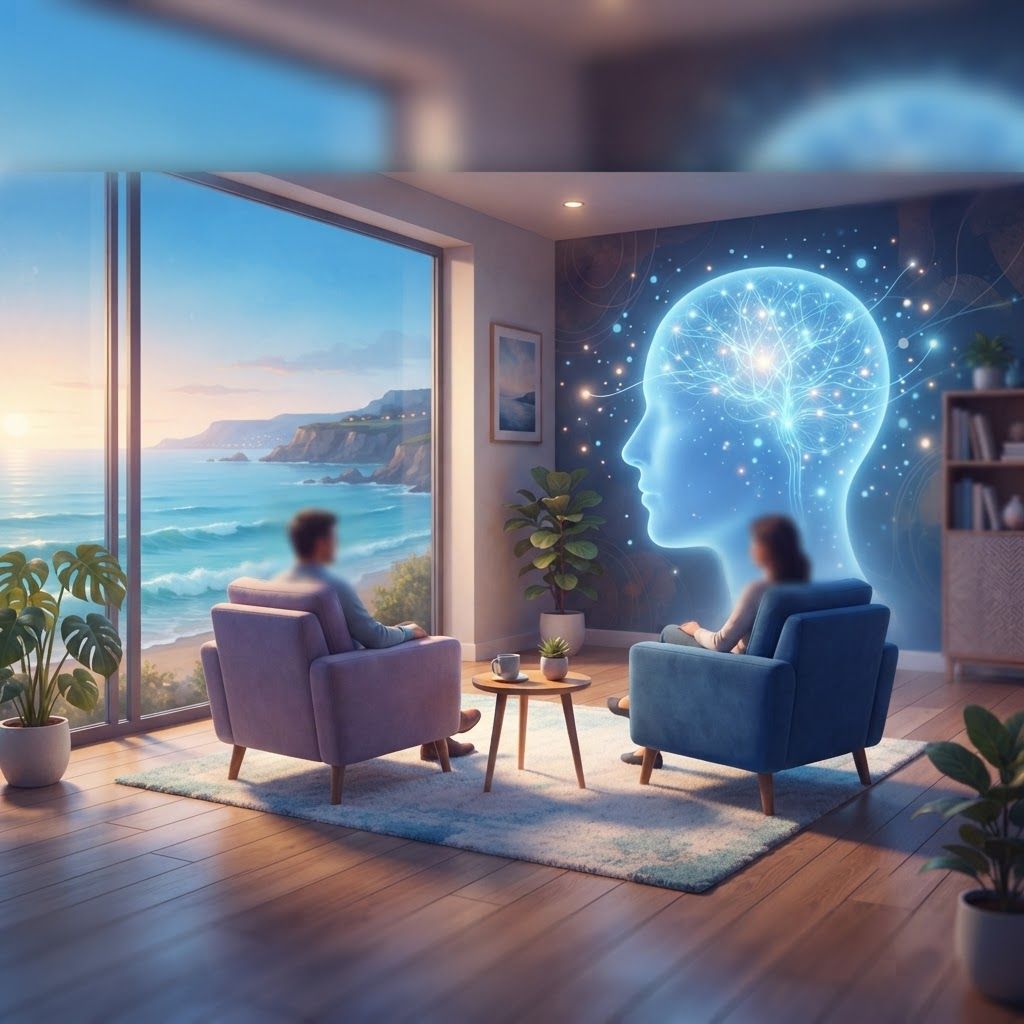
Mental Health Provision in the Arun District
Mental health has moved decisively into mainstream healthcare conversation, and provision in the Arun district reflects that. Support ranges from self-referral talking therapy services and general practice based mental health practitioners through to specialist community teams, crisis services, private therapy practices and voluntary sector organisations providing peer support and counselling.
The district faces specific pressures. Coastal communities across England experience elevated rates of anxiety, depression and social isolation, associated with seasonal employment, transport limitations, an older population and pockets of deprivation. At the same time, Arun benefits from a strong voluntary sector and from a network of independent therapists drawn to the area, which together create more choice than the population size might suggest.
Understanding the Different Types of Support
Navigating mental health services is easier once the tiers are clear. NHS Talking Therapies services accept self-referral without needing a general practice appointment and provide evidence-based treatment for anxiety, depression, post-traumatic stress and related conditions, typically cognitive behavioural therapy, counselling, guided self-help or eye movement desensitisation and reprocessing.
Primary care mental health practitioners work within general practices offering assessment, brief intervention and signposting. Community mental health teams support people with more severe or enduring conditions including bipolar disorder, psychosis and complex depression, with multidisciplinary input from psychiatrists, psychologists, nurses and occupational therapists. Crisis services operate around the clock for acute risk. Private therapy offers immediate access, greater choice of therapist and modality, and longer-term work than NHS courses typically allow.
The Ten Leading Mental Health Providers in Arun
1. Sussex Talking Therapies Service. The primary NHS route for anxiety and depression treatment, accepting direct self-referral and offering cognitive behavioural therapy, counselling and trauma-focused approaches in person and remotely.
2. Arun Mental Health Community Team. Specialist multidisciplinary support for severe and enduring mental illness, providing care coordination, psychiatric review, medication management and psychological therapy.
3. Bognor Regis Wellbeing Centre. A community-based hub combining counselling, group programmes, peer support and practical wellbeing courses covering sleep, stress and low mood.
4. Littlehampton Counselling Practice. An established private practice with a team of accredited counsellors and psychotherapists covering individual, couples and bereavement work.
5. Arundel Psychological Services. Clinical psychology provision offering formal assessment and structured therapy for complex presentations including trauma, obsessive compulsive disorder and personality-related difficulties.
6. Coastal Cognitive Therapy Clinic. Specialists in cognitive behavioural therapy and its derivatives, including acceptance and commitment therapy and compassion-focused approaches, with accredited practitioners.
7. Rustington Family and Youth Counselling. Focused on children, adolescents and families, providing play therapy, adolescent counselling and parenting support alongside school liaison.
8. Felpham Addiction and Recovery Support. Substance misuse and behavioural addiction services combining structured treatment, relapse prevention and group recovery programmes.
9. Angmering Mindfulness and Wellbeing Clinic. Group-based mindfulness courses, stress reduction programmes and integrative approaches used alongside conventional therapy.
10. Arun Crisis and Community Support Network. Voluntary sector and NHS-linked crisis provision including safe haven style drop-in support, telephone helplines and out-of-hours listening services.
Evidence-Based Treatments Worth Knowing About
Cognitive behavioural therapy has the strongest evidence base for anxiety disorders, depression, obsessive compulsive disorder and insomnia, typically delivered over eight to twenty sessions with structured between-session tasks. Eye movement desensitisation and reprocessing is highly effective for post-traumatic stress disorder. Interpersonal therapy and behavioural activation are well supported for depression.
Newer approaches including acceptance and commitment therapy, compassion-focused therapy and dialectical behaviour therapy have growing evidence, particularly for chronic difficulties and emotional regulation problems. Medication remains an important option, most effective for moderate to severe presentations and often best combined with therapy rather than used alone.
Practical interventions matter enormously and are frequently underrated: regular physical activity has effect sizes comparable to some therapies for mild to moderate depression, sleep regulation improves almost every mental health condition, and reducing social isolation through structured community activity has measurable benefit.
Trends in Mental Health Care
Digital delivery has expanded permanently. Video therapy is now routine and works well for most talking therapies, while structured digital programmes with therapist support have made treatment available to people who could not attend appointments. In a district with limited rural transport this has genuinely improved access.
Integration with physical healthcare has increased, reflecting evidence that mental and physical health are inseparable. Mental health practitioners embedded in general practice, liaison psychiatry in hospitals and psychological support within long-term condition pathways are all growing.
Social prescribing has become a mainstream tool, connecting people to exercise groups, gardening projects, arts activities, volunteering and befriending schemes. For loneliness-driven low mood, which is a substantial issue among Arun's older residents, this often outperforms clinical intervention alone.
Workplace mental health has also become a serious area of provision, with employers commissioning counselling, manager training and structured wellbeing support.
Practical Guidance on Accessing Help
You can self-refer to NHS Talking Therapies directly without a general practice appointment, which is the fastest route for common anxiety and depression. For anything more complex, start with your general practice, which can refer to specialist teams.
If choosing a private therapist, verify accreditation with a recognised body such as the British Association for Counselling and Psychotherapy, the British Psychological Society, the Health and Care Professions Council or the British Association for Behavioural and Cognitive Psychotherapies. Ask about training, experience with your specific difficulty, the approach used, session cost and expected duration. Most therapists offer an initial consultation, and the quality of the working relationship is one of the strongest predictors of outcome, so it is entirely reasonable to try more than one.
In a crisis, contact NHS 111 and select the mental health option, use local crisis lines, or attend an emergency department if there is immediate risk to life. Support is available around the clock and asking for it early is far better than waiting.
Final Thoughts
Mental health support in Arun is more extensive and more accessible than many residents realise, spanning self-referral NHS therapy, specialist community teams, accredited private practitioners and a capable voluntary sector. The most important step is the first one, and multiple routes exist that do not require waiting for a doctor's appointment.
Want your brand featured in front of decision-makers? Publish a guest post or get a link insertion in our guides through AAMAX's guest post and link insertion service.
Helpful Links
 SponsoredAAMAX — Full-Service Digital Agency
Write for Us
Share your expertise with our readers. We welcome guest contributions from industry specialists.
Pitch your idea

