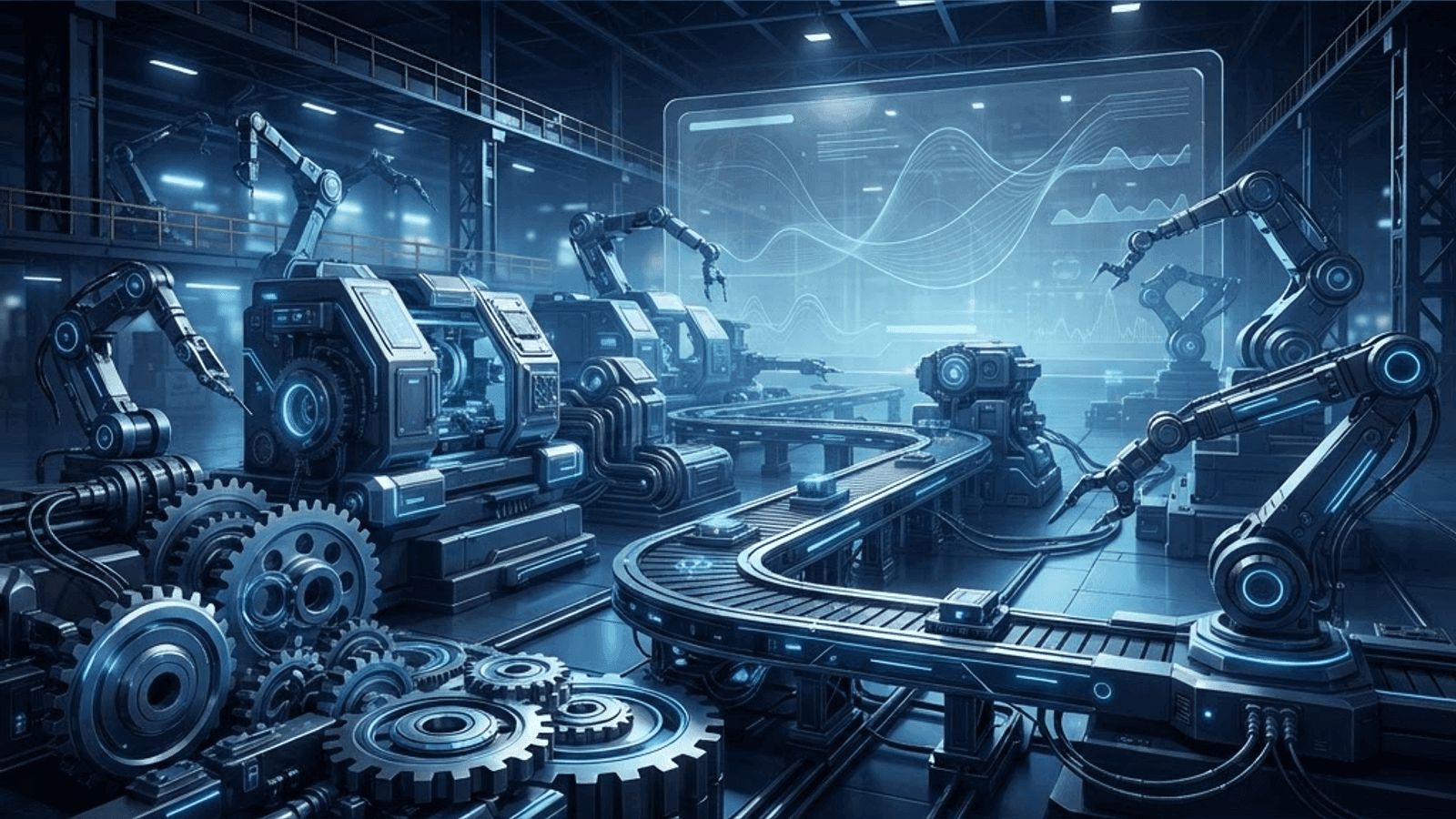
Why West Lancashire Builds Machinery Well
Machinery manufacturing rewards places with deep engineering traditions, and West Lancashire qualifies. The borough combines a long history of mechanical engineering with two demanding local customer bases: food production and horticulture on the coastal plain, and general manufacturing across the Skelmersdale and Burscough industrial estates. Both require equipment that runs reliably in difficult conditions and can be serviced quickly when it does not.
That proximity between builder and user has shaped the local sector. Machinery designed here tends to be practical, robust and maintainable, developed in dialogue with the people who operate it. Many builders offer full lifecycle support, covering design, manufacture, installation, commissioning, operator training and ongoing maintenance, which is exactly what smaller manufacturers without large in-house engineering teams need.
What Defines a Capable Machinery Builder
A strong machinery manufacturer combines several disciplines under one roof: mechanical design, fabrication and machining, electrical and control engineering, software for automation, and commissioning expertise. Integration is the hard part, and businesses that can manage all of it internally typically deliver more reliable outcomes than those coordinating multiple subcontractors.
Compliance is equally important. Machinery supplied in the United Kingdom must meet safety requirements covering guarding, emergency stops, risk assessment and technical documentation. Food sector machinery adds hygienic design requirements such as washdown capability, appropriate surface finishes and elimination of bacterial harbourage points. Buyers should expect a full technical file, not just an operating manual.
The Top 10 Machinery Manufacturers in West Lancashire
1. West Lancs Machinery Works
A general machinery builder producing bespoke production equipment across multiple sectors. Its process of detailed specification development before design work begins consistently reduces late-stage changes and cost overruns.
2. Skelmersdale Automation Systems
Designers and builders of automated assembly and handling systems, integrating robotics, conveyors and vision inspection. Projects usually include control software, safety systems and operator interface development.
3. Tarleton Agricultural Machinery
Manufacturing planting, harvesting, grading and washing equipment for the borough's substantial horticultural sector. Close collaboration with growers produces machines well suited to local crops and soil conditions.
4. Burscough Food Processing Equipment
Specialists in hygienic stainless steel machinery for food production, including conveying, portioning and packing equipment built to washdown standards with fully documented material certification.
5. Ormskirk Engineering Solutions
A design-led engineering business producing bespoke machines and production aids for customers with unusual process requirements. Concept development and feasibility studies often precede full builds.
6. Pimbo Materials Handling
Manufacturers of conveyors, elevators, hoppers and bulk handling systems for warehouse and process environments, with a focus on throughput reliability and easy maintenance access.
7. Douglas Valley Hydraulics
Producing hydraulic power packs, cylinders and hydraulically driven machinery, alongside servicing and refurbishment of existing systems for industrial and agricultural clients.
8. Lathom Packaging Machinery
Building filling, sealing, labelling and end-of-line packaging equipment, with particular expertise in accommodating frequent product changeovers without lengthy downtime.
9. Up Holland Machine Tools
Supplying, refurbishing and retrofitting machine tools, including upgrading older machines with modern controls to extend useful life at a fraction of replacement cost.
10. Rufford Special Purpose Machines
Focused on one-off machines for processes that cannot be served by standard equipment, frequently engaged where a manufacturer needs to automate a genuinely unique operation.
Trends in Machinery Manufacturing
Automation demand continues to grow, driven by labour availability and the need for consistent output quality. Machines increasingly incorporate sensors and connectivity, enabling condition monitoring and predictive maintenance rather than reactive repair. Energy efficiency has become a specification requirement as operating costs rise, pushing designs toward efficient drives and reduced compressed air dependency.
Modularity is another clear direction. Customers want machines that can be reconfigured as products change, rather than fixed equipment that becomes obsolete when a product line evolves. Finally, digital design and simulation allow builders to validate performance before cutting metal, reducing commissioning surprises.
How to Choose a Machinery Manufacturer
Invest time in the specification. Most machinery projects that disappoint do so because requirements were vague at the outset. Define throughput, product variants, available floorspace, utilities, cleaning regime and operator skill level before requesting quotes.
Ask to see comparable machines in operation and speak to the customers running them. Confirm what is included in commissioning, training and warranty, and establish spare parts availability and typical response times for breakdowns. Clarify intellectual property ownership for bespoke designs. Finally, treat the lowest quote with caution, as machinery that underperforms costs far more over its life than the initial saving.
Understanding the True Cost of Ownership
Purchase price typically represents a modest share of what a machine actually costs over its working life. Energy consumption, consumable parts, downtime, operator labour and eventual refurbishment all contribute, and small differences compound over a decade of production. A machine running two shifts a day for ten years will consume many times its purchase value in electricity and maintenance alone.
Reliability is the largest hidden variable. Unplanned downtime halts output, disrupts delivery commitments and often incurs overtime to recover lost production. Buyers in West Lancashire increasingly evaluate machinery on availability percentage rather than specification sheets, asking builders to evidence uptime achieved on comparable installations. Access for maintenance also matters enormously, since a machine requiring two hours of dismantling to reach a wearing part will accumulate far more downtime than one designed with serviceability in mind. Discussing these factors during specification, rather than after installation, is one of the most effective ways to protect long-term return on investment.
Final Thoughts
Machinery manufacturers in West Lancashire deliver a practical blend of engineering capability and local responsiveness. Whether the requirement is hygienic food equipment, agricultural machinery, automation or bespoke special purpose machines, the borough supports genuine depth. Clear specification, thorough supplier assessment and attention to lifetime support will consistently produce a better investment than focusing on purchase price alone.
Want your brand featured in front of decision-makers? Publish a guest post or get a link insertion in our guides through AAMAX's guest post and link insertion service.
Helpful Links
 SponsoredAAMAX — Full-Service Digital Agency
Write for Us
Share your expertise with our readers. We welcome guest contributions from industry specialists.
Pitch your idea