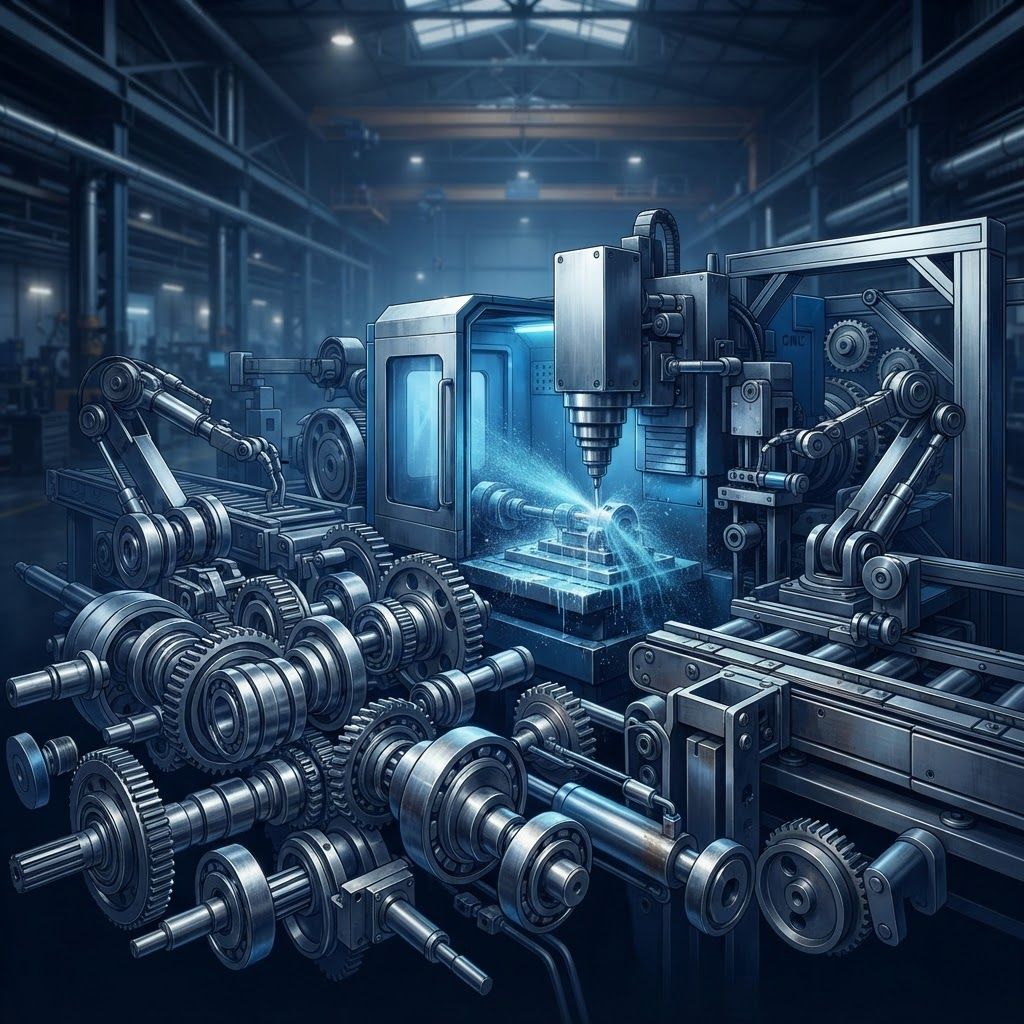
A Borough Built on Machine Building
Trafford Park was the world's first purpose-built industrial estate, and machinery manufacturing was central to its identity from the outset. Heavy engineering works produced turbines, generators, locomotives and industrial plant that were exported globally. That scale of production has changed, but the underlying capability endures in a different form.
Modern machinery manufacturing in Trafford is characterised by bespoke and small-batch production rather than mass output. Companies design and build machines to solve specific customer problems: a packaging line configured for an unusual product, a materials handling system fitted into a constrained building, a process vessel meeting particular hygiene requirements. This work resists offshoring because it depends on close collaboration between engineer and customer, and because commissioning and support require physical presence.
Categories of Machinery Production
The sector encompasses several distinct areas. Automation and robotics integration builds systems combining robots, vision, conveying and control to automate manufacturing tasks. Materials handling covers conveyors, hoists, cranes, palletisers and storage systems. Process equipment includes mixers, dryers, mills, heat exchangers and reaction vessels for food, chemical and pharmaceutical production. Packaging machinery fills, seals, labels and cartons products. Special purpose machinery covers everything designed for a single application.
Alongside new build sits a substantial service economy: machine refurbishment, control system upgrades, spare parts manufacture and maintenance contracts. Given that industrial machinery often operates for thirty years or more, this aftermarket frequently generates more revenue than original sales.
The Top 10 Machinery Manufacturers in Trafford
1. Trafford Park Engineering Works. A heavy engineering business fabricating and machining large industrial equipment, including process vessels, structural assemblies and custom machinery. Its overhead crane capacity and large machine tools allow it to handle work most competitors cannot physically accommodate.
2. Northern Automation Systems. A systems integrator designing and building automated production cells combining robotics, vision inspection, conveying and PLC control. It handles projects from concept through installation and operator training, serving food, pharmaceutical and general manufacturing clients.
3. Carrington Process Equipment. Manufacturing stainless steel process plant for food, beverage, pharmaceutical and chemical industries, including tanks, mixers, heat exchangers and clean-in-place systems. Hygienic welding and surface finishing to demanding standards define its work.
4. Urmston Materials Handling. Designing and installing conveyor systems, sortation equipment, palletising cells and automated storage. Given Trafford's concentration of distribution operations, its local market is unusually strong, and it also serves manufacturers nationally.
5. Sale Packaging Machinery. Building filling, capping, labelling and case packing machines for liquids, powders and solids. Its strength lies in machines handling difficult products or unusual container formats where standard equipment will not suffice.
6. Stretford Machine Tools. Supplying, rebuilding and retrofitting machine tools including lathes, mills and grinders, with CNC conversion of older manual machines. Retrofitting modern controls to sound mechanical machines offers excellent value compared with replacement.
7. Altrincham Special Purpose Machines. A design-and-build house creating one-off machines for specific manufacturing problems, from test rigs to assembly automation. Its engineering team works closely with customers through requirement definition, which is where such projects succeed or fail.
8. Old Trafford Hydraulics and Pneumatics. Manufacturing hydraulic power packs, cylinders and pneumatic systems, alongside repair and reseal services. Its component manufacturing supports both original equipment builders and maintenance operations.
9. Timperley Controls Engineering. Specialising in industrial control systems, this company designs PLC and SCADA architectures, writes control software, builds panels and commissions systems. Control upgrades on ageing machinery represent a large share of its work.
10. Partington Machinery Services. Providing installation, relocation, refurbishment and preventive maintenance for industrial machinery. Plant relocation in particular is a specialist discipline involving rigging, transport, reinstallation and recommissioning.
Industry Trends
Industry 4.0 has moved from conference topic to practical reality. Machines now routinely include networked sensors, data logging and remote diagnostics, enabling condition-based maintenance rather than fixed schedules. The commercial value is straightforward: unplanned downtime is enormously expensive, and predicting failure is worth considerable investment.
Automation demand has accelerated sharply due to labour availability rather than pure cost reduction. Manufacturers struggling to recruit operatives are automating tasks they previously considered uneconomic, which has broadened the market for mid-range automation substantially.
Collaborative robotics has opened automation to smaller manufacturers. Robots designed to work safely alongside people without extensive guarding reduce installation cost and footprint, making automation viable for shorter production runs and smaller businesses.
Energy efficiency has become a design priority. Variable speed drives, regenerative braking, improved thermal design and reduced compressed air consumption all lower operating cost, and customers increasingly evaluate machinery on lifetime energy use rather than purchase price alone.
How to Choose a Machinery Manufacturer
Specification discipline determines project success. Invest properly in defining what the machine must do, including throughput, product variation, changeover time, hygiene requirements, footprint and integration with existing equipment. Ambiguous specifications produce disputes and disappointing outcomes far more often than technical incompetence does.
Verify relevant experience with your product and process, and ask to visit a comparable installation in operation. A reference site tells you far more than a brochure. Check compliance capability, particularly CE or UKCA marking, machinery safety risk assessment, functional safety performance levels and, where applicable, hygienic design standards or explosive atmosphere requirements.
Clarify the support arrangement before ordering. Spare parts availability, response times, remote diagnostic capability, availability of documentation and source code for control software, and training provision all determine the machine's real value over decades of service.
Finally, structure payment against demonstrable milestones, including factory acceptance testing before delivery and site acceptance testing after commissioning, with clear performance criteria attached to each.
Final Thoughts
Trafford's machinery manufacturers carry forward more than a century of engineering tradition into automation, process equipment and bespoke machine building. For manufacturers seeking equipment tailored to a specific problem, with engineering support close enough to visit, the borough remains one of the most capable locations in the country.
Want your brand featured in front of decision-makers? Publish a guest post or get a link insertion in our guides through AAMAX's guest post and link insertion service.
Helpful Links
 SponsoredAAMAX — Full-Service Digital Agency
Write for Us
Share your expertise with our readers. We welcome guest contributions from industry specialists.
Pitch your idea