

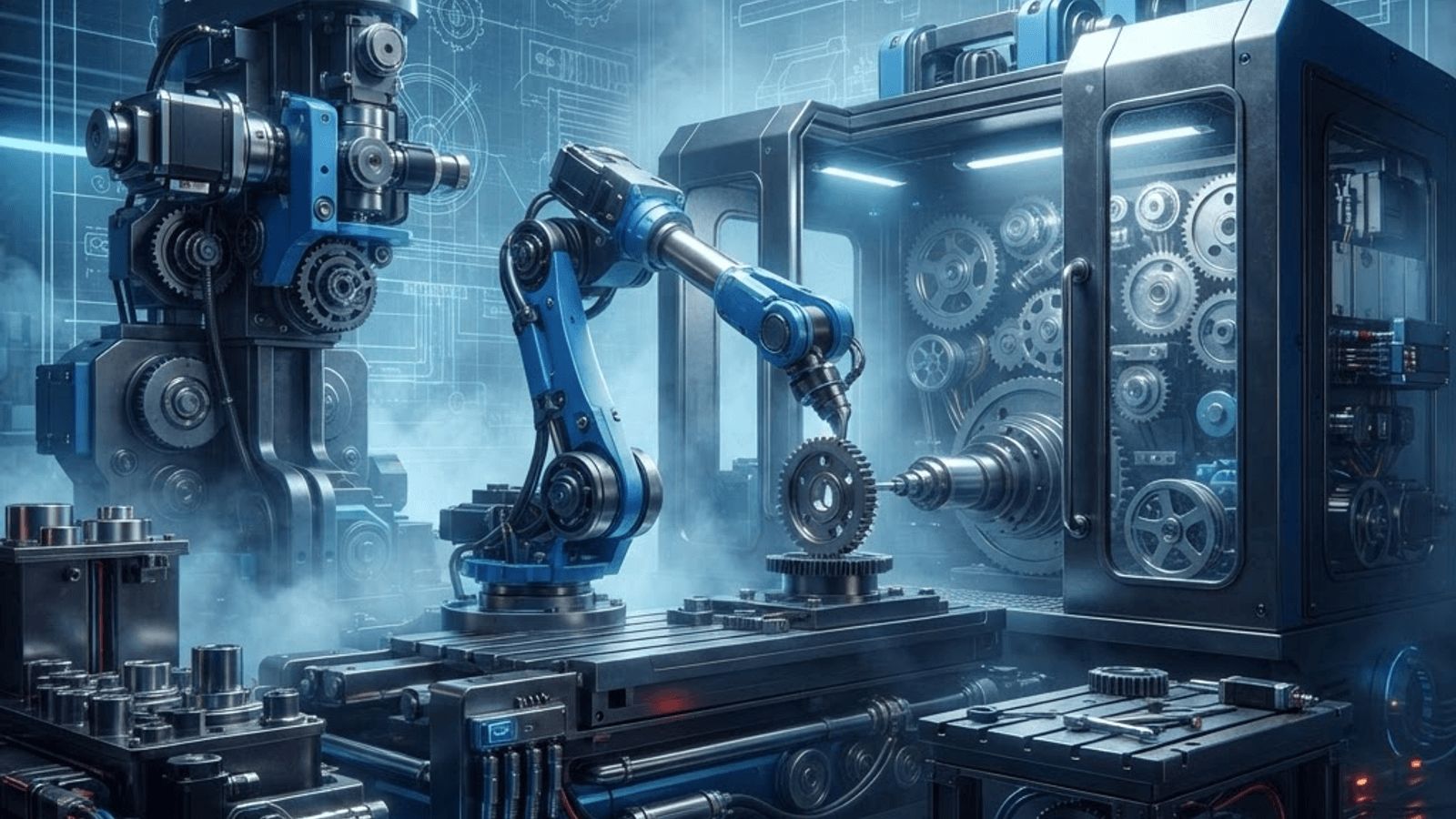
Engineering Capability on the English Riviera
Machinery manufacturing is one of the less visible but most economically valuable industries in Torbay. Behind unremarkable industrial units in Paignton, Torquay and the surrounding South Devon estates sit workshops equipped with multi-axis CNC machining centres, welding bays, fabrication shops and assembly areas producing equipment that ends up in factories, farms, harbours and laboratories across the country and overseas.
The sector here is characterised by bespoke and low-volume work rather than standard product lines. Customers come with a problem, and local engineers design, build, install and commission a machine to solve it. That consultative, problem-solving model suits smaller firms with deep technical knowledge, and it is exactly what Torbay's engineering community does well.
The Types of Machinery Built Locally
Bespoke automation and special purpose machinery covers assembly rigs, test benches, handling systems and robotic cells built to a customer's specific process requirements. Food and beverage processing equipment serves Devon's substantial food production sector with conveying, filling, packing and washdown-rated stainless machinery.
Marine and harbour equipment includes winches, davits, deck machinery, hydraulic systems and fish handling equipment supporting Brixham's fishing industry. Materials handling spans conveyors, hoists, lifting frames and bespoke trolleys. Laboratory and scientific equipment reflects the region's research and photonics presence, producing precision positioning stages, enclosures and test apparatus.
Leading Machinery Manufacturers and Engineering Firms Serving Torbay
1. Special purpose machinery builders across South Devon deliver complete turnkey automation projects, from concept design and simulation through manufacture, installation and operator training.
2. Precision CNC engineering companies in the bay operate multi-axis milling and turning centres producing components to tight tolerances in aluminium, stainless steel, titanium and engineering plastics.
3. Stainless steel fabrication specialists in Devon manufacture hygienic equipment for food, pharmaceutical and marine applications, with polished finishes and full weld documentation.
4. Hydraulic and pneumatic systems engineers serving Torbay design, build and maintain power systems for marine deck machinery, industrial presses and mobile plant.
5. Marine engineering workshops around Brixham manufacture and refurbish winches, cranes, trawl gear and deck equipment for the commercial fishing fleet, working to demanding safety and reliability standards.
6. Conveyor and materials handling manufacturers in the South West supply bespoke transport systems for production lines, warehouses and packing halls.
7. Control and automation integrators across Devon program PLCs, design control panels and implement SCADA and machine vision systems that turn mechanical assemblies into intelligent equipment.
8. Toolmakers and jig and fixture manufacturers in the region produce the production aids that underpin repeatable manufacturing for customers in automotive, aerospace and electronics.
9. Agricultural machinery engineers serving the Devon hinterland build and modify equipment for farming operations, including feeding systems, trailers and specialist implements.
10. Maintenance and refurbishment specialists across Torbay extend the life of existing capital equipment through overhaul, retrofitting of modern controls and reverse engineering of obsolete parts.
Why Bespoke Machinery Delivers Value
Off-the-shelf equipment suits standard processes, but many businesses have requirements that no catalogue product addresses. A Devon food producer handling an unusual product shape, a fishing operation working with specific gear, or a photonics manufacturer needing sub-micron positioning all require custom solutions.
Bespoke machinery typically costs more initially but delivers precisely matched performance, eliminates workarounds and manual intervention, and is designed around the customer's actual space, throughput and maintenance constraints. Well-designed custom equipment often pays for itself through labour savings and improved consistency within a relatively short period.
Design Engineering and Simulation
Modern machine building begins on screen. Three-dimensional CAD modelling allows complete virtual assembly before any metal is cut, identifying clashes, access problems and assembly difficulties early. Finite element analysis verifies structural adequacy, while motion simulation confirms cycle times and identifies bottlenecks.
These tools reduce project risk substantially. Customers can review realistic renderings and animations before manufacture begins, and changes at design stage cost a fraction of modifications during build. The best Torbay engineering firms invest heavily in this capability and involve customers throughout the design review process.
Safety, Compliance and Documentation
Machinery supplied in the United Kingdom must meet stringent safety requirements. Manufacturers must carry out risk assessment, design out hazards where possible, provide guarding and safety interlocks where elimination is not feasible, and supply comprehensive technical documentation and instructions.
Functional safety of control systems is a particular focus, with safety-related circuits requiring appropriate performance levels and validation. Reputable suppliers handle this rigorously, producing a technical file, declaration of conformity and appropriate marking. Buyers should confirm that compliance is included rather than treated as an optional extra.
The Marine Machinery Niche
Brixham's status as a major fishing port creates sustained demand for deck machinery, and the engineering challenges are considerable. Equipment must operate reliably in salt water, withstand shock loading, function in confined deck spaces and be maintainable at sea. Failures are expensive and potentially dangerous.
Local engineers who understand these conditions build equipment with generous safety factors, corrosion-resistant materials, accessible service points and simple, robust mechanisms. This knowledge is largely experiential and represents real competitive advantage for Torbay firms.
Automation, Robotics and Skills
Industrial automation is becoming accessible to smaller manufacturers as collaborative robots, standardised vision systems and simplified programming reduce cost and complexity. Torbay integrators are deploying these technologies for pick and place, machine tending, inspection and palletising in businesses that could never previously justify automation.
The skills required are shifting accordingly. Mechanical fitting remains essential, but controls engineering, robot programming and data integration are now equally important. Employers in the bay are addressing this through apprenticeships and through supporting existing staff into higher technical qualifications.
Selecting a Machinery Partner
Evaluate suppliers on demonstrated experience with similar applications rather than general capability claims. Visit the workshop. Ask about their design process, how they manage change requests, what commissioning support they provide and what spares and service arrangements follow handover. Clarify intellectual property ownership for bespoke designs before contracting.
Conclusion
Machinery manufacturing in Torbay combines traditional engineering craft with modern design, controls and automation expertise. The firms described here solve genuinely difficult problems for customers in food, marine, industrial and scientific sectors, sustaining high-value skilled employment and demonstrating that serious engineering capability thrives on the Devon coast.
Want your brand featured in front of decision-makers? Publish a guest post or get a link insertion in our guides through AAMAX's guest post and link insertion service.
Helpful Links
 SponsoredAAMAX — Full-Service Digital Agency
Write for Us
Share your expertise with our readers. We welcome guest contributions from industry specialists.
Pitch your idea

